Certification guide ·
Woven Placemats – Scallop Rim, TVD-10363: Canadian Rules for Restaurants and Retailers
A woven placemat looks harmless, but its fibre, decoration and packaging decide which Canadian rules apply. This post covers TVD-10363, the Scallop Rim mat, and says plainly what we hold on file.
What the rules depend on
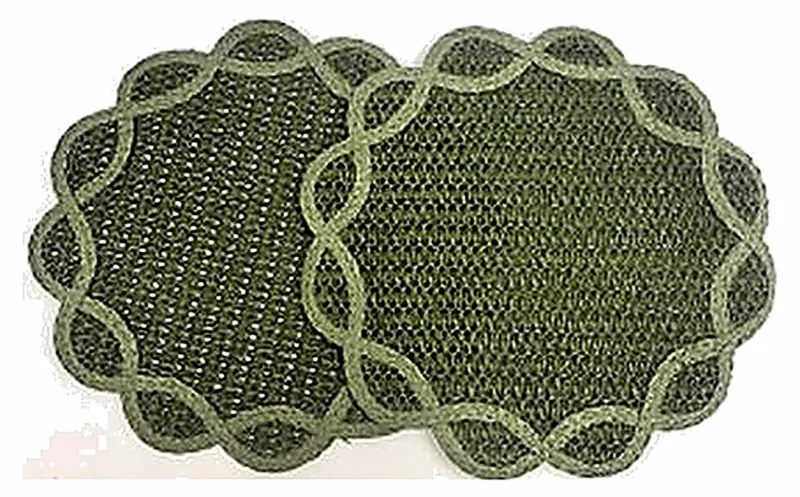
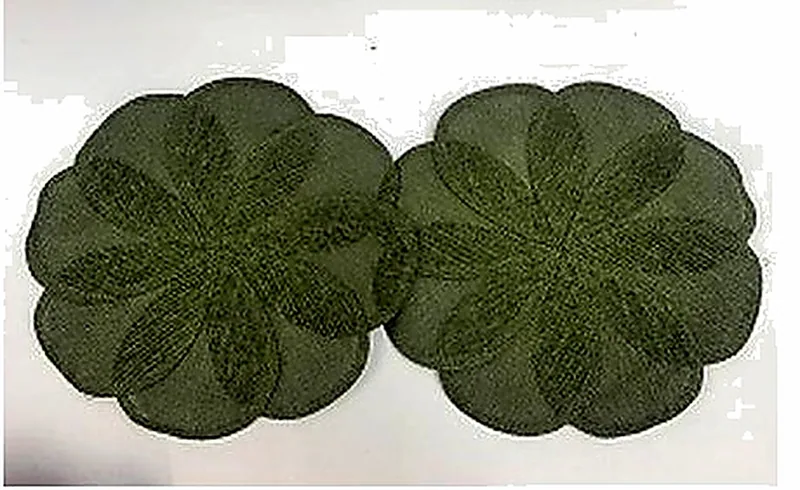
The Woven Placemats – Scallop Rim (TVD-10363) are 38 cm woven placemats in round, flower and scalloped shapes, offered in several styles. The listed features show no electrical part, no glass and no coating, so we do not assume any of those rules apply. Instead, the questions turn on three facts that the listing does not state: what the mat is woven from, whether any decoration or finish has been added, and how the mats are packed for sale. No certification mark is on file for TVD-10363, and we do not describe it as certified, listed or approved. This page is general information and not legal advice; rules change, so confirm with the authority, your inspector or your customs broker.
Question one: is the mat a textile article?
The Textile Labelling Act calls for fibre-content and dealer identity labelling on consumer textile articles, such as bedding, throws, cushions and mats sold as textiles. If a woven mat is made from a textile fibre and sold to consumers as a textile article, that labelling can apply, and if it is woven from plant material instead, a different analysis applies. We do not guess. We confirm the material on the written quote, and we tell you whether, in our view, textile labelling is a consideration for the version you order. You then confirm with the authority or your own adviser before you print any label.
Question two: could the mat touch food?
A placemat sits under the plate, not in the food, but in a restaurant it may meet the base of a dish, bread or a cutlery roll. If the mat is used only as a table accessory, food-contact rules are less central. If it carries a coating or a printed or metallic decoration that could transfer to food, or if you plan to line a basket with it, ask for food-contact test reports. The Food and Drugs Act prohibits selling food in or with materials that may make it harmful, and Health Canada does not pre-approve kitchenware.
Restaurants face an extra point. Public health inspectors check that surfaces are durable, easy to clean and kept sanitary, and some ask for sanitation certification on commercial food equipment. A woven mat is hard to wipe down, which is why we ask the factory whether it is wipe clean or washable before we describe it to a restaurant.
Question three: how are the mats packaged?
Prepackaged consumer products need bilingual (English and French) product identity and net quantity, and the dealer's name and place of business, under the Consumer Packaging and Labelling Act. A set of mats in a band or sleeve counts as prepackaged. In Quebec, the Charter of the French language requires labels, instructions and warranty documents to be available in French, with French at least as prominent. Settle the artwork language before printing.
Document checklist
| Document | Why | Who issues it |
|---|---|---|
| Material and fibre-content statement | Decides whether textile labelling applies and what the label says | Factory, confirmed in our quote |
| Food-contact test report, if a coating, print or food use is involved | Supports the Food and Drugs Act requirement | Accredited laboratory via the factory |
| Wipe-clean or wash instructions | Restaurants and inspectors need to know how mats are cleaned | Factory |
| Bilingual label and pack proof | Retail packs and Quebec | You, with factory proof |
| Tariff classification and origin note | Duty and taxes | Our customs broker, before we quote |
Restaurant use: what an operator should ask
A restaurant manager buying TVD-10363 is thinking about service, not statutes, so translate the rules into practical questions. Can the mat be wiped between seatings, or does it need washing? How many wash cycles will the weave survive before the scalloped edge frays? Is there a spare allowance in the order, since mats are replaced faster than plates? Does the owner's insurer or franchisor have a standard for table surfaces? We pass these questions to the factory and put the answers on the quote, so the operator is not guessing. For a restaurant group, order a sample set first and run it through a real week of service before committing to a full quantity.
Marks that do not apply, and the CE mark
CSA, cUL and cETL marks belong to electrical equipment, and a woven mat carries none; see our explainer on what those marks mean if you also stock powered goods. A CE mark on a sample card is not recognised in Canada as proof of compliance for electrical, gas or consumer products, so ignore it when answering a Canadian question.
What happens if paperwork is missing
- A retailer may refuse mats that lack bilingual identity and net quantity, or fibre content if textile labelling applies.
- A restaurant's health inspector may query a mat that cannot be cleaned properly.
- A shipment can be held while customs asks about classification and origin.
How we handle it
We confirm certification status, material, available test reports and classification on the written quote and supply the documents before you order. The quote also gives packing, lead time and delivered cost, and payment is 30% deposit and 70% before release. For the buying side, see the guide to choosing between TVD-10363 and TVD-10364, or compare with the Green Flower mat. The line-wide view is in the tableware compliance guide. GST, HST, PST or QST depend on province, as in the sales tax guide. Begin with how ordering works and the quote request.