Certification guide ·
Decorated Acrylic Serving Trays in Canada: Food Contact, Gold Finishes and Documents
Gold rims, beads and flecks on serving trays raise questions beyond plain food contact. Here are the Canadian rules, the documents to request and how we handle them.
Why gold-decorated acrylic trays get extra questions
A plain serving tray raises one compliance question: is it fit to touch food? A tray with a gold rim, a bead border or a fleck finish raises a second one: what is the decoration made of, and where does it sit? This guide covers the Canadian rules that matter for the decorated trays in our acrylic serving trays and plates line, from the gold-edged round platters to the bead-trimmed handle trays. No mark of any kind is on file for these products, so nothing here is a certification claim. We confirm certification status and supply the documents with the quote before you order.
The decorated trays this guide covers
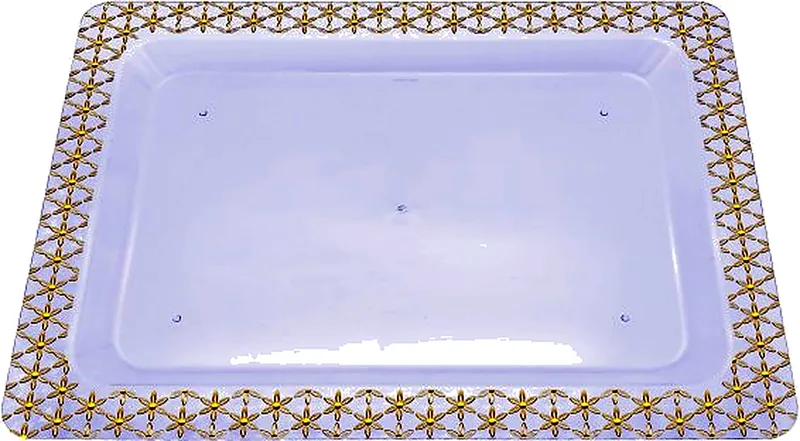
- Gold Lattice Rim Tray (TVD-2471): gold lattice-print border around a clear centre.
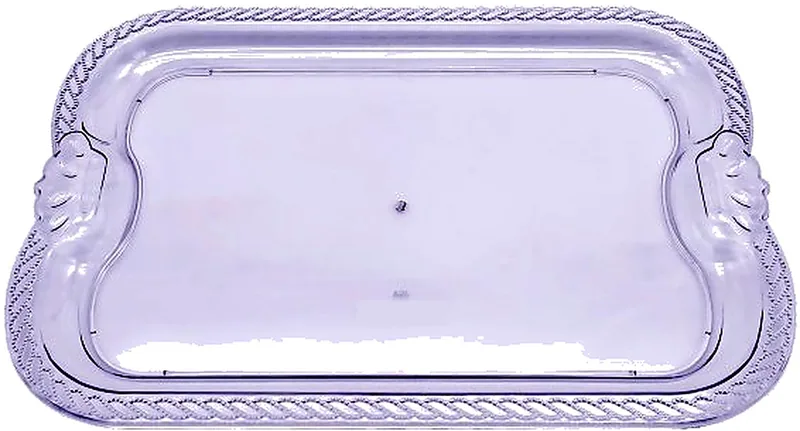
- Rope-Rim Handle Tray (TVD-2473): rope-pattern edge with moulded handles.
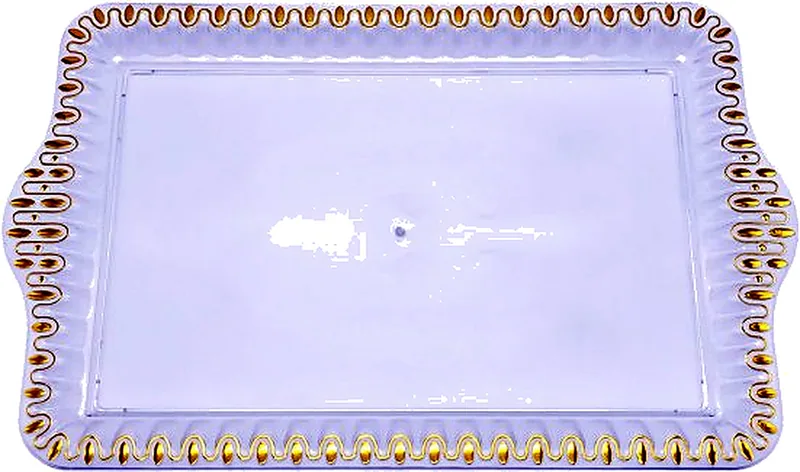
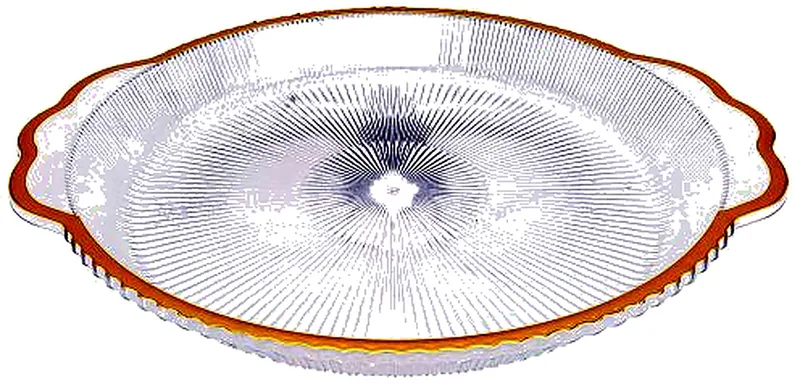
- Gold Bead Border Handle Tray (TVD-2474): gold bead-trim border with moulded side handles.
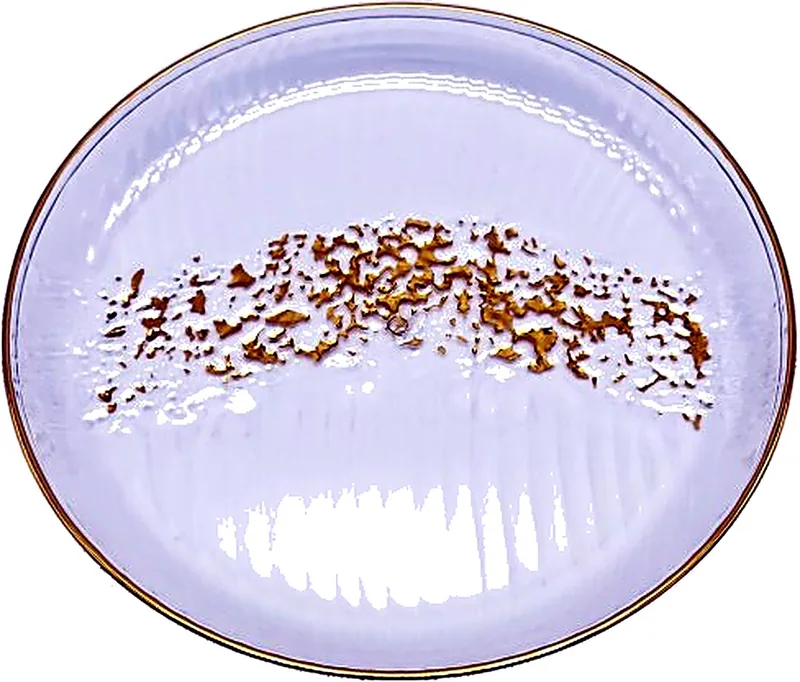
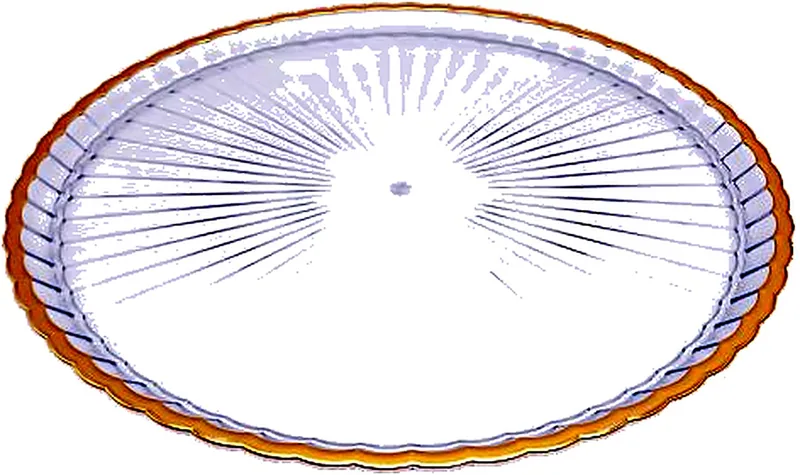
- Round Platter – Gold Fleck (TVD-2476): gold fleck decoration, gold rim and ribbed base.
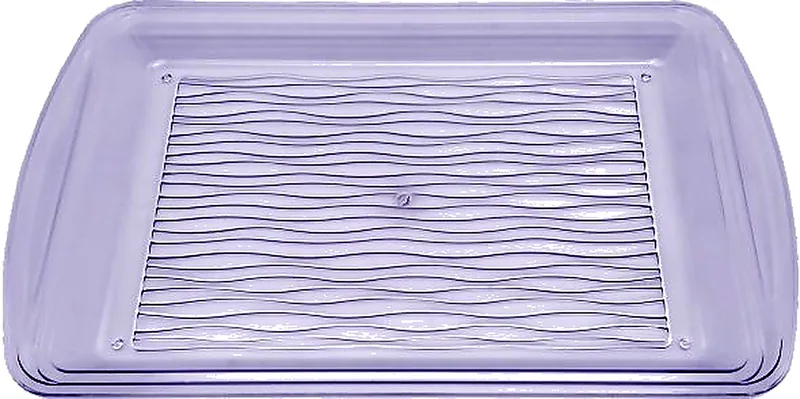
- Wave-Pattern Serving Tray (TVD-2479): wave-line engraved base with a raised rectangular rim.
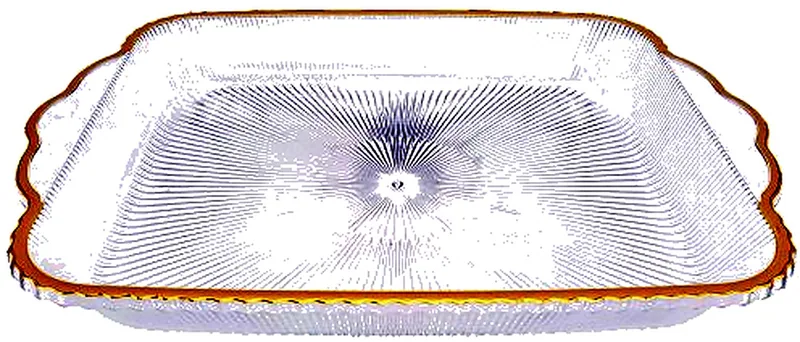
- Round Platter – Gold Rim (TVD-2502) and Gold-Rim Square Handle Tray (TVD-2510): radial engraved pattern with a gold edge, and gold edge trim with curved side handles.
- Gold-Rim Round Handle Tray (TVD-2511), Bead-Edge Round Platter (TVD-2536), Bead-Edge Oval Tray (TVD-2537), Hexagon Gold-Edge Tray (TVD-2541), Round Tray – Gold Rim, Wave Texture (TVD-2542) and Round Tray – Gold Rim, Diamond Texture (TVD-2543): round, oval and hexagon shapes with gold edges or beads and textured surfaces.
Some of these only carry a shaped or textured edge, with no applied colour at all (the rope-pattern and wave-line trays, for example). That distinction decides which rules bite hardest, so ask the factory for each tray whether the decoration is moulded, engraved or applied.
Rule 1: materials that touch food
The Food and Drugs Act prohibits selling food in or with materials that may make it harmful. Health Canada does not pre-approve kitchenware. It offers voluntary Letters of No Objection for food packaging materials, which is a different thing from approving a serving tray. In practice, buyers ask the factory for food-contact test reports, for example FDA or EU food-contact migration tests, and keep them on file for retailers, caterers and inspectors who ask.
Rule 2: lead and cadmium in decoration
Decorated rims and printed or metallic decorations near the lip are a known risk. The Glazed Ceramics and Glassware Regulations under the Canada Consumer Product Safety Act set limits on lead and cadmium that can leach from glazed ceramics and glassware that contact food. If a glass or ceramic version of any of these items is offered, those limits apply and a test report is the expected evidence. For an acrylic tray the same report is still what careful buyers request, because the gold finish is the part most likely to be questioned. The Consumer Products Containing Lead Regulations also set lead limits that include kitchen utensils and products for young children. Ask for the lead and cadmium report for the exact version you will receive.
Rule 3: consumer product safety, labelling and French
The Canada Consumer Product Safety Act applies to consumer products: it prohibits products that are a danger to human health or safety, requires incident reporting and allows recalls, and Health Canada enforces it. The Consumer Packaging and Labelling Act requires bilingual (English and French) product identity and net quantity on prepackaged consumer products, plus the dealer's name and place of business. In Quebec, the Charter of the French language requires labels, instructions and warranty documents to be available in French, and Quebec retailers will ask for this.
Document checklist
| Document | Why you want it | Who issues it |
|---|---|---|
| Food-contact test report | Shows the tray material was tested for migration into food | Factory or an independent test lab |
| Lead and cadmium test report | Covers gold rims, beads, flecks and printed borders | Independent test lab, requested through the factory |
| Decoration description (plated, foil, painted or moulded) | Tells you which trays need the most scrutiny | Factory, confirmed on our quote |
| Care and cleaning instructions | Acrylic items are usually hand wash only, and the label must say so | Factory, then printed on your retail packaging |
| Bilingual label artwork | Needed for prepackaged consumer sale in Canada; French is expected in Quebec | You or your designer, using our carton data |
| Certification status statement | States plainly whether any mark is on file | Thames Valley Distribution, on the written quote |
CE marks, electrical marks and other red herrings
A European CE mark is not proof of compliance in Canada for electrical, gas or consumer products. These trays are unpowered, so electrical marks such as CSA or cUL are not relevant to them; the food-contact and decoration documents above are. Be cautious if a supplier offers a CE document as the answer to a Canadian food-contact question.
Differences between the products
The tray with a fleck finish or printed border carries more decoration risk than one with a moulded rope edge. The platters with a gold edge need the gold material and wear question answered. Textured trays (wave, diamond, ribbed) add a cleaning point. Pick the documents you collect according to what is on the tray, and ask us to request the same set for every product in a mixed order so your documents are uniform.
What happens if a document is missing
A retailer may refuse to list a tray without a report, a caterer's landlord or franchisor may ask to see one, and a product found to be a danger can be recalled under the Canada Consumer Product Safety Act. Reports collected after the goods arrive are slower and costlier than reports collected before you place the order.
How we handle it
We confirm certification status and supply the available documents with the quote before you order. Samples are available on most items, and the sample cost is usually credited to the first order, so you can test decoration wear yourself. Payment is 30% deposit and 70% before release. Duties and taxes depend on tariff classification, origin and province of delivery; see sales tax by province, and read how ordering works or request a quote. Rules change, so confirm with the authority, your inspector or your customs broker; this is not legal advice.