Product guide ·
Bamboo Cutting Boards (TVD-2832): Wholesale Guide for Canadian Retailers
Two board sizes with a black handle edge, built for a good-and-better shelf. Here is what to confirm about bamboo, finish and food contact before you order.
Two sizes of bamboo board for one shelf
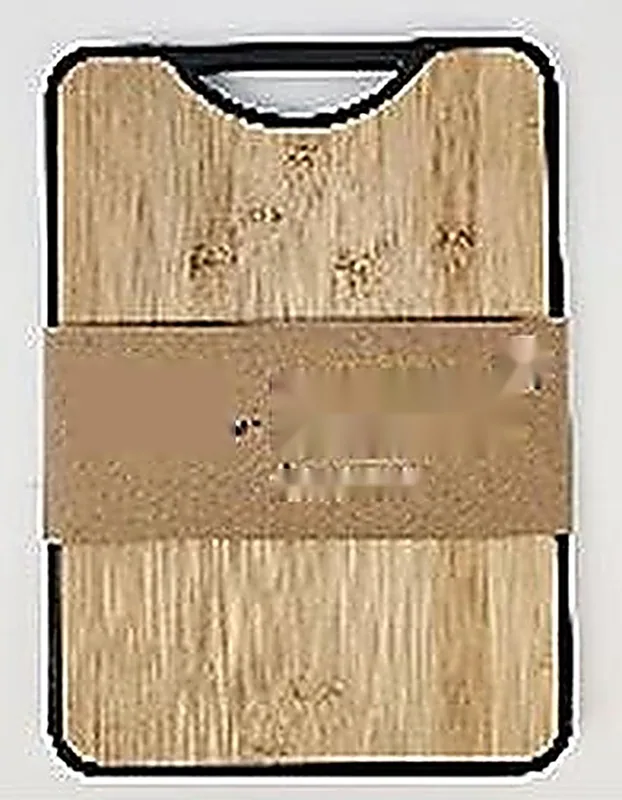
The Bamboo Cutting Boards (TVD-2832) come in two listed sizes, 34.5 x 24.5 cm and 38 x 28 cm, in bamboo with a black handle edge, and they come in several styles. That two-size structure is what makes this a useful line for retailers: the smaller board covers everyday chopping and serving for one or two people, the larger gives a household room to work, and the pair lets a store show a clear step-up on the shelf without stocking two unrelated products.
The buyer is the retailer, from a kitchen shop or gift store to a housewares chain or an online seller shipping small parcels. Boards are a gifting staple around housewarmings, weddings and the holidays, and the black edge detail gives a modern look that photographs well online.
What the listed features mean for you
- Bamboo. A grass-based board material that retailers position as a natural alternative to hardwood. Which bamboo construction it is (strips laminated together, pressed or otherwise) is confirmed on your written quote.
- Black handle edge. A coloured edge or handle detail. We do not say what material or coating gives the black colour until the factory confirms it, because that detail matters for food-contact questions below.
- 34.5 x 24.5 cm and 38 x 28 cm. Thickness is not listed, and it drives weight, stability and freight volume, so ask for it with the quote.
- Several styles. Settle your mix of sizes and styles before ordering, and ask whether every style carries the same construction.
Bamboo and food contact: what Canadian buyers ask for
A cutting board is a food-contact surface, and the Food and Drugs Act prohibits selling food in or with materials that may make it harmful. Health Canada does not pre-approve kitchenware. For bamboo and wood boards, buyers ask for food-contact tests that cover the finish and the glue that holds the strips together, not just the bamboo itself. Ask the factory for those reports and request the test date and the article tested.
- If the board is a blend of bamboo and another binder, such as melamine, it is not for microwave use. Do not print microwave wording on your label unless the factory confirms construction in writing.
- Ask what finish, oil or wax is applied, and whether it is food-contact tested.
- Ask what the black edge is made of or coated with, and for a lead and cadmium result if it is a printed or painted decoration.
- Ask whether the board is rated by the factory for dishwasher use. Bamboo boards generally do not enjoy dishwashers, and a care claim you cannot support invites returns.
- If a food business is the end customer, confirm what the local health inspector and landlord expect on commercial food equipment, which can include NSF/ANSI sanitation certification. No certification mark is on file for this product, and we make no certification claim; we confirm status and send the documents with the quote.
The line-wide picture is in our kitchen gadgets and knives compliance guide.
Canadian use notes: winter dryness and transit
Bamboo and solid wood move with moisture. Cold, dry heated interiors in winter on the Prairies and in central Canada can dry boards out, while coastal British Columbia and Atlantic Canada are humid. For a retailer that means two things. First, store cartons in a heated, stable room instead of an unheated back dock. Second, tell shoppers on a care card to wash by hand, dry upright and oil occasionally, because a board that cracks in February becomes a return.
Boards are flat and rigid, so freight is about carton strength and pallet height rather than fragility. Delivery runs to your store or warehouse across Canada, with ocean freight landing on the west coast and moving inland by rail. See the Canada delivery hub for the route logic and the landed cost calculator for a planning estimate. The quote carries the confirmed delivered figure.
How to specify the boards
- State the sizes and style split by TVD code: how many of the 34.5 x 24.5 cm and how many of the 38 x 28 cm.
- Ask for thickness, weight per board and the construction of the bamboo.
- Ask what gives the black handle edge its colour and whether it is food-contact tested.
- Request food-contact test reports covering finish and adhesive, for your market.
- Confirm whether the factory rates the board for dishwasher or microwave use. Expect no unless confirmed.
- Choose retail packaging: sleeve, hang tag or colour box, bilingual labelling, barcode, carton quantity and size.
- Ask for the minimum per size or style, sample availability and lead time.
How it compares with nearby boards and tools
| Product | What it has | Choose it when |
|---|---|---|
| Acacia & Marble Cutting Boards (TVD-2842) | 34 x 14.5 and 38 x 17 cm, acacia wood with marble | You want a slim serving-board look in wood and stone rather than a chopping board |
| Silicone Pot Grip Pad (TVD-2824) | Green silicone, 10 x 8 cm, carded pack | You want a low-ticket carded add-on beside the boards |
| Ice Cream Scoop – Soft Grip (TVD-2826) | 21.3 x 4.5 cm, 55 g, grey grip, copper-tone scoop | You want a small gadget to fill the same display bay |
Everything sits on the Kitchen Gadgets & Knives line page. The wholesale guide explains how the line is organised, and a free account shows full specifications on each product page.
Packaging and labelling
A prepackaged board sold to consumers needs bilingual English and French product identity and net quantity, plus the dealer's name and place of business. In Quebec, labels and care instructions must also be available in French. Settle sleeve artwork language at quote stage. For duties and taxes, the tariff classification and origin decide the duty, and GST, HST, PST or QST apply by delivery province, as set out in our sales tax guide.
How ordering works
Every order is quoted in writing with price for your quantity, specifications, certification status and documents, packing, lead time and delivered cost. Many lines carry low trial minimums and samples are available on most items, with the sample cost usually credited to your first order. Payment is a 30% deposit and the 70% balance before release. Boards can share a consolidated container with products from other factories. Begin at the quote page or read how ordering works. Rules change, so confirm with the authority or your customs broker. This is not legal advice.