Certification guide ·
Importing Bamboo Cutting Boards to Canada: Food-Contact and Labelling Checklist
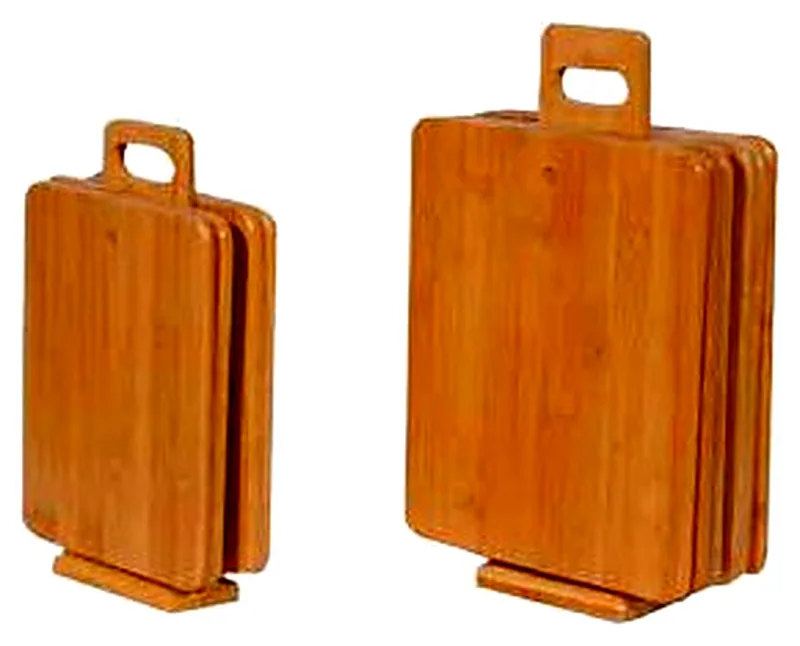
Boards touch food, so Canadian buyers, inspectors and landlords ask for paperwork. This is the document checklist for TVD-5758, a set of bamboo boards with handles.
What is on file for this product
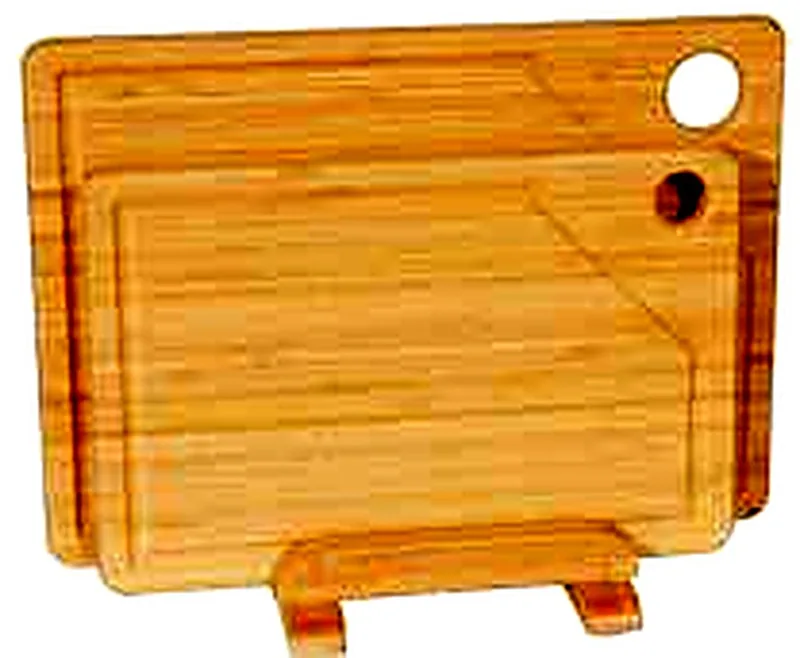
Bamboo Cutting Boards with Handle – Set (TVD-5758) is a set of cutting boards with handles, a stand and a natural bamboo finish. No certification mark is on file for this product. Health Canada does not pre-approve kitchenware, so the question is not "is it stamped" but "what evidence can the factory give that the board is safe for food contact". We confirm certification status and supply the documents with the quote before you order. The sales side (who buys it, how it compares with other boards) is in our product buying guide.
Who decides what a board must have
There is no single stamp that makes a board legal. Several layers apply at once, and different people ask for different things.
- The Food and Drugs Act. It prohibits selling food in or with materials that may make it harmful. A cutting board falls squarely in that concern.
- Health Canada. It does not pre-approve kitchenware. It offers voluntary Letters of No Objection for food packaging materials, which is a different category from a board, so buyers more often rely on test reports from the factory.
- Public health inspectors. Provincial food premises rules and local inspectors require food equipment that is durable, easy to clean and kept sanitary. A restaurant using boards will be judged on this.
- Landlords and franchisors. Many ask for NSF/ANSI or an equivalent sanitation certification on commercial food equipment. Check what your health unit and landlord ask for. We do not claim that mark for this set.
- Retailers. A store's compliance team will usually ask for a food-contact test report before listing.
The bamboo-specific risks
The board itself is only part of the story. Bamboo boards are made from strips pressed and bonded together, and they are usually finished with an oil or lacquer. That brings three checks.
- Finish and glue. Ask for food-contact tests on the finishes and the adhesives, not only on the bamboo.
- Blends. Melamine-bamboo blends are not for microwave use. If a product is a blend, say so on the label and in the instructions.
- Lead and kitchen utensils. The Consumer Products Containing Lead Regulations set lead limits that include kitchen utensils, so ask whether any metal parts, paints or printed decorations are present.
Printed decoration and coatings are where problems tend to hide, so if your boards carry a printed logo or a coloured edge, tell us so the test report covers that finish.
Document checklist
| Document | Why you want it | Who issues it |
|---|---|---|
| Food-contact test report on the board material (for example an FDA or EU migration test) | Evidence the material is suitable for food contact; retailers and health units ask for it | A testing laboratory, via the factory |
| Finish and adhesive statement or test | Oils, lacquers and glues are the usual weak point | The factory, with laboratory support |
| Lead and heavy-metal statement for any metal or printed parts | Lead limits apply to kitchen utensils | The factory or a testing laboratory |
| Sanitation certification such as NSF/ANSI, if your landlord or health unit asks | Some inspectors and franchisors require it for commercial food equipment | An accredited certification body (not on file for this set) |
| Care and use instructions | Boards are hand wash only, and misuse shortens their life | The factory, translated as needed |
| Bilingual label and Quebec French copy | Prepackaged consumer products need bilingual identity and net quantity; Quebec needs French labels and instructions | You or us, on the quote |
Labelling rules for retail packs
If you sell the set in a retail pack, the Consumer Packaging and Labelling Act requires bilingual (English and French) product identity and net quantity, plus the dealer's name and place of business. In Quebec, the Charter of the French language requires labels, instructions and any warranty documents to be available in French, with French at least as prominent. Retailers in Quebec will ask for it, so plan the packaging before the order, not after.
Canada does not recognise a CE mark here
A factory may offer a CE-marked declaration. Canada does not treat the CE mark as proof of compliance for consumer products, so it does not replace the Canadian checks above. A European food-contact migration test report is still useful evidence, and buyers commonly ask for one, but it is a test report, not a Canadian approval.
What happens if the paperwork is missing
A health inspector can ask a restaurant to remove food equipment that is not suitable, a landlord can refuse a tenant's kitchenware, and a retailer can decline to list a product without a food-contact report. Under the Canada Consumer Product Safety Act, an unsafe consumer product can be recalled, and the importer carries the burden. Asking for the documents up front is far easier than dealing with any of that later.
How we handle it
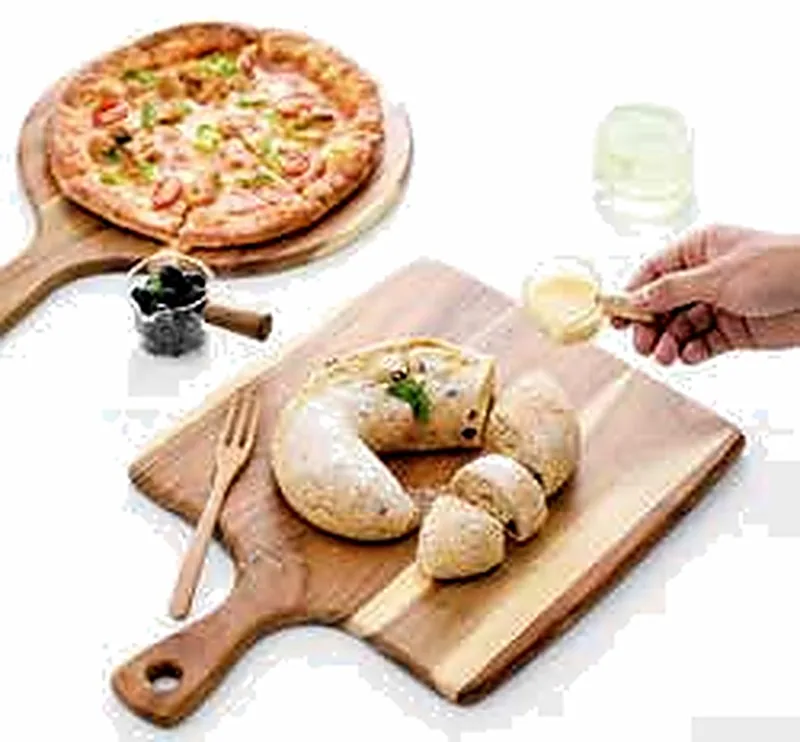
Every order is quoted in writing. Our quote confirms the material and grade, the finish, the test reports available for the product and your market, the packing and label language, and the minimum order. Where a document is not on file, we say so. Boards in the same line, such as Bamboo Cutting Board with Juice Groove (TVD-5759) (a board with a juice groove) and Acacia Serving & Pizza Boards (TVD-5889) (acacia serving boards), carry their own paperwork and are confirmed on their own quotes. Browse the Bamboo & Acacia Boards and Bowls line, send a quote request, and read how ordering works for the terms: 30% deposit and 70% before release.
This is general information, not legal advice. Rules change, so confirm with your health unit, the relevant authority or your customs broker.