Certification guide ·
Bamboo and Acacia Boards and Bowls: Canadian Import and Food-Contact Rules
Wooden and bamboo kitchenware carries no electrical or gas mark, but it still needs a paper trail. This guide covers what to ask for, which rules apply and how it differs from one board or bowl to the next.
Cutting boards, serving boards and bowls look simple, yet they touch food every day and are sold to families, restaurants and gift buyers. The compliance work is different from lighting or appliances: there is no CSA-type mark to look for, so the evidence is mostly test reports, finish information and correct labelling. Our bamboo and acacia boards and bowls line has eight products, and the notes below apply to all of them with a few differences that matter.
The rules that apply
- Food and Drugs Act: it prohibits selling food in or with materials that may make it harmful. Health Canada does not pre-approve kitchenware, so the responsibility sits with the importer and seller.
- Bamboo and wood boards: ask for food-contact tests covering the finish and the glues, because boards are often laminated from strips. Melamine-bamboo blends are not for microwave use.
- Consumer Products Containing Lead Regulations: these set lead limits that include kitchen utensils.
- Consumer Packaging and Labelling Act: prepackaged boards and bowls sold to consumers need bilingual English and French product identity and net quantity, plus the dealer's name and place of business.
- Quebec: under the Charter of the French language, labels, care instructions and any warranty text must be available in French, with French at least as prominent as English.
- CCPSA: the Canada Consumer Product Safety Act prohibits products that are a danger to health or safety and requires incident reporting; Health Canada enforces it.
These are requirements, not claims about any one product. Rules change, so confirm them with Health Canada, your province's public health authority or your customs broker. This is not legal advice. For the marks that do apply to powered products, our guide to CSA, cUL and cETL marks explains why they are not the question for a wooden board.
Certification status on these eight products
No certification mark is on file for any product in this line. Do not assume otherwise. We confirm certification status and supply the documents with the quote before you order, and we say plainly in writing if a document is not available for a particular item.
How the eight products differ on compliance
| Product | Listed features | What to ask about |
|---|---|---|
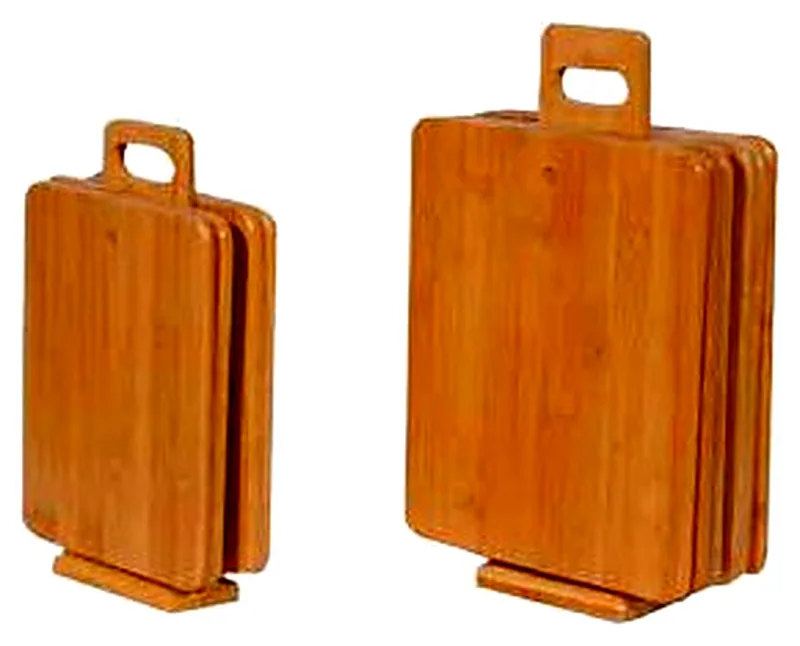
| Bamboo Cutting Boards with Handle – Set (TVD-5758) | Set of boards with handles, stand included, natural bamboo finish | Glue and finish in the laminate; handle joints; stand material |
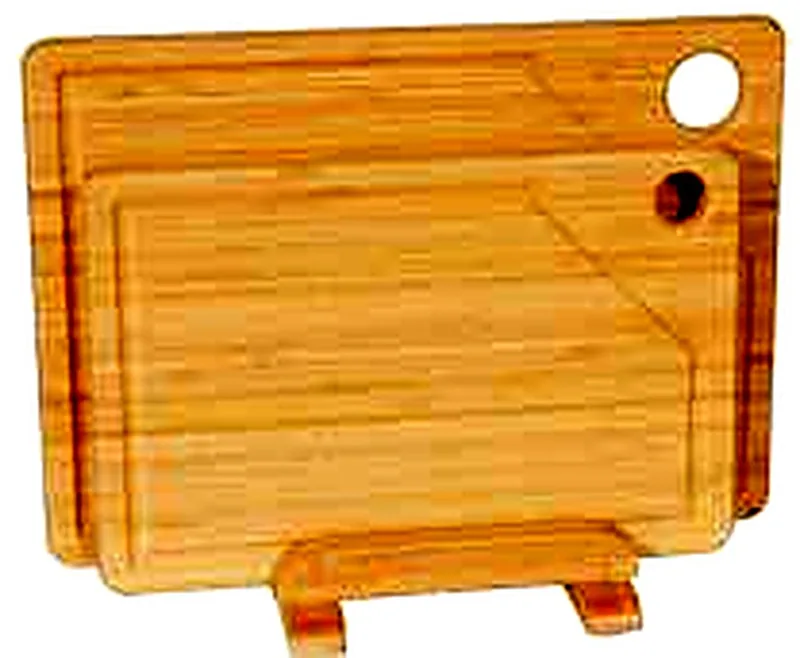
| Bamboo Cutting Board with Juice Groove (TVD-5759) | Juice groove edge, hanging hole, stand included | Finish inside the groove, where meat juices collect; care wording |
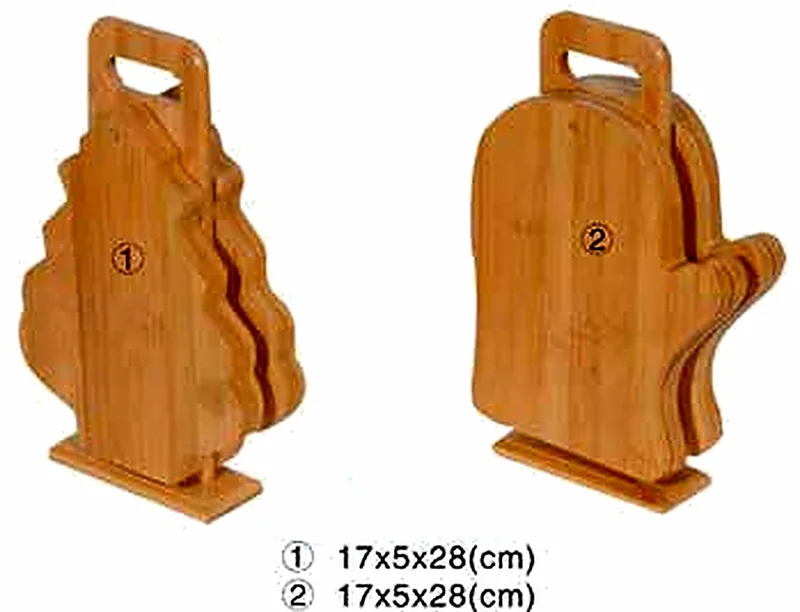
| Novelty Bamboo Boards – Tree & Glove Set (TVD-5760) | Tree and glove shapes, stand included, natural bamboo finish | Whether any shape carries a printed or burned decoration, and what it is made of |
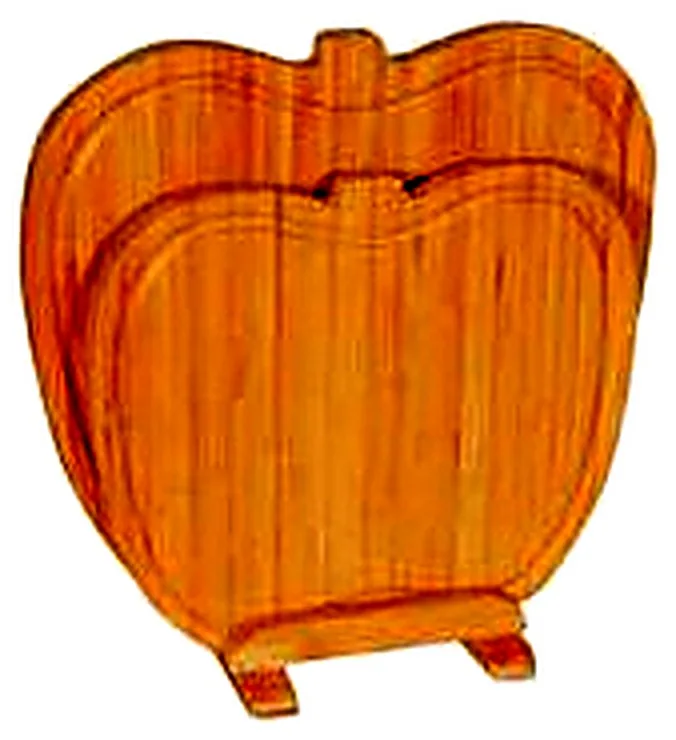
| Apple-Shaped Bamboo Boards – Set (TVD-5761) | Set of apple-shaped boards, stand included, natural bamboo finish | Finish on the shaped edges; whether any colour is applied |
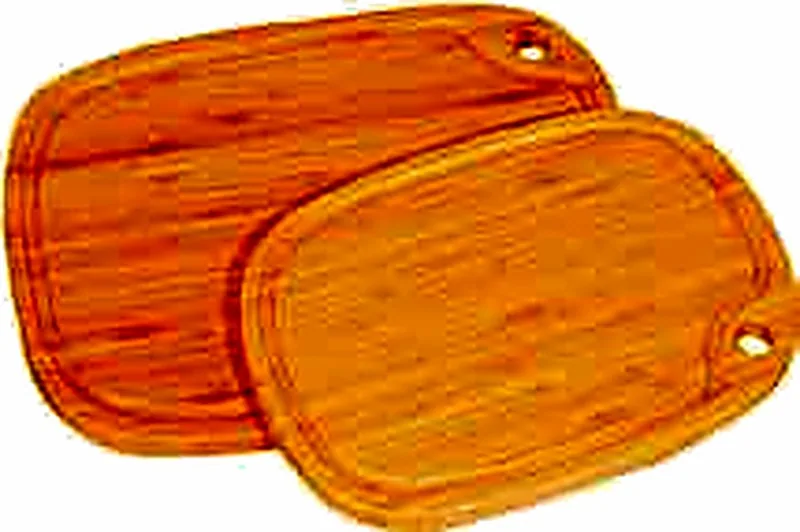
| Oval Bamboo Boards – Set (TVD-5762) | Set of oval boards, juice-groove edge, natural bamboo finish | Finish in the groove; piece sizes within the set |
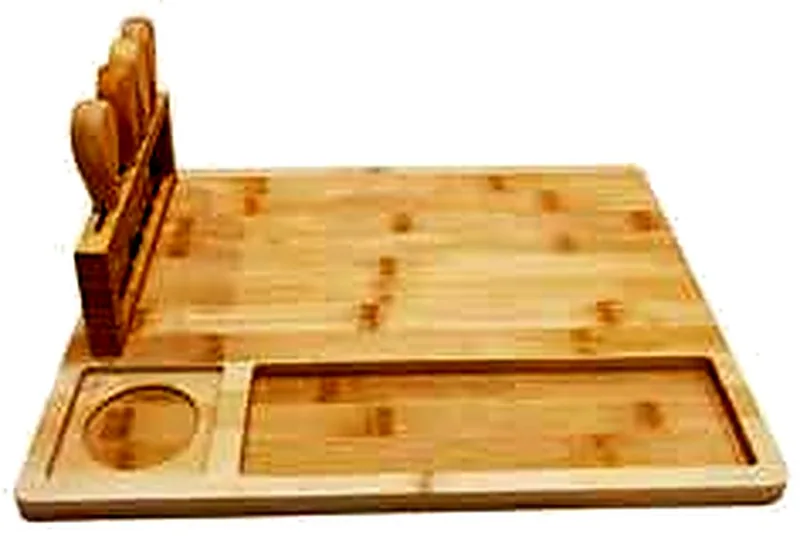
| Bamboo Chopping Board with Knife Rack (TVD-5767) | Board with knife slots, built-in cup holder, natural bamboo finish | Materials of the cup holder and slot lining; cleaning of the slots |
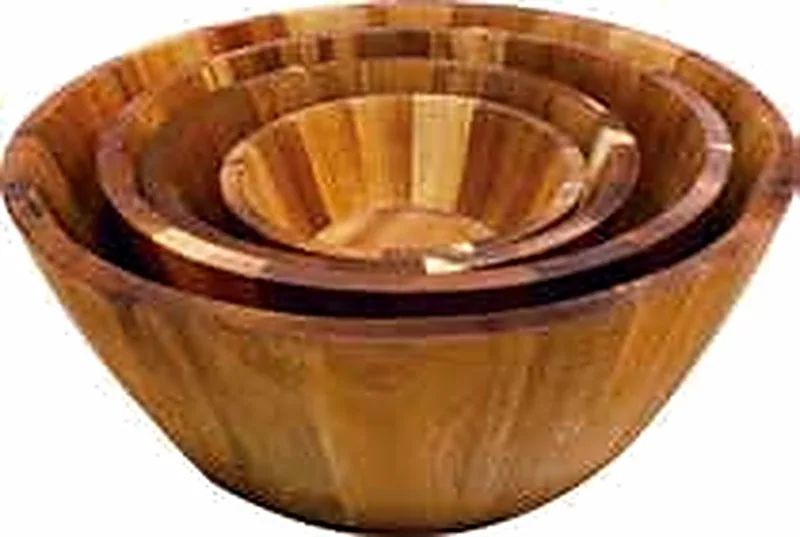
| Acacia Wood Bowl Set – Nested (TVD-5888) | Nested bowl set, natural acacia grain, several sizes | Coating or oil on the bowl interior; wood moisture on arrival |
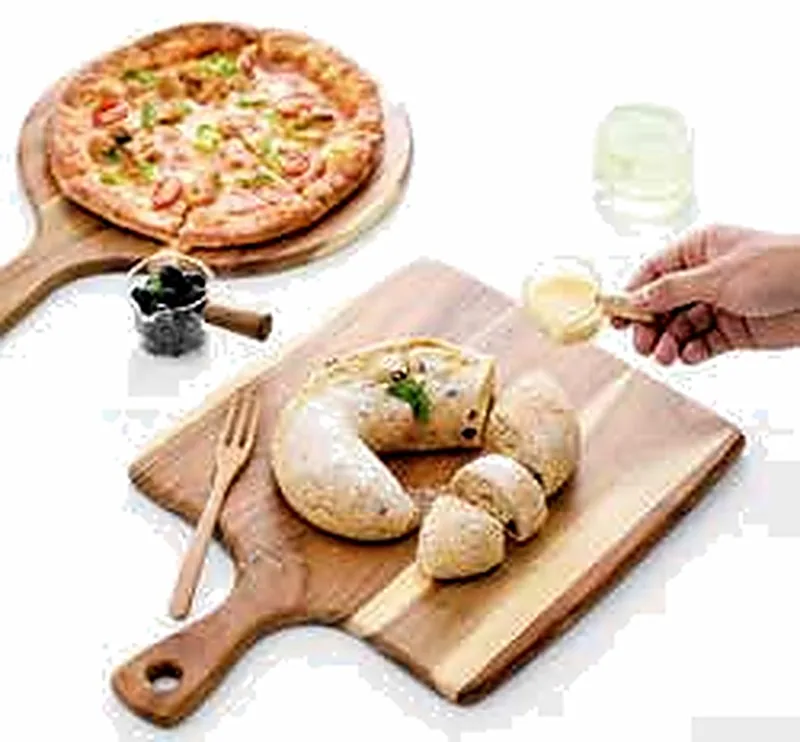
| Acacia Serving & Pizza Boards (TVD-5889) | Serving boards with handles, natural acacia grain, several shapes | Finish on the cutting surface if buyers will cut pizza on it |
Document checklist
| Document | Why you want it | Who issues it |
|---|---|---|
| Food-contact test report (migration or equivalent) | Shows the board or bowl and its finish do not release harmful substances into food | Accredited test laboratory, requested through the factory |
| Finish and glue statement | Identifies what binds and coats the bamboo or wood | Factory, ideally with the test report |
| Lead test result for any applied colour or decoration | Applies if any piece carries paint, print or a coloured coating | Test laboratory |
| Care and use instructions in English and French | Boards are hand wash only, and French is expected in Quebec | You or us, approved before print |
| Packaging artwork showing identity and net quantity in both languages | Required for prepackaged consumer goods | You, checked against our quote |
| Tariff classification and duty confirmation | Duty depends on classification and origin | Our customs broker |
Bamboo versus acacia: where the questions change
Bamboo boards are usually laminated from strips, so the glue is a first-order question and the report should name it. Acacia is solid wood, so the questions move to moisture and finish: how dry the wood is when it leaves the factory, and whether the interior of a bowl has an oil or a coating. Cold, dry heated interiors in winter on the Prairies and in central Canada can move solid wood, while coastal British Columbia and Atlantic Canada are humid, so acclimatise stock before it goes on display and avoid leaving boxes on a cold loading dock.
What happens if the paperwork is missing
A retailer's own compliance team may refuse to list a board without a report. A restaurant's public health inspector can question a surface that is not durable and easy to clean. If a product were found to be a hazard, the CCPSA allows recalls, which costs far more than a test report. Getting the documents early protects your margin.
Restaurants and shops need different things
A restaurant uses a board as a work surface, so inspectors and franchisors may ask for food-contact documentation and a surface that is easy to keep sanitary. Many ask for NSF/ANSI or equivalent sanitation certification on commercial food equipment; check what your health unit and landlord ask for, because a retail-grade board may not meet that request. A retailer cares about packaging, barcodes and care labels. We quote with both in mind.
Where to read more on each product
Each of these has its own page: see the bamboo cutting boards with handle guide and its certification and compliance notes, the tree and glove board guide, the apple-shaped board guide and the nested acacia bowl guide.
Ordering and duty
Quotes cover price for the quantity, specification, certification status and documents, packing, lead time and delivered cost to your address. Payment is 30% deposit and 70% before release, with samples available on most items. Provincial sales tax varies, so read the sales tax by province guide, then see how ordering works and send a quote request. Delivery runs across Canada; start at the Canada delivery hub.