Certification guide ·
Bamboo Serving Trays in Canada: Compliance and Import Rules for Eight Trays
No electrical mark applies to a bamboo tray, but food-contact, lead and labelling rules do. Here is what each of eight trays raises and the documents to request.
Serving trays are among the easiest products to bring into Canada from a certification point of view, because none of the eight trays below is powered or gas-fired. That does not make them paperwork-free. They carry food and drink, several have metal handles, and the finish ranges from natural bamboo to carbonised and dark-wood looks. This guide walks through the rules that apply and which tray raises which question. We do not hold a certification document for any of these trays at present. We confirm certification status and supply the documents with the quote before you order.
The eight trays covered
| Tray | Listed features | Question it raises |
|---|---|---|
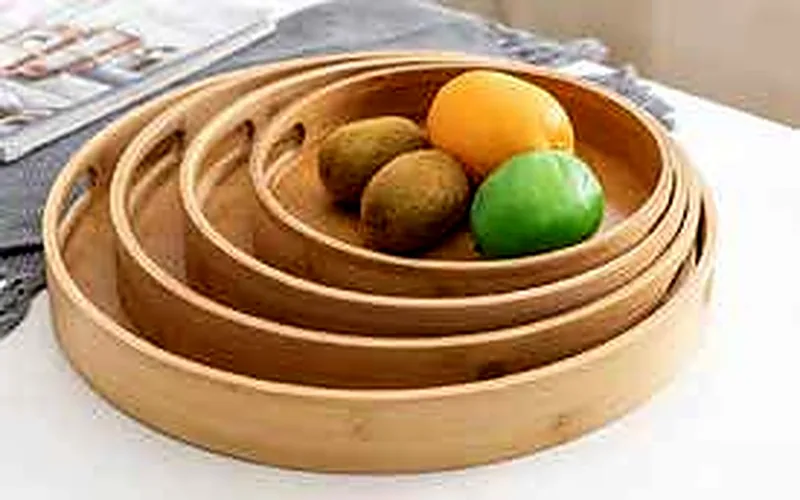
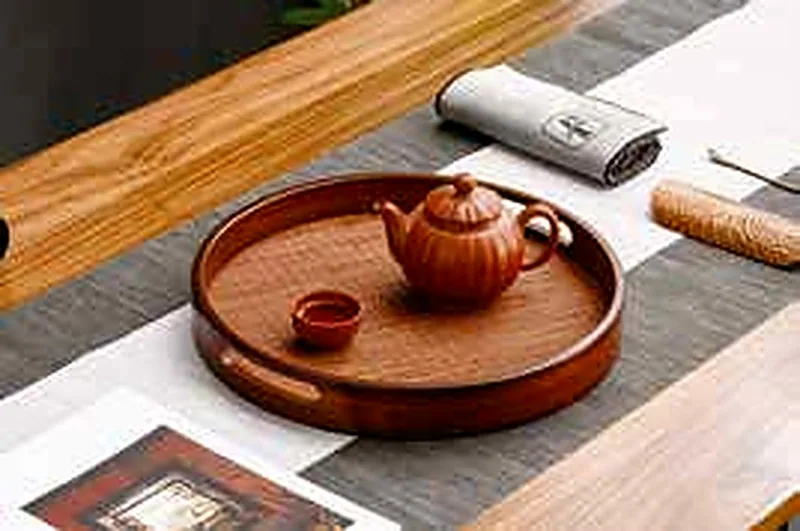
| Nested Round Bamboo Trays – Shallow (TVD-5711) | Set of nested round trays; natural bamboo; serve fruit or snacks | Food-contact report for bamboo and finish; stack packing |
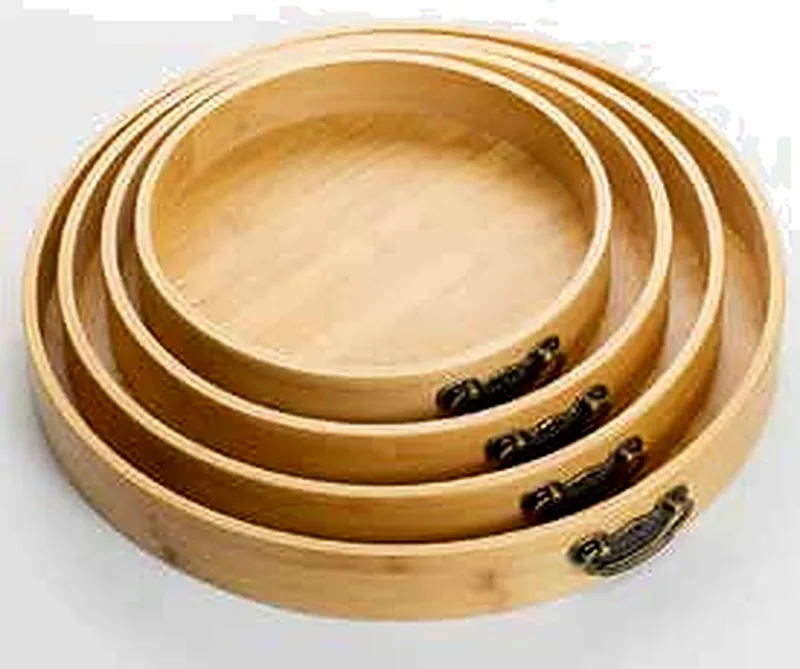
| Nested Round Bamboo Trays – Handles (TVD-5713) | Four nested sizes; metal carry handles; natural bamboo | Handle metal, fixings and finish; load advice |
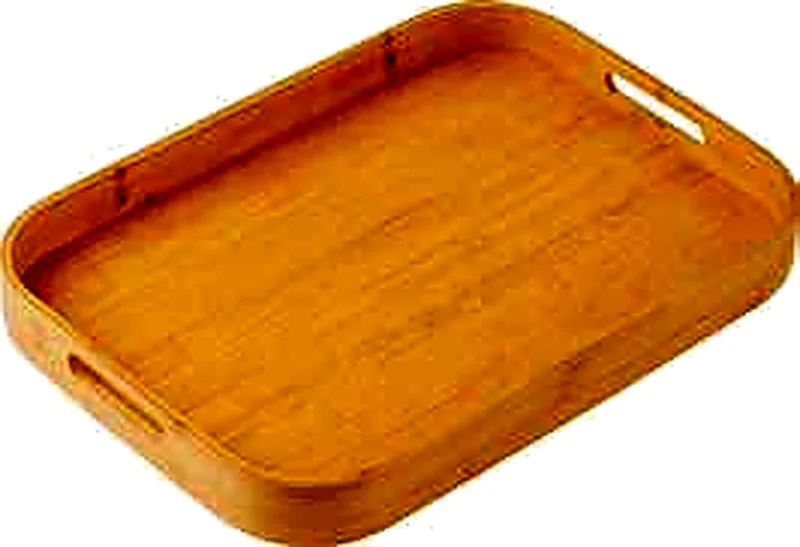
| Moulded Bamboo Serving Tray (TVD-5720) | Curved moulded bamboo; cut-out handles; natural finish | Moulding resin or glue, since the curve is formed under pressure |
| Carbonised Bamboo Tray – Rectangular (TVD-5721) | Carbonised brown bamboo; cut-out handles; round and rectangular shapes | How the brown colour is achieved; finish and glue reports |
| Carbonised Bamboo Tray – Round (TVD-5722) | Carbonised brown bamboo; round tea-serving size; smooth moulded finish | Surface coating over a smooth moulded finish |
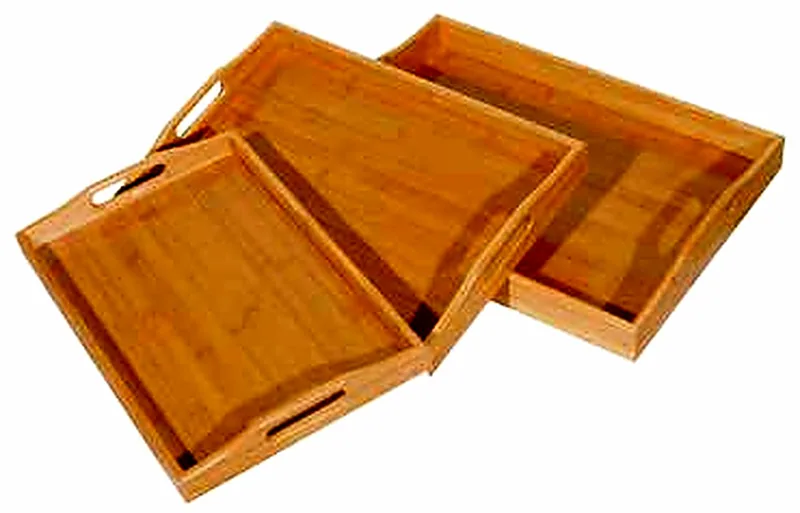
| Nested Bamboo Serving Trays – Handles (TVD-5756) | Set of nested trays; cut-out handles; natural finish | Same bamboo evidence as other natural trays; set count |
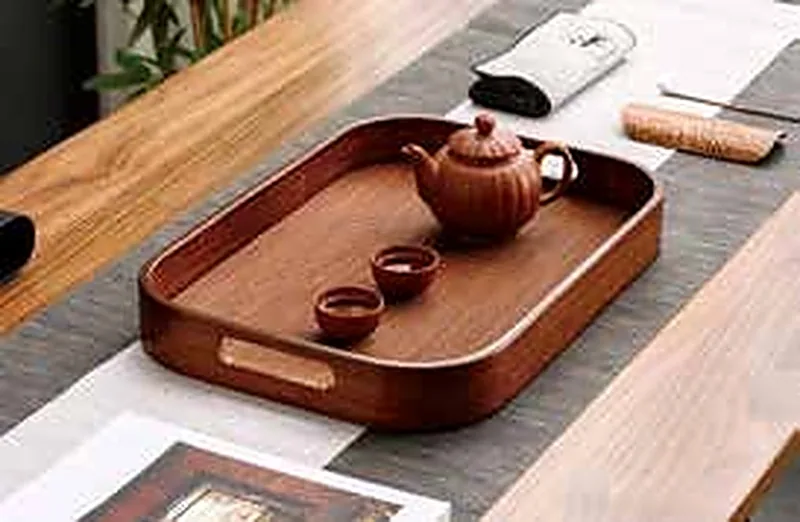
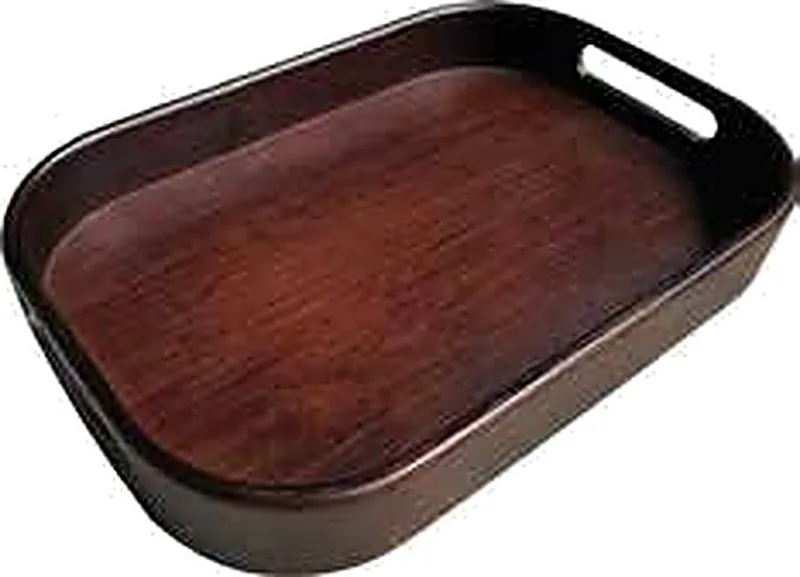
| Dark Wood Tray – Cut-Out Handles (TVD-5890) | Dark carbonised finish; cut-out handles; deep serving tray | Wood species and finish; food-contact evidence for a dark finish |
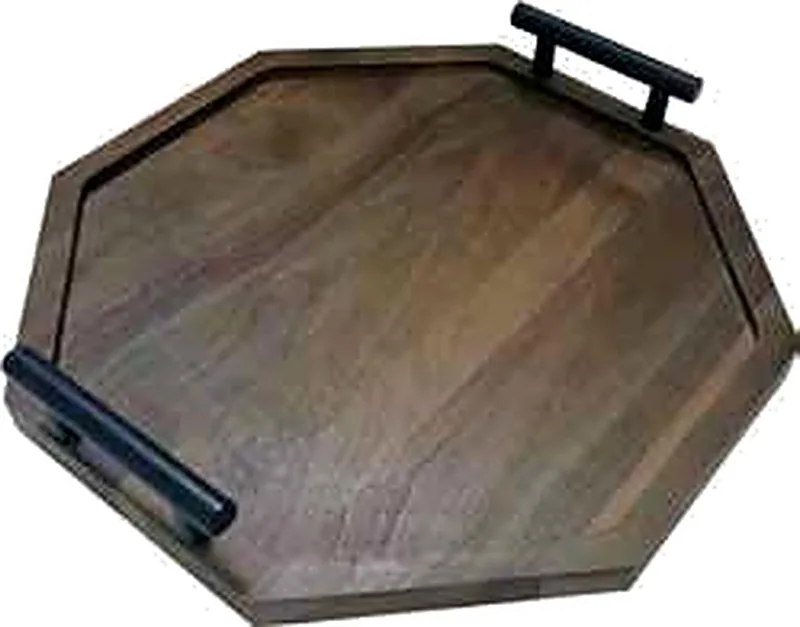
| Octagonal Wood Tray – Metal Handles (TVD-5892) | Octagonal shape; black metal handles; dark wood finish | Black handle coating; wood and finish reports |
These are part of the wider Bamboo Serving Trays product line, which also includes trays with woven and glass inserts that have their own guides. You can read about the individual trays in our guides to the nested round trays, moulded bamboo tray, carbonised trays, nested trays with handles, dark wood tray and octagonal wood tray.
Food and drink contact: the core rule
The Food and Drugs Act prohibits selling food in or with materials that may make it harmful. Health Canada does not pre-approve kitchenware, though it offers voluntary Letters of No Objection for food packaging materials, which is a different product class from a serving tray. In practice a Canadian buyer asks the factory for food-contact test reports, and for bamboo and wood boards specifically, for tests on the finishes and glues. A bamboo tray is a laminate: strips of bamboo are joined with adhesive and often finished with a lacquer or oil, so it is the adhesive and finish that the report should address.
The Consumer Products Containing Lead Regulations set lead limits that include kitchen utensils. Coloured, black or metallic parts, such as black handles or a dark surface coating, are where a lead report is most useful. The Canada Consumer Product Safety Act sits over everything: it prohibits consumer products that are a danger to health or safety, requires incident reporting and allows recalls, with Health Canada enforcing it.
How the differences between trays change the paperwork
- Natural finish trays (5711 (TVD-5711), 5756 (TVD-5756)) have the simplest file: bamboo, glue and any clear finish.
- Carbonised and dark trays (5721 (TVD-5721), 5722 (TVD-5722), 5890 (TVD-5890), 5892 (TVD-5892)) have a darker surface. Ask whether the colour comes from heat treatment or from a stain or coating, because a coating is a separate item to test.
- Moulded trays (5720 (TVD-5720)) are bent into shape, so ask how the curved form is held together and whether the bonding resin was tested for food contact.
- Metal handles (5713 (TVD-5713), 5892 (TVD-5892)) add a component. Ask for the metal type, the coating on a black handle and how the fixings sit relative to the food side.
- Cut-out handles (5720 (TVD-5720), 5721 (TVD-5721), 5756 (TVD-5756), 5890 (TVD-5890)) have no added parts; the question is edge finish and sanding.
Our listing for the carbonised pair says brown bamboo; whether colour is applied or heat-formed is confirmed on the quote, and we do not assume either.
Document checklist
| Document | Why you ask for it | Who issues it |
|---|---|---|
| Food-contact test report | Shows bamboo or wood, finish and glue were tested for use with food | Independent laboratory via the factory |
| Lead and heavy-metal report | Covers coloured, black or metallic parts and coatings | Independent laboratory |
| Material declaration | Species or bamboo type, finish, glue, metal and fixings | Factory, confirmed on our written quote |
| Load and handle statement | Safe carrying capacity for handled trays | Factory |
| Bilingual pack artwork | Product identity, net quantity and dealer details | You or us, approved before printing |
| Customs classification | Wood and bamboo goods are classified by material and origin, which sets duty | Our customs broker |
CE, CSA and UL: which marks matter
Canada does not recognise the European CE mark as proof of compliance for consumer products. Electrical marks (CSA, cUL, cETL) apply to powered equipment and are not relevant to these trays; see CSA, cUL and cETL marks if you also import lit or powered items. For trays, the evidence is test reports and declarations from an independent laboratory.
Provincial and retailer differences
The Consumer Packaging and Labelling Act requires prepackaged consumer products to carry bilingual product identity and net quantity and the dealer's name and place of business. In Quebec, the Charter of the French language also expects French labels, instructions and warranty documents. Hotel and restaurant buyers are accountable to their provincial or municipal food premises rules, and some franchisors ask for sanitation certification on commercial food equipment; whether that applies to a serving tray is a question for your health unit and your franchisor. Rules change, so confirm with the authority, your inspector or your customs broker. This is general information, not legal advice.
What happens when a document is missing
A national retailer may decline to list the tray, a hotel group may refuse to approve it for guest rooms, and a marketplace may ask for evidence after a complaint. A product found to be harmful can be recalled under the CCPSA. Gathering reports before the order is far simpler than after the container lands.
How we handle it
For each tray we ask the factory for a material declaration, food-contact and lead reports and handle-load information, tell you what is available and what needs lab testing, and put it all on the written quote with packing, lead time and delivered cost. Our customs broker confirms classification before we quote; the sales tax by province guide explains how provincial taxes apply to the delivered goods and the landed cost calculator helps with budgeting. Every order is quoted in writing, samples are available on most items, trial minimums are low on many lines, products from several factories can share one container, and payment is 30% deposit with 70% before release. See how ordering works and request a quote. The bamboo serving trays wholesale guide and the home kitchen and tableware across Canada cover the buying side.