Product guide ·
Five Striped Flexible Stone Panels, One Size: Choosing the Right Line
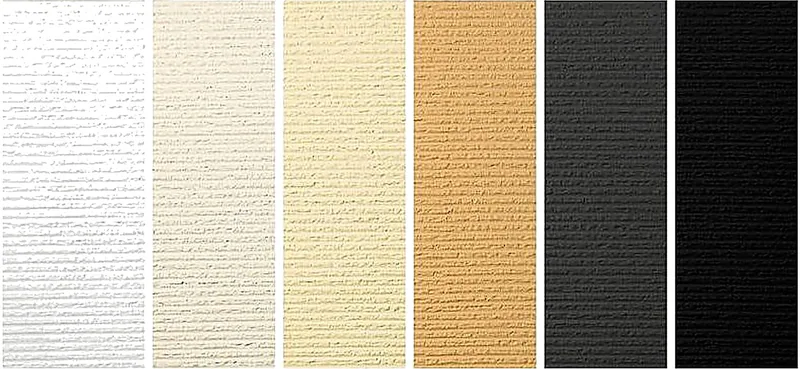
Bengaline, fine stripe, slim concave-convex, broad band and serrated: five flexible stone panels share a thickness range and a sheet size but not a rhythm. Here is how to choose the stripe that suits your wall.
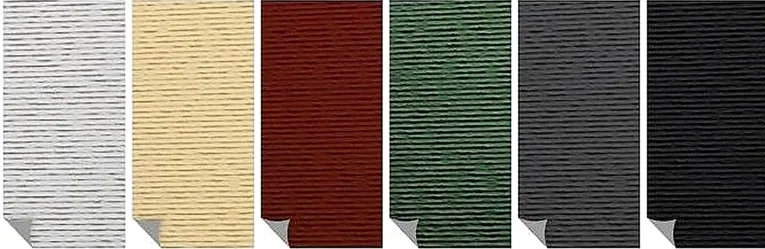
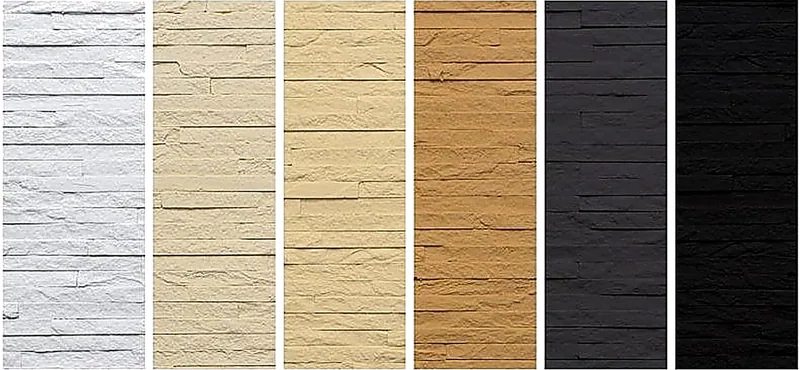
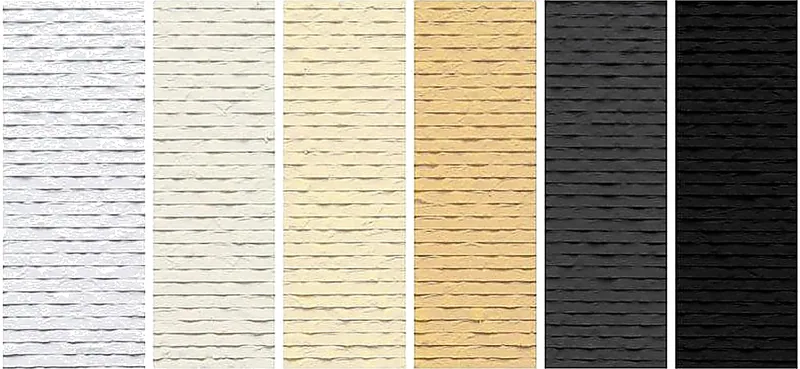
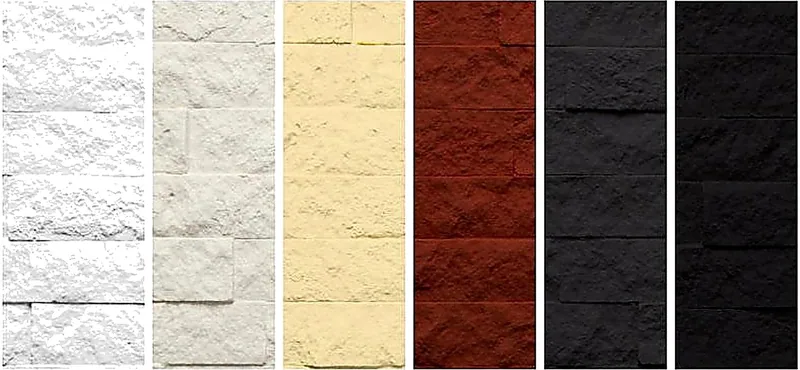
When you put five panels with the same thickness and the same sheet size on one table, the only thing left to compare is the pattern, and with line patterns the pattern is nearly everything. Our listing gives all five of these a thickness of 3 to 5 mm and a sheet of 1200 x 600 mm, described as flexible, lightweight wall cladding. The differences are in the way each one draws its lines on a wall: Bengaline-Texture Flexible Stone (TVD-1324), Fine Striped Stone Flexible Panel (TVD-1329), Slim Concave-Convex Flexible Stone (TVD-1333), Broad Banded Flexible Stone (TVD-1338) and Serrated-Pattern Flexible Stone (TVD-1346).
What they have in common
Everything in the listing that can be compared matches: thickness, size, and the flexible lightweight cladding description. That means the quote can treat them as one family. Substrate preparation, adhesive choice, the cutting method and the freight packing will be the same questions for all five. The listing does not state the core material, the weight per sheet or the exposure rating, so those details are confirmed on your written quote, not assumed from the family resemblance.
Reading the names
Names in a catalogue are only hints, and we do not want to over-read them. Even so, the words give a reasonable first guide to scale. "Fine striped" and "slim" suggest narrow lines; "broad banded" suggests wide bands; "serrated" suggests an edge with a toothed rhythm; "bengaline" is a fabric term for a ribbed weave, so expect a soft, horizontal ribbing. Treat this as a reason to request samples, not as a description of what you will receive.
How scale changes a room
- Narrow lines (TVD-1329, TVD-1333) read as a texture from across the room and as lines only up close. They suit corridors and small rooms where a bold stripe would feel loud.
- Broad bands (TVD-1338) become part of the architecture. On a tall reception wall they make an obvious statement, and the direction in which you run them counts.
- Ribbed or serrated surfaces (TVD-1324, TVD-1346) catch light at an angle, so a wash of light from above or the side makes them look deeper than lighting from the front.
Direction matters as much as pattern. Vertical lines raise the apparent ceiling height; horizontal lines widen a narrow room. A designer will choose, and the sheet size of 1200 x 600 mm will let you turn the panel either way, so ask whether the pattern is reversible or runs only in one direction.
Who each one suits
Retail fit-out firms tend to pick the ribbed bengaline look for a display wall behind a till, where a soft texture hides the odd scuff. Restaurant designers might choose the broad band for a booth back. Renovators in condominium lobbies often want the fine stripe for a calm backdrop. Builders working on a feature wall in a show home may use the serrated panel for contrast with flat painted surfaces. These are patterns of use, not guarantees, so confirm with samples under your actual lighting.
Mixing them in one order
Because the five share size and thickness, a single project can use two or three together: a broad band on the main wall and a fine stripe on the return. They will join cleanly only if the joints, thickness and finishing details are planned, so tell us the combination at the quote stage. Colour and tone can differ between patterns, so approve the pairing on samples side by side. The rest of the family is in the flexible stone line; for comparison, Fine Matte Sand Flexible Stone (TVD-1327) offers a texture without direction.
Specifying checklist
- Choose the pattern and its running direction, and ask if the sheet repeats.
- Confirm the exact thickness within the 3 to 5 mm range and any tolerance.
- Ask for the recommended adhesive and the substrate it expects.
- Ask for fire and flame-spread data for the exact panel, since interior finishes in Canada face limits that vary by room use.
- State whether it is interior only, or whether it faces weather, and ask for the rating in writing.
- Request pack size, weight and the packing method.
Canadian use notes
Heated buildings in the Prairies and central Canada run very dry in winter, which can show up as small movements at joints on any cladding. Coastal and Atlantic buildings have the opposite concern, humidity. An installer who allows panels to adjust to the room before fixing saves callbacks. A lightweight sheet is easy to carry up stairs, but carton edges are still vulnerable in transit, so inspect on delivery. Our Canada delivery hub explains how freight reaches the provinces.
Compliance in brief
Our listings name no certificate for these five, so none is claimed. Flame-spread limits, adhesive suitability and any composite wood question are covered in our flexible stone compliance guide, and we send the relevant documents with the quote, before the deposit.
Ordering
Ask for a sample of each pattern. The sample cost is normally credited to the first order. Quotes are written, covering quantity, specification, documents, packing, lead time and delivery to your site, and many lines allow trial quantities. A 30% deposit starts production and 70% is due before release. See how ordering works and send details through the quote request.