Certification guide ·
PU Faux Stone Wall Panels in Canada: Certification and Import Rules
Lightweight PU stone panels sit between decoration and building envelope. Here is which Canadian rules matter, how the products in the line differ, and what we confirm before quoting.
People call them stone panels, brick panels, rock panels or feature-wall cladding, and for a regulator the name hardly matters. What counts is where the panel goes, what it is made of and what evidence follows it across the border. Our PU stone line runs from small brick-look panels to deep-relief exterior tiles, hollow decorative blocks and a bendable soft stone sheet. We hold no certificate on file for any of them. This guide explains the rules you should ask about, product by product.
Why the material changes the questions
Polyurethane is a plastic foam. That is the reason these panels weigh so little, and it is also the reason fire officials look at them with more care than they give a mineral board. Nothing in our product listing describes the fire performance of any panel in this line, so we claim nothing. What we can tell you is the question to put to the factory: what is the flame-spread result, under which test, on which thickness?
Interior or exterior: the first fork
Our line description says interior and exterior feature walls. Those two uses open different rule sets. Inside a building, the National Building Code of Canada limits the flame-spread rating of interior wall and ceiling finishes, tested to CAN/ULC-S102, and the limit depends on the building use and the location of the wall, with exits and corridors strictest. On an outside wall, the wall assembly and its fire behaviour become a design question for the architect or engineer, and the building official has the final word. The code is adopted with changes in each province; Quebec, Ontario, British Columbia and Alberta have their own codes.
We say plainly: we do not claim that any panel in this line is non-combustible. Requirements that refer to non-combustible construction point to a separate test, CAN/ULC-S114, and a PU panel should not be offered for that purpose without a report that proves it.
How the products in the line differ
| Product | What our listing says | Extra question it raises |
|---|---|---|
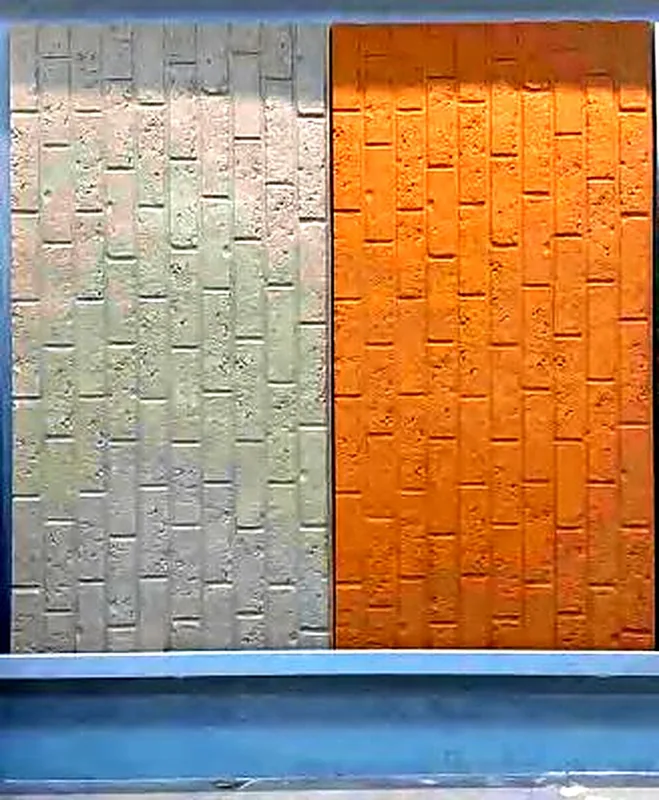
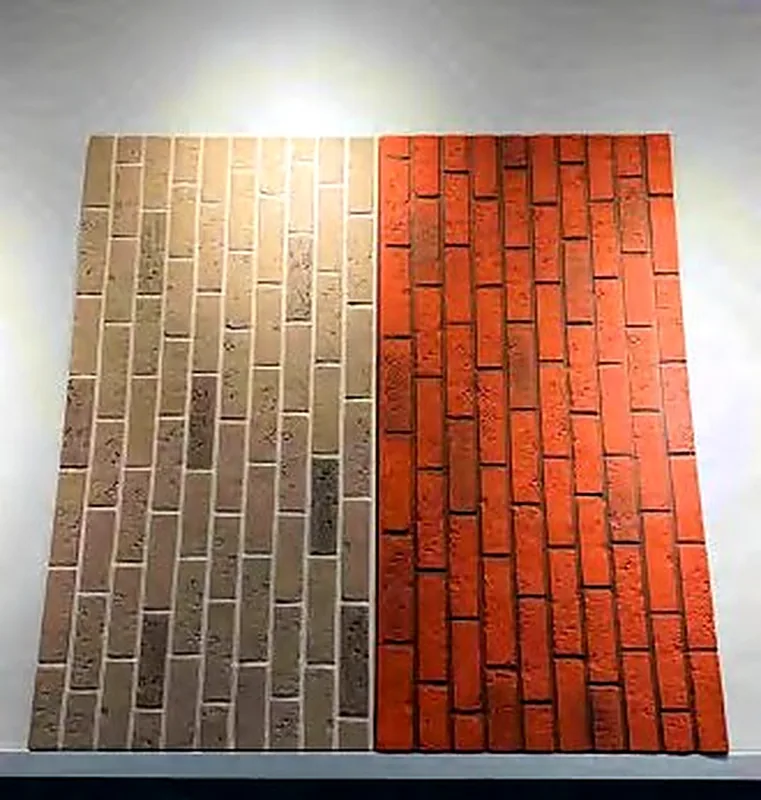
| Cultural Brick PU Wall Panel (TVD-1381) | 1200 x 600 mm, brick-look relief | Interior or exterior evidence |
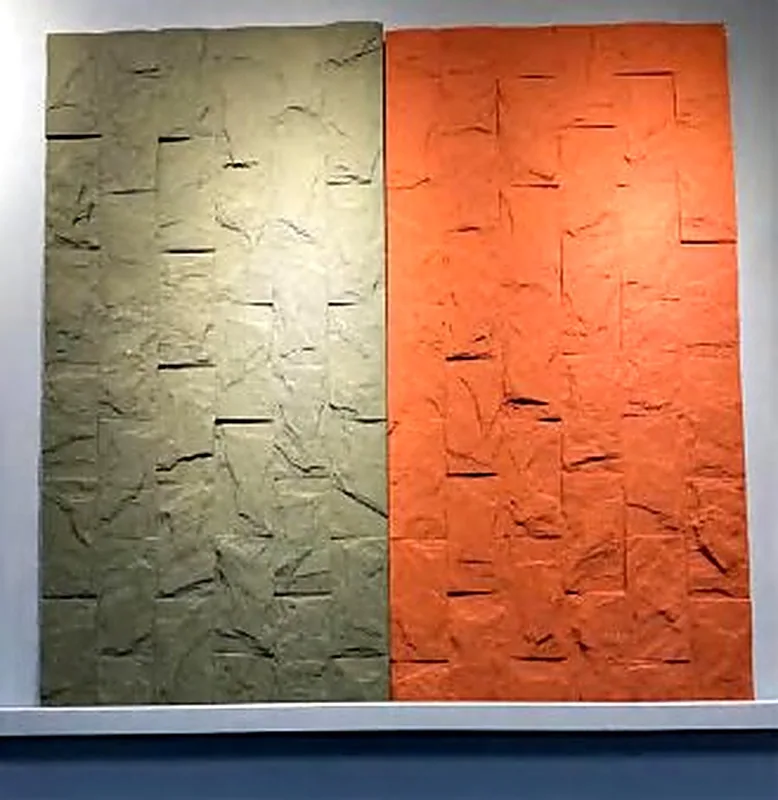
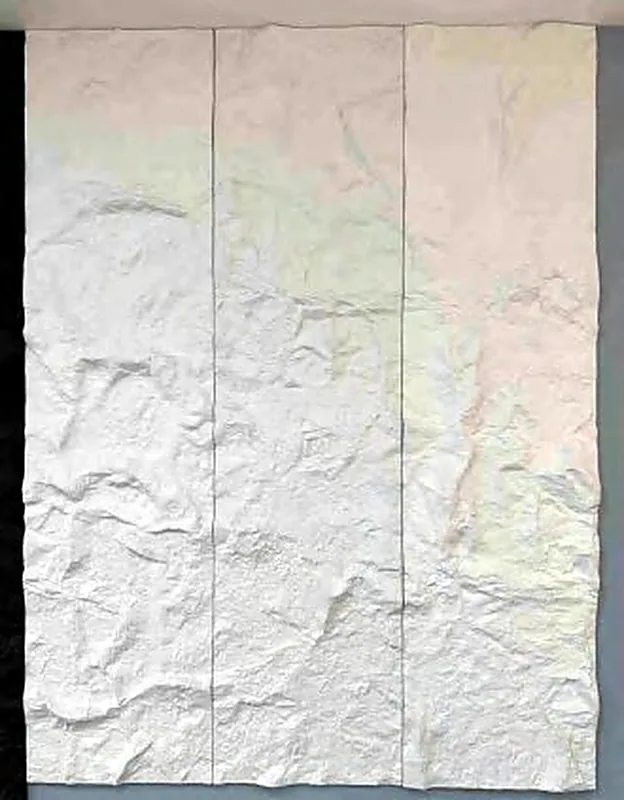
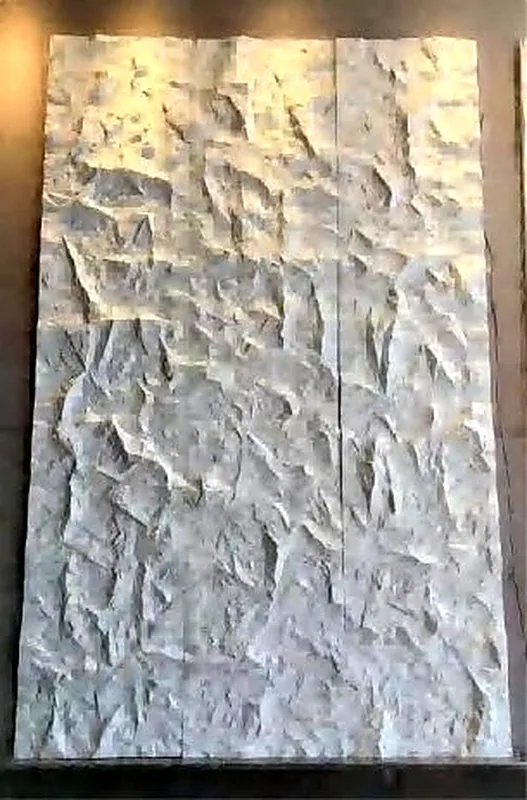
| 3 cm Exterior Tile PU Panel (TVD-1383) | 1500 x 750 x 30 mm, large-format tile-look relief | Exterior fixing and fire behaviour |
| 5 cm Exterior Tile PU Panel (TVD-1384) | 1500 x 750 x 50 mm, deep-relief face | Test report at 50 mm, not 30 mm |
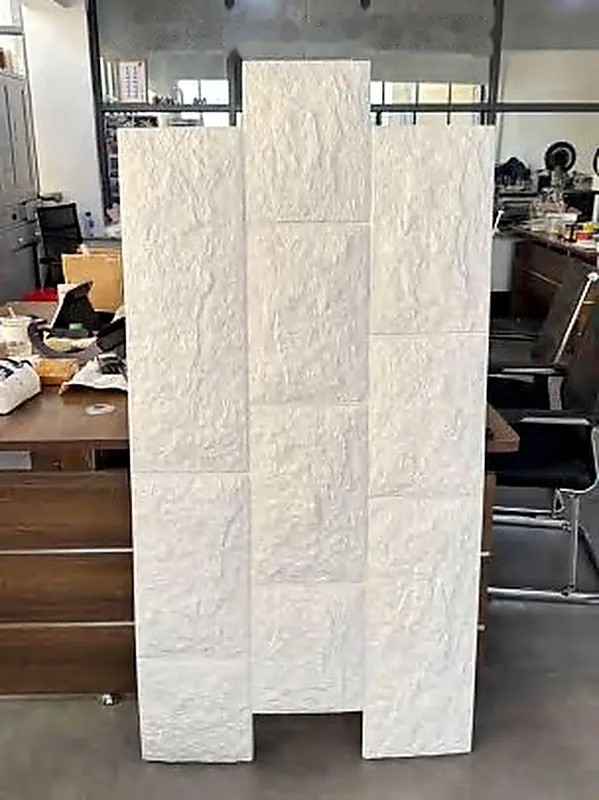
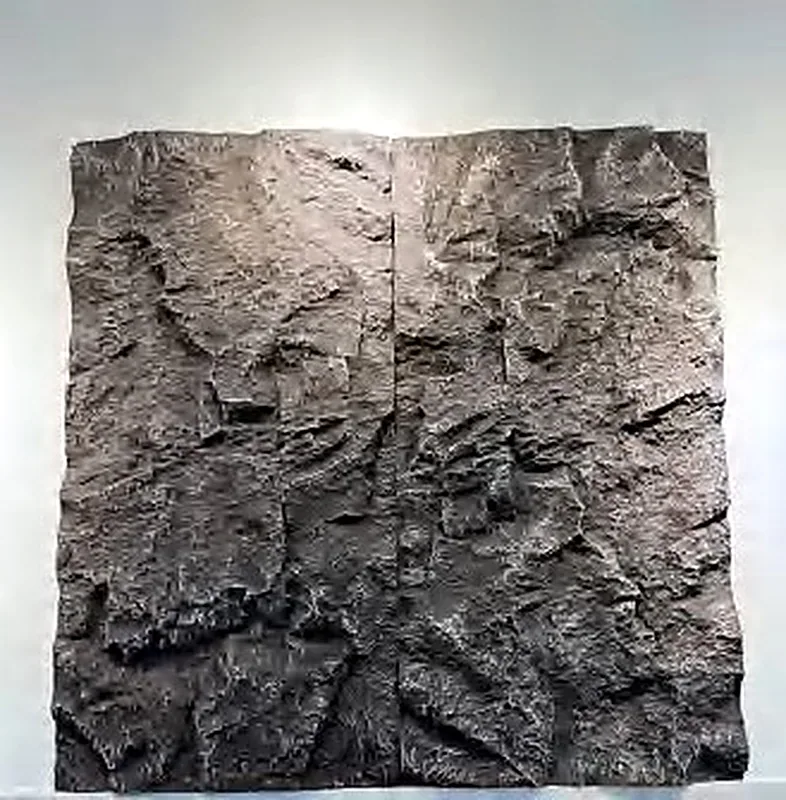
| Continuous-Grain Broken Stone Panel (TVD-1385) | Thickness 20-100 mm, film-laminated and sprayed finish | A report for each thickness you order |
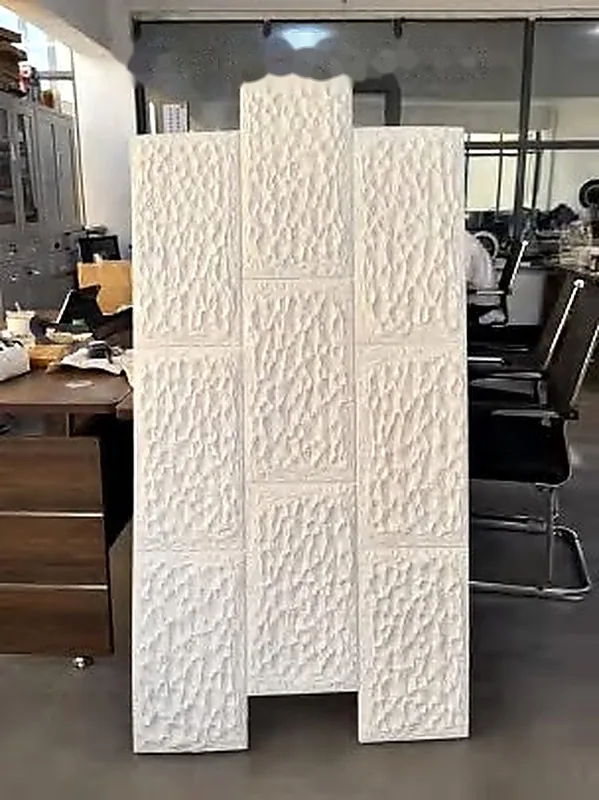
| PU Nine-Palace Grid Block Panel (TVD-1394) | Hollow block, 600 x 600 x 60 mm | Hollow cavity and its fixing |
| Flexible PU Soft Stone - Plain Colours (TVD-1399) | Bendable sheets with no cracks shown after bending | Test data for the thin flexible material |
The point of the table is that fire evidence is specific. A report written for a 30 mm panel does not automatically cover a 50 mm one, and a rigid panel's test does not stand in for a flexible sheet. The line also includes TVD-1382, TVD-1386, TVD-1387, TVD-1388, TVD-1389, TVD-1390, TVD-1391, TVD-1392, TVD-1393, TVD-1395, TVD-1396, TVD-1397 and TVD-1398, and each is checked on its own.
The finish layer
Several products carry a film-laminated and sprayed finish, and others have a colour card of 25 colours. A coating on a panel raises its own questions in Canada. The Surface Coating Materials Regulations set limits for lead and mercury in paints and coatings on furniture and on children's products, which would matter if a panel were used in children's rooms or on furniture. It is sensible to ask the factory for the coating details at the same time as the fire report.
Composite wood, if any
These are PU products, so a wood-based core is not expected, but our listing does not describe the core in detail. If any version has a hardwood plywood, particleboard or MDF component, Canada's formaldehyde emission rules for composite wood products apply: limits, a third-party certifier and labelling. We ask the factory to state the construction in writing and request a certificate where the rule applies.
Importing: duty, tax and language
Duty follows the tariff classification and the country of origin, and GST, HST, PST or QST apply by delivery province; the sales tax guide explains the differences. Our customs broker confirms the classification before we quote a delivered cost. For Quebec, product labels, manuals and warranty documents must be available in French, and prepackaged consumer goods follow federal bilingual labelling rules. Ask the landed cost calculator for an early estimate while you shop.
Documents to collect
| Document | Why | Who issues it |
|---|---|---|
| Flame-spread test report for the exact thickness | Compare against the code limit for the wall's location | Accredited laboratory |
| Interior and exterior use statement | Settles which rule set applies | Manufacturer, with test data |
| Construction and coating details | Reveals composite wood or coating questions | Manufacturer |
| Installation instructions | Fixings, adhesives, joints and movement gaps | Manufacturer |
| Tariff classification note | Fixes duties and taxes | Our customs broker |
| French-language documents | Required for Quebec | Manufacturer, translated |
What a missing document can cost you
If a building official cannot match the panel to a test report, the wall may have to be opened and redone. A retailer can refuse to stock the line, and an insurer may ask questions about plastic cladding on a commercial building. Weighed against those risks, a report requested up front is cheap insurance.
How we work with this line
Send your project to the quote request form: use, location, province and the thickness you need. We confirm certification status and the documents available for each code and put them with the written quote, before you order. See how ordering works for the 30% and 70% payment steps. For buying guides, start with the brick-look pair and the exterior tile pair, or open the line page. This is general information and not legal advice; rules change, so confirm with your building official, inspector or customs broker.