Certification guide ·
When Flexible Stone Might Contain Wood: Compliance for TVD-1323, 1344, 1370, 1371 and 1373
Five of our flexible stone panels need a question the rest do not: is there a wood-based layer anywhere in the sheet? If there is, Canadian emission and labelling rules apply. Here is how to find out and what to collect.
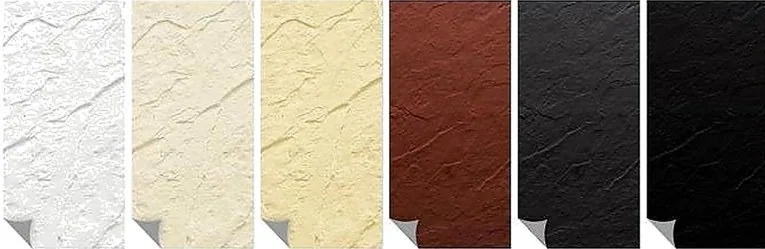
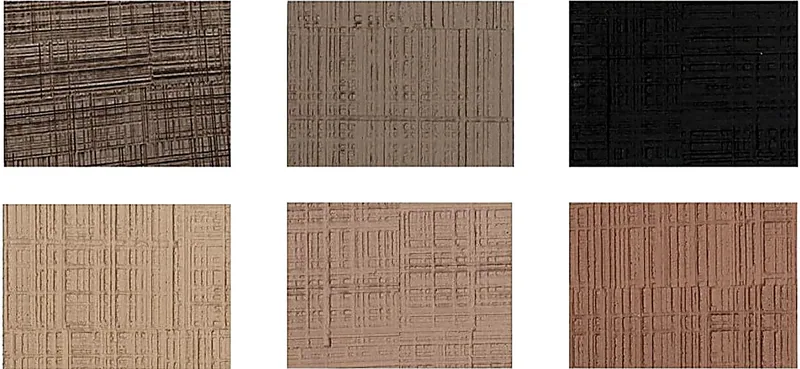
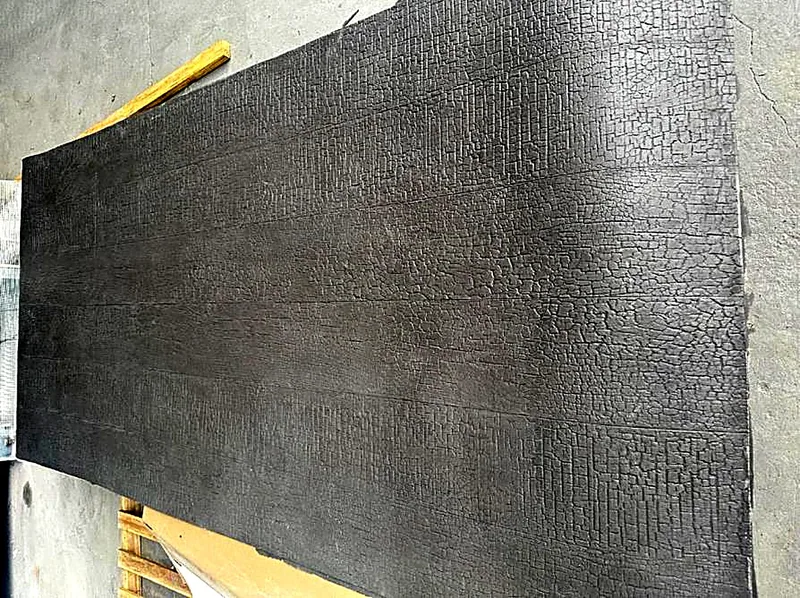
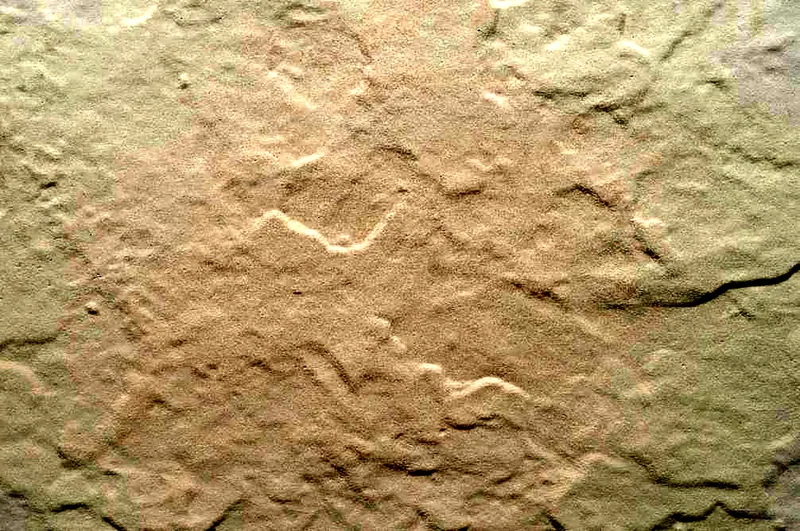
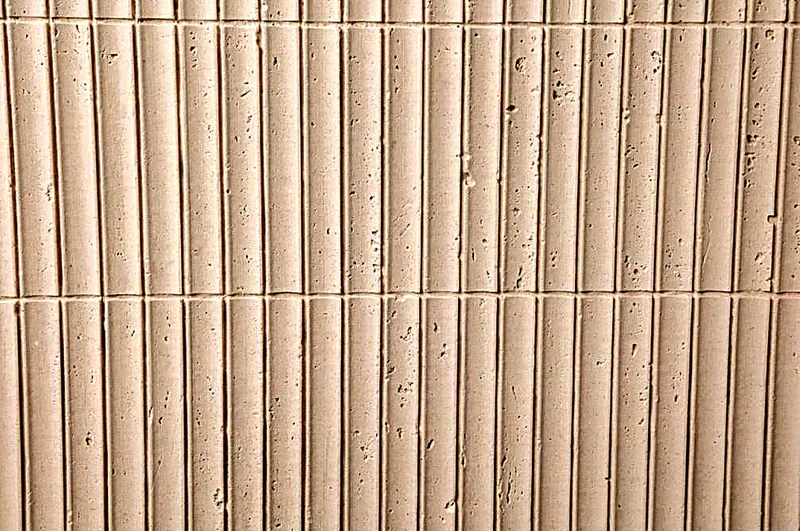
Most of our flexible stone panels raise the same few compliance questions, which the line-wide guide answers. This post is the narrower one. Five panels in the line need an extra check, because a Canadian rule on composite wood products may come into play. The five are Slate-Look Flexible Stone (TVD-1323), Wood-Grain and Sawn-Moss Flexible Stone (TVD-1344), Leather-Grain Flexible Stone - Slate (TVD-1370), Smooth-Slate Flexible Stone - Cream (TVD-1371) and Vertical-Slat Flexible Stone - Tan (TVD-1373).
Why these five get a second look
Our listings describe all five as flexible, lightweight wall cladding. They do not say what is under the surface. Some decorative panels, especially ones with a slatted or wood-grain look, are built on or with a wood-based board. If the version you order has one, the Canadian formaldehyde emissions rules for composite wood products apply to that layer. If it does not, the rule does not apply. We would rather ask than assume, so asking the maker is the first step in every quote for these codes.
What the composite wood rule requires
Hardwood plywood, particleboard, MDF and laminated products must meet emission limits, be certified by an approved third-party certifier, and be labelled. The paperwork is aligned with the US TSCA Title VI one, so a certificate from a recognised certifier for one is usually what a buyer is shown for both. A retailer, developer or inspector may ask to see it, and the absence of a label is itself a flag. This applies to wood-based cores. It does not make the finished stone-effect surface a wood product.
The panels side by side
| Code | Listing detail | Why it sits in this group |
|---|---|---|
| TVD-1323 | 3.5 mm, 1200x600 and 1200x3000 mm | Long sheet, so ask about core and bend limits |
| TVD-1344 | 3 to 8 mm, 1140x3060 mm | Wood-grain look and a thick range: confirm what the body is |
| TVD-1370 | 2.5 mm, 1200x3000 mm | Very thin and long: ask how the surface is supported |
| TVD-1371 | 3 to 5 mm, 590x1190 mm | Small tile format: check whether a backing is used |
| TVD-1373 | 3 to 5 mm, 600x1200 mm | Slat pattern: ask for the structure behind the face |
The right-hand column is a list of questions, not a statement that any of these panels contain wood.
The wider checklist still applies
- Flame spread for interior finishes under the National Building Code as adopted by your province. Designers usually want CAN/ULC-S102 results.
- Adhesive and substrate suitability, with the adhesive's own data sheet.
- Exterior or interior rating, if the panel is near weather. The listings do not give one.
- For floors or stair risers, a different test applies, so say so at the start.
- Installation guidance including the minimum radius for curved work.
Provinces and buyers
Quebec buyers should expect French-language documents for instructions and warranty. Ontario, Quebec, British Columbia and Alberta each have a building code of their own, so the flame-spread table you need may differ. Large retail chains often ask for composite wood proof even for products where the core is uncertain. We would encourage a builder to ask at specification stage, long before the carton is on the loading dock. Rules change, so confirm with your inspector.
What we do on the quote
For each of the five codes we ask the maker whether any wood-based layer exists, request the certificate if it does, and put the answer on the written quote. If a certificate is missing for a version that needs it, we tell you and suggest another product, such as one of the panels in the Bengaline-Texture family or Fine Matte Sand, whose compliance questions are simpler. No certificate is claimed for any of the five in our listings.
A quick way to triage the five
If you only need a stone-effect wall in a dry interior room and have no strong attachment to a particular pattern, ask us which of the five has the simplest answer on structure. If the look matters more, as with the wood-grain and slat looks, accept that one extra document may be needed and ask for it early. For long sheets, such as the 3 m ones, also confirm how they are rolled or crated, because a long thin sheet that is kinked in transit cannot be repaired on site. Keep a retained sample from every batch.
Questions to put to your installer
An installer who has worked with thin cladding will have opinions about substrate flatness, primer, open time and how to treat joints. Share the maker's guidance with them before the order is confirmed, and ask whether they have used a similar sheet on a curved wall. Their answers often show which panel in the group is practical on your particular job, and they are worth more than any brochure.
Tax, import and ordering
Duties follow classification and origin, confirmed by our broker before we quote a delivered cost, and the sales tax guide covers the provincial side. Deposit is 30% on acceptance, with 70% before release, and samples can be requested first; their cost is usually credited to the first order. For electrical marks on anything you light behind the cladding, see the certification marks guide. Begin with the quote request.