Certification guide ·
Acoustic Wall Panels in Canada: Flame Spread, Formaldehyde and the Documents to Ask For
Acoustic panels are finishes, so they face building code limits on fire performance, plus composite wood emission rules. Here is what to ask before you specify them for a Canadian project.
An acoustic panel looks like decoration, behaves like a sound absorber and is regulated like a building finish. That last role surprises buyers. When a panel is fixed to an interior wall or ceiling, the building code treats it as a finish and limits its flame-spread rating. When the panel has a core of MDF or a similar board, there is a second layer of rules on formaldehyde emissions. This guide covers both, product line by product line, for the Acoustic Wall Panels line.
A short statement of where we stand: of the products named below, one has a fire document on file, and we explain it in its own section. For all the others, no certificate is on file with us, so we do not say any of them is certified, compliant or approved. We confirm the status of each and supply the documents with your written quote, before you order. Rules change; confirm requirements with your designer, building official and customs broker. This is not legal advice.
Rule one: flame spread on interior finishes
The National Building Code of Canada, adopted with changes by each province (Quebec, Ontario, British Columbia and Alberta have their own codes), limits the flame-spread rating of interior wall and ceiling finishes. The test is CAN/ULC-S102. The limit depends on the use of the building and where the finish sits; exits and corridors are the strictest places, while a feature wall in a meeting room may be treated differently. An ASTM E84 report is the equivalent US test. Canadian designers and building officials usually want CAN/ULC-S102 results, but some will review an E84 report case by case, so ask the person who signs off your project which they accept.
Two practical points follow. First, a fire test applies to the product as tested, including its thickness, backing and mounting. A report for one slat panel does not automatically cover another. Second, a fire report is not the same as the claim of non-combustibility. Non-combustible construction refers to a different test, CAN/ULC-S114, and we do not claim any panel in this line is non-combustible.
Rule two: formaldehyde in composite wood
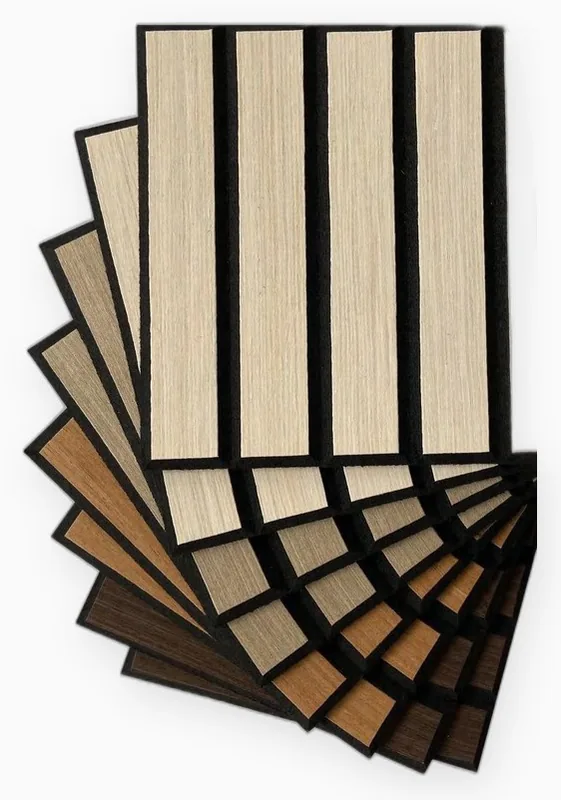
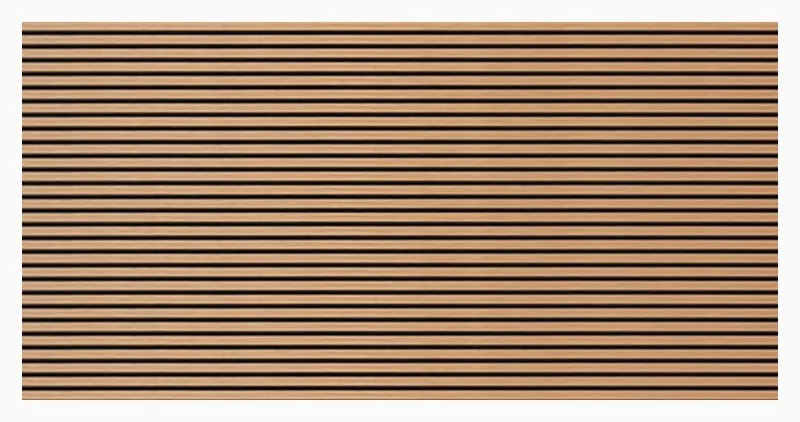
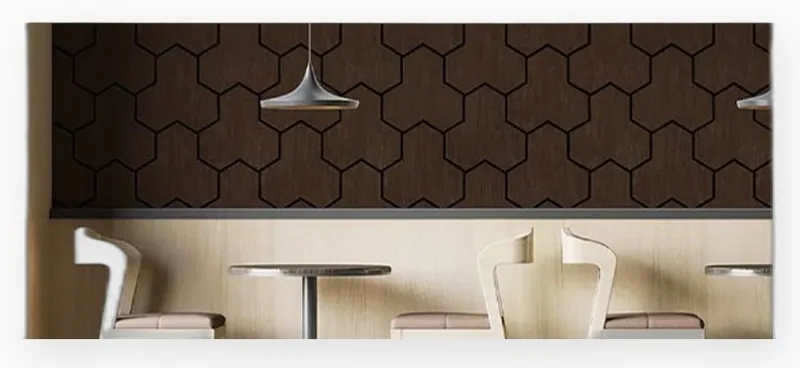
Under the Formaldehyde Emissions from Composite Wood Products Regulations, in force in Canada since 2023, hardwood plywood, particleboard, MDF and laminated products must meet emission limits, be certified by an approved third-party certifier and be labelled. Many slat and tile panels in our line use MDF cores, for example the Single-Side Wrapped Slat Panel (TVD-072) and the Polygon Acoustic Tile (TVD-079), each of which lists polyester fibre, MDF and veneer. The right paperwork is the TSCA Title VI or the equivalent Canadian compliance certificate; the two are aligned. Ask for it by name. The Wood Veneer Acoustic Slat Panel (TVD-064) lists an E1 grade, which describes an emission class in the maker's system, but it is not the same as the Canadian certificate, so we still ask for the paperwork.
Rule three: performance claims need test reports
Sound absorption is stated as an NRC, the noise reduction coefficient, from a laboratory test. Ask for the report, the thickness tested, and the mounting. An air gap behind a panel changes the result, so a figure achieved on a hung panel cannot be assumed for a panel glued flat to a wall. Where the panel is meant to cut echo in a classroom or a restaurant, a designer will need the figure, not a general statement that a panel is sound-absorbing.
Documents to request
| Document | Why it matters | Who issues it |
|---|---|---|
| CAN/ULC-S102 flame-spread report | Shows the panel meets the finish limits for the room | Accredited testing laboratory |
| ASTM E84 report, if that is what exists | Reviewed case by case by many Canadian officials | Testing laboratory |
| Composite wood formaldehyde certificate | Needed for MDF, plywood and laminated cores | Approved third-party certifier |
| NRC test report with mounting detail | Backs the sound absorption figure | Acoustic laboratory |
| Finish and veneer description | Confirms the surface matches the approved sample | Maker, confirmed on our quote |
The one product with a fire document on file
For the PET Felt Acoustic Slat Panel (TVD-085), our files hold a Class A fire rating under ASTM E84. That is all we say about it: it is the US test, and the product's own listing also notes a fire grade from the country of manufacture that still needs a Canadian rating confirmed. Ask your building official whether an E84 result is accepted for your project, or whether CAN/ULC-S102 testing is wanted. We send the report with the quote.
Differences across the line
- Veneer on felt slats, such as TVD-064 and TVD-071, raise the veneer and adhesive questions for composite wood.
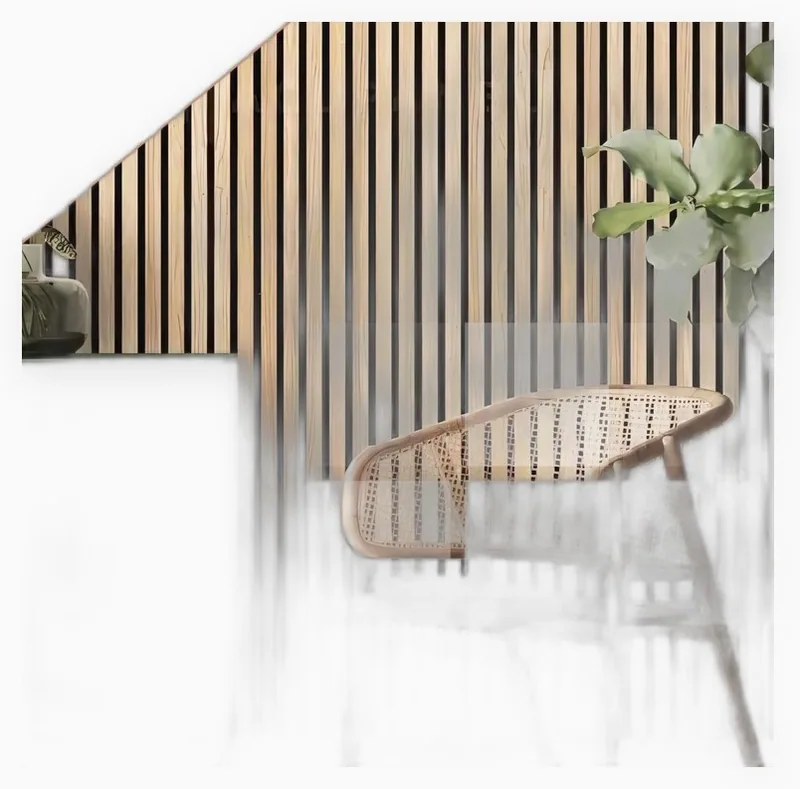
- Fabric-covered slats, such as the Colour Fabric Half-Round Slat (TVD-082), add a fabric to the fire question, and a textile-covered finish should be tested as built.
- Wrapped slats, such as the Three-Sided Wrapped Slat Panel (TVD-083) and Wrapped Slat Profiles (TVD-084), offer technical veneer or PVC finishes, and a PVC finish should come with its own fire data.
- All-PET panels, such as TVD-085, have no wood core, so the composite wood certificate does not apply, though fire and acoustic reports still do.
Provincial notes
Because each province adopts the national code with changes, the person who rules on your panels may be a municipal building official in Ontario or the local authority in British Columbia, Alberta or Quebec. In Quebec, product labels, instructions and any warranty document must be available in French. If you buy for a school or hospital, expect the tender to add its own tests. Our Alberta buying guide shows how one province's buyers approach the question.
What happens when paperwork is missing
A building official can refuse a finish that lacks the evidence the code requires, and a panel taken down after installation costs far more than the delay of asking first. A retailer or contractor may decline to take stock without a formaldehyde label. Insurers can query a finish that burned worse than expected.
How we handle it
We confirm certification status and supply documents with the quote, before the deposit. Where a test is missing we say so and discuss testing options. Start with the quote request, list the codes, and describe the rooms. The ordering page covers payment, the Canada hub covers delivery, and you can read our guide for TVD-064 for a single-product view.