Buyer guide ·
Wall panels and flooring in Canada: fire ratings, formaldehyde rules and what to ask a supplier
Interior finishes are checked by building officials long before anyone admires them. Here are the two tests and one regulation that decide whether panels and flooring are accepted in Canada.
Panels, tiles and floors look like decoration, but the building code treats them as part of the building's fire performance, and Canadian rules treat the wood inside them as a chemical emissions question. The result is a short list of documents that every supplier should be able to produce. This guide sets out that list, what each document means and where our range fits. We confirm certification status on each written quote, and nothing here claims a product meets a rule unless the quote says so.
Why finishes are regulated
The National Building Code of Canada is adopted with changes by each province, and Quebec, Ontario, British Columbia and Alberta have their own codes. It limits the flame-spread rating of interior wall and ceiling finishes, and the limits depend on the building use and the location of the finish. Exits and corridors are the strictest. Designers and building officials decide which limit applies to your room, so ask them first and design the order around their answer.
Fire tests and what they cover
| Test or term | What it applies to | Practical note |
|---|---|---|
| CAN/ULC-S102 | Flame-spread rating of interior wall and ceiling finishes | The Canadian test most designers expect to see |
| CAN/ULC-S102.2 | Floor coverings | Ask for it when a floor runs through a corridor or exit |
| ASTM E84 | The US test for surface burning | Canadian designers and building officials usually want CAN/ULC-S102 results, or will review an E84 report case by case |
| CAN/ULC-S114 | Non-combustible construction requirements | Do not assume any panel is non-combustible; we make no such claim unless the product record says so |
A report should name the exact product, thickness and mounting. A test on a thicker or different build-up is not evidence for the one you receive. Our acoustic ceiling board guide (TVD-1424) shows how the ceiling version of the question works.
Formaldehyde: the rule for composite wood
Canada's Formaldehyde Emissions from Composite Wood Products Regulations have been in force since 2023. Hardwood plywood, particleboard, MDF and laminated products must meet emission limits, be certified by an approved third-party certifier and be labelled. The rule matters for panels with MDF or particleboard cores, for furniture made from those panels and for the cores of engineered and laminate flooring. Ask for the TSCA Title VI or Canadian compliance certificate; they are aligned. A grade printed on a data sheet is not the same as a third-party certificate.
Acoustic performance: NRC
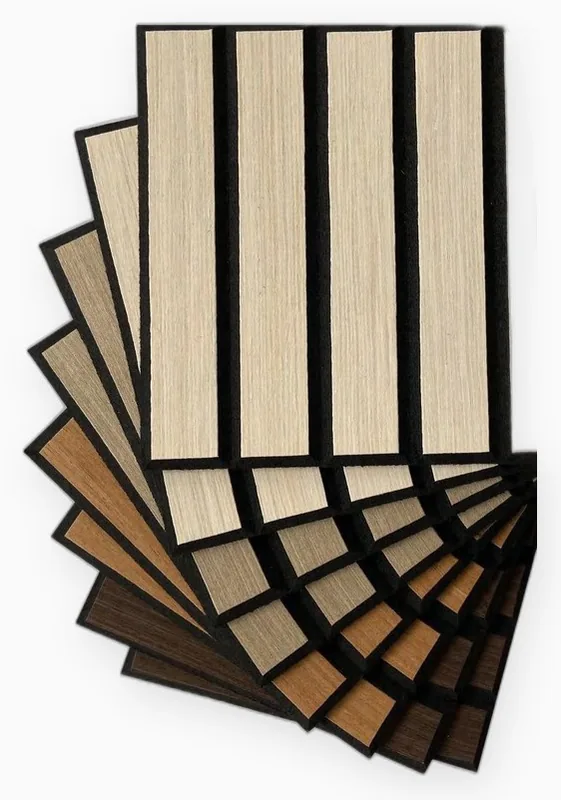
Acoustic panels state performance as NRC, the noise reduction coefficient, from a lab test. Ask for the test report and the mounting type, because the air gap behind a panel changes the result. Without the mounting information, an NRC figure cannot be compared with another product. See the TVD-064 wood veneer acoustic slat panel guide, and the paperwork behind it in the TVD-064 certification guide.
Flooring: wear layer, install method and climate
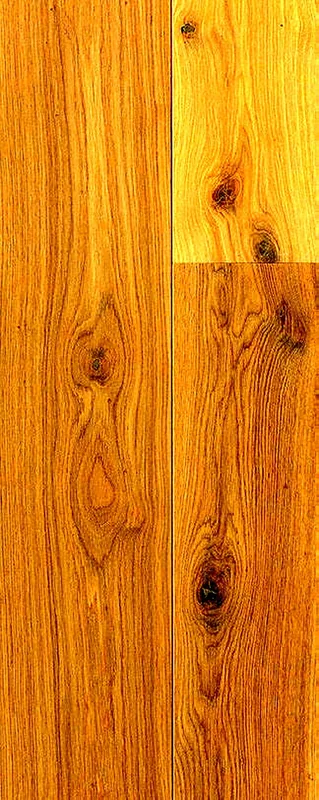
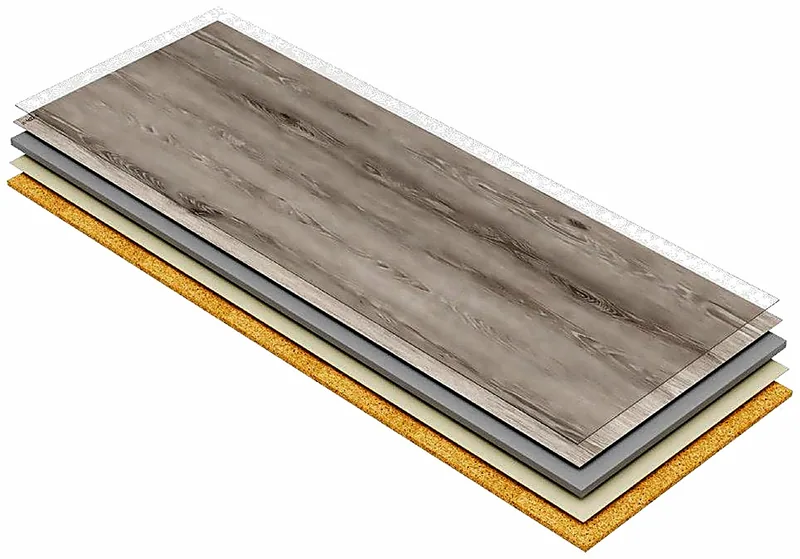
Engineered, laminate and some SPC or rigid-core floors contain composite wood or adhesives, so the formaldehyde rules apply to composite wood cores. Beyond that, ask about the wear layer, the installation method, acclimatisation and compatibility with in-floor heating. Cold, dry heated interiors in winter on the Prairies and in central Canada can move solid wood and wood flooring, while coastal British Columbia and Atlantic Canada are humid. Acclimatise flooring and solid wood before installation, and ask the installer for the manufacturer's method. For individual products, see the engineered oak flooring guide (TVD-888) and its certification guide, the engineered oak certification guide for TVD-1620 and the melamine resilient plank flooring guide (TVD-1441).
Thin cladding and feature walls
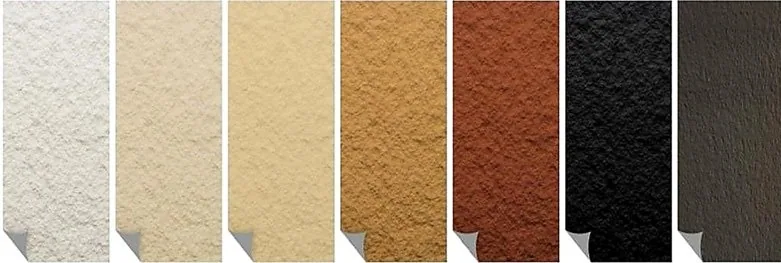
Flexible stone and similar thin cladding sheets follow the same interior-finish logic: ask for the flame-spread report for the exact product and thickness, plus the interior or exterior rating and the recommended adhesive. The granite-look flexible stone guide (TVD-1320) covers the practical side.
What to ask any supplier
| Ask for | Why |
|---|---|
| CAN/ULC-S102 (walls and ceilings) or S102.2 (floors) report | Shows the finish against the limit for the room's use |
| Formaldehyde certificate from an approved third-party certifier | Required for composite wood and shows how the product is labelled |
| NRC report with mounting type | Makes acoustic claims comparable |
| Material declaration and thickness | Tells the reviewer which rules apply |
| Wear layer, installation method and heating compatibility | Decides whether a floor suits the room |
| Interior or exterior rating and moisture resistance | Avoids using an interior product where it will get wet |
| Bilingual labels and French documents for Quebec | Charter of the French language expects French labels, instructions and warranty documents |
The order checklist
- Ask your designer or building official which flame-spread limit applies to each room.
- List the products and their cores, thickness and mounting, then ask for matching reports.
- Request the third-party formaldehyde certificate for any composite wood.
- Check that CE marks or foreign fire grades are not the only evidence offered.
- Plan acclimatisation time and storage on site before the delivery date.
- Confirm customs classification and delivered cost on a written quote.
- Keep every report with the job file for inspectors.
Matching the document to the room
The same panel can face different questions in different rooms. The building code sets limits by building use and by location within the building, and exits and corridors are the strictest. That means a product used in a meeting room may need a different level of evidence from the same product in a main corridor. Use this as a way to organise questions for your designer.
| Where it goes | What to ask your designer or building official |
|---|---|
| Exit stairs and corridors | The flame-spread limit for walls, ceilings and floors; the strictest case |
| Lobbies and reception areas | Which limit applies to the building use, and whether the feature wall is treated as a finish |
| Offices and meeting rooms | The limit for the room's use and the acoustic target |
| Restaurants and cafés | The limit for the occupancy, plus cleaning and moisture needs |
| Schools and institutions | The limit for the occupancy and any tender requirement |
Reading a test report
Do not accept a report just because it exists. Check that it names the exact product and thickness you are buying, and that the build-up tested matches the build-up you will receive, including the core, the face and any backing. Check the mounting method used in the test, which matters for acoustic results and can matter for fire results. Check the date and the laboratory name. If the report is in another language, ask for a translation of the result page. If anything differs, ask whether the result still applies. A report for a thicker version or a different finish is not evidence for yours.
Provincial and site notes
Because Quebec, Ontario, British Columbia and Alberta have their own codes, the exact limit for a room can differ between provinces. In Quebec, French labels, instructions and warranty documents are also expected. On site, store panels and flooring flat and dry, away from heavy traffic, and plan acclimatisation before installation. Winter delivery adds its own risks, since liquids and adhesives can freeze in transit, so tell us the delivery month when you request the quote.
Ordering walls, ceilings and floors together
Because several factories can share one container, panels, ceiling boards and flooring can arrive in a single shipment and be checked against one document list. Plan delivery so the flooring and any solid wood have time to acclimatise before the installers start, and keep wall panels and ceiling boards flat and dry in a separate area. Order a few spare cartons at the start, since colours and textures can vary between batches and a repair later may not match. Ask each product's supplier documents to be filed under the same product code as your purchase order, so an inspector who asks about one item finds its report in seconds.
How we handle it
Every order is quoted in writing: price for the quantity, specification, certification status and the documents we can supply, packing, lead time and delivered cost to the address. Samples are available on most items, usually credited to the first order. Many lines have low trial minimums, and several factories can share one container, so panels, ceiling boards and flooring can travel together. Payment is a 30% deposit and 70% before release. See how ordering works, send a quote request, check taxes in the sales tax by province guide and estimate costs with the landed cost calculator. We deliver across Canada; see the Canada delivery hub. Rules change, so confirm with your building official or customs broker. This is general information, not legal advice.