Certification guide ·
Blue Floral Lidded Bowls – White Handle (TVD-2709): Canadian Certification and Compliance
No certification mark is on file for this ceramic-look lidded bowl. Here is what Canadian rules ask of the buyer and which documents to request before ordering.
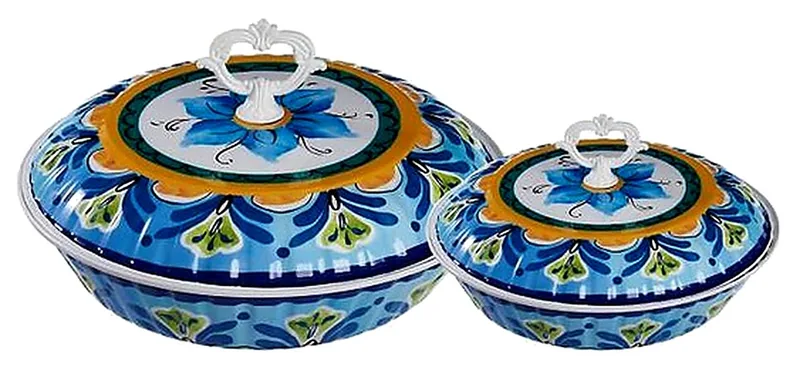
This guide covers the Canadian rules a buyer should think about before importing or reselling the Blue Floral Lidded Bowls – White Handle (TVD-2709). Our product listing describes pastel-print boxes and blue ceramic-look lidded bowls in several sizes. No certification mark is on file for this product, and we make no certification claim for it. We confirm certification status and supply the documents with the quote before you order.
Start with the material, not the look
The words ceramic-look do not tell you what the bowl is made of. The rules that apply depend on that answer, so the material is the first thing we confirm. If any part of the bowl is glazed ceramic or glass, the Glazed Ceramics and Glassware Regulations under the Canada Consumer Product Safety Act (CCPSA) set limits on lead and cadmium that can leach from pieces that contact food. Decorated rims and printed or metallic decoration near the lip are a known risk, so a buyer should ask for a lead and cadmium test report. If the bowl is plastic, the glazed-ceramic regulation is not the right frame, but the food-contact and lead questions still apply to the plastic and its print.
Rules that can apply to this product
- Food and Drugs Act. Food must not be sold in or with materials that may make it harmful. Health Canada does not pre-approve kitchenware. It offers voluntary Letters of No Objection for food packaging materials, and buyers commonly ask factories for food-contact test reports such as FDA or EU migration tests.
- CCPSA. It applies to consumer products: it prohibits products that are a danger to human health or safety, requires incident reporting and allows recalls. Health Canada enforces it.
- Consumer Products Containing Lead Regulations. Lead limits that include kitchen utensils.
- Consumer Packaging and Labelling Act. Prepackaged consumer products need bilingual English and French product identity and net quantity, plus the dealer's name and place of business.
- Quebec. Under the Charter of the French language, labels, instructions and warranty documents must be available in French, with French at least as prominent.
These are summaries in plain words. Rules change, so confirm with the authority, your inspector or your customs broker. This is not legal advice.
Electrical and gas marks do not come into it
Nothing in the listed features is powered, so CSA, cUL and cETL electrical marks should not be expected for a lidded bowl. If you order a version with a battery or plug component, that changes, and our guide to CSA, cUL and cETL marks explains why a US-only mark is not enough. A CE mark, which is common on European goods, is not accepted in Canada as proof of compliance for consumer products.
Document checklist
| Document | Why you want it | Who issues it |
|---|---|---|
| Material declaration for body, lid and handle | Fixes which food-contact and glaze rules apply | Factory, confirmed by us on the quote |
| Food-contact test report | Shows migration results for your market | Independent test laboratory via the factory |
| Lead and cadmium test report | Covers the print, rim and any glaze or decal | Independent test laboratory via the factory |
| Bilingual label proof | Needed for prepackaged consumer sale | You or us, agreed before print |
| French instructions or insert (Quebec) | Quebec retailers will ask for it | You, with our help on the carton |
| Packing specification | Shows how ceramic-look pieces are protected | Factory, in the written quote |
Provincial differences
The federal rules above apply across the country. The main provincial difference is language: Quebec expects French at least as prominent as English on labels, instructions and warranty documents, and Quebec retailers will ask to see it. Other provinces follow the federal bilingual rule for prepackaged goods. Sales tax also varies by delivery province, as set out in our sales tax by province guide.
What happens if documents are missing
Missing paperwork rarely stops goods at the border by itself. It stops them later. A retailer may refuse to list the product without test reports. A buyer who receives a complaint about taste, smell or chipped glaze has nothing to show. If a product is found to be a danger, the CCPSA allows recalls, and that cost lands on the importer. A short wait for documents before ordering costs far less than any of those.
How we handle it
When you send a quote request, we state the material, ask for the test reports named above and confirm the certification status in writing. Where a piece needs more than the factory holds, we say so before you pay a deposit. Payment is a 30% deposit and 70% before release, samples are available on most items and are usually credited to the first order, and how ordering works explains the rest. The buyer-focused version of this product is in our TVD-2709 wholesale guide, and the full line is on the plastic storage line page.
A practical sequence before ordering
- Request a sample and examine the rim, lid fit and print.
- Ask for the material declaration and test reports in writing.
- Check your label against the bilingual rule.
- Confirm packing for breakage and winter transit.
- Place the order only when documents match the sample.