Certification guide ·
Christmas Wine Stoppers, Tree and Bear (TVD-2814): What Canadian Buyers Should Ask For
Three seasonal designs, each in a clear gift box, raise a short list of Canadian questions on materials, small parts and labels. This is the checklist we work through on the quote.
Certification status on file
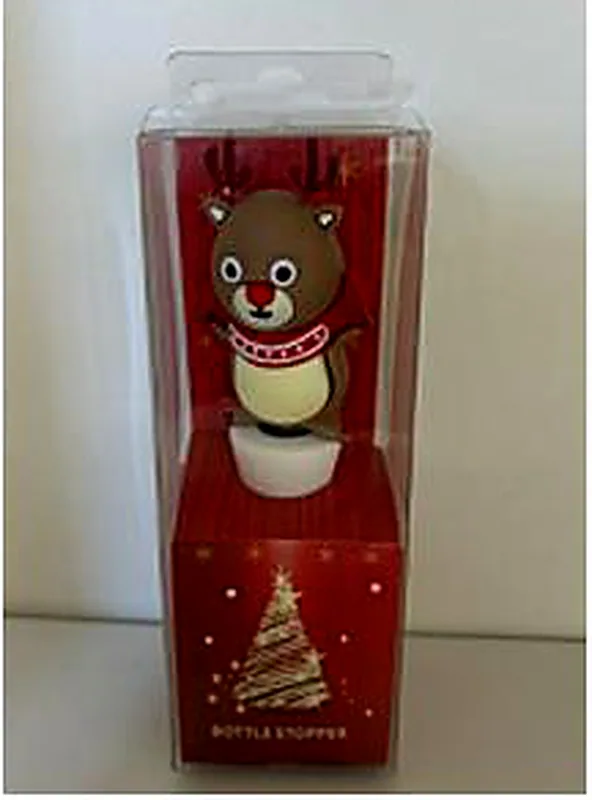
No certification document is on file for Christmas Wine Stoppers – Tree & Bear (TVD-2814), and we make no claim that it is certified, listed or approved. The product is described as tree, bear and snowman stoppers, each in a clear gift box, at 11.5 x 3.6 x 2.3 cm. Before you order we confirm certification status and supply the documents with the quote. A decorative stopper has no electrical or gas mark to look for, so the paperwork that matters is about materials and labelling.
Which rules this product touches
Three designs and three possible finishes make this a slightly broader question than a single-figure stopper. Start with what the product is: a small giftware item that may enter the neck of a wine bottle and that is sold in a box.
- General safety. The Canada Consumer Product Safety Act applies to consumer products, prohibits products that are a danger to human health or safety, requires incident reporting and allows recalls. Health Canada enforces it. A bear or snowman figure is a shape a child may pick up, so the buyer should ask how the figure is attached and whether any part can come off.
- Materials that touch the bottle. The Food and Drugs Act prohibits selling food in or with materials that may make it harmful. Health Canada does not pre-approve kitchenware. Buyers usually ask for food-contact test reports for the part that enters the bottle.
- Glazed or decorated parts. If a design is glazed ceramic or glass, the Glazed Ceramics and Glassware Regulations set limits on lead and cadmium that can leach from food-contact surfaces. Decorations near the lip are a known risk.
- Lead rules. The Consumer Products Containing Lead Regulations include limits for kitchen utensils and products for young children. Whether a stopper falls into either group depends on how it is sold and used, so ask us and your own adviser.
- Packaging. The Consumer Packaging and Labelling Act requires bilingual product identity and net quantity and the dealer's name and place of business on prepackaged consumer products.
Our listing does not name the material or finish for any of the three designs. If the version you order has glass, ceramic, paint or plating at the bottle neck, points 2 to 4 carry more weight. If the bottle-neck part is a plain material with no coating, the paper trail is shorter. We confirm which applies, design by design.
Document checklist
| Document | Why | Who issues it |
|---|---|---|
| Material list per design | Three designs can use different materials and finishes | Factory |
| Food-contact report for the stopper stem or seal | Evidence for the Food and Drugs Act duty | Third-party lab, via the factory |
| Lead and cadmium report for glazed or decorated parts | Applies if a part is glazed ceramic or glass | Third-party lab |
| Small-part and attachment note | Supports your own CCPSA review of the figures | Factory, reviewed by you |
| Bilingual gift-box text | Consumer Packaging and Labelling Act | You and us, agreed on the quote |
| French text for Quebec sales | Charter of the French language: French at least as prominent | You, with artwork support from us |
Where Canadian buyers get tripped up
Assuming a European mark helps. Canada does not recognise the CE mark as proof of compliance for consumer products. A CE logo on a factory spec sheet does not replace a food-contact report.
Treating three designs as one test. A report on the tree does not automatically cover the bear or the snowman if the paint or material differs. Ask that each design is named in the report.
Skipping the language of the box. The box is clear, but any printed text, barcode label or insert is part of the pack. In Quebec, labels and instructions must be available in French, and a retailer there will ask. Other provinces still need bilingual identity and net quantity.
Provincial differences
The rules above are federal, so provincial differences are mostly about language and retailer expectations. Quebec is the main one. Outside Quebec, public health units and landlords set expectations mainly for commercial food equipment, not giftware. Large retail chains often require a vendor compliance pack, and some ask for a letter of guarantee on food-contact materials. Ask your buyer what is required in their vendor manual before you place the order.
What happens if something is missing
A missing document usually shows up at shelf rather than at an inspection. A retailer may refuse to list a stopper with no food-contact report, a marketplace may pull a listing after a complaint, and the Canada Consumer Product Safety Act allows recalls if a product proves dangerous. A pack without bilingual product identity can be a labelling complaint. These rules change, so confirm the current position with the authority or your customs broker; this is not legal advice.
How we handle it
On a quote request for TVD-2814 we confirm the material of each design, ask the factory for the reports above that fit those materials, and tell you plainly what we received and what we did not, before a deposit is due. Duty depends on tariff classification and origin, and our customs broker confirms classification before we quote a delivered cost. The commercial side of the same product is in our wholesale guide for TVD-2814. Related reading: the certification guide for the Santa wine stopper, the drinkware food-contact, glass and ceramic import rules and the CSA, cUL and cETL marks explained (which explains why electrical marks do not apply here).
Ordering
Orders are quoted in writing with specification, certification status and documents, packing, lead time and delivered cost. Samples are available on most items with the sample cost usually credited to the first order, and payment is 30% deposit and 70% before release. See how ordering works, the landed cost calculator, the sales tax by province guide and the Drinkware & Tumblers range, or send a quote request.