Product guide ·
Diamond-Cut Square Bowls with Gold Rim: TVD-2531 and TVD-2532 Compared
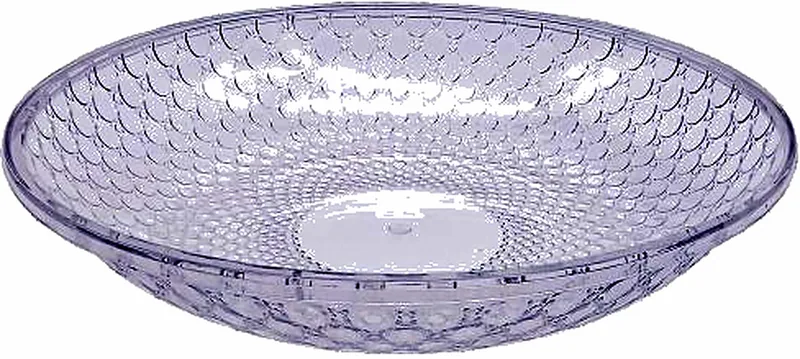
Two clear, diamond-cut square bowls with a gold rim: one open and footed, one with a lid. Here is how to choose and how to order them.
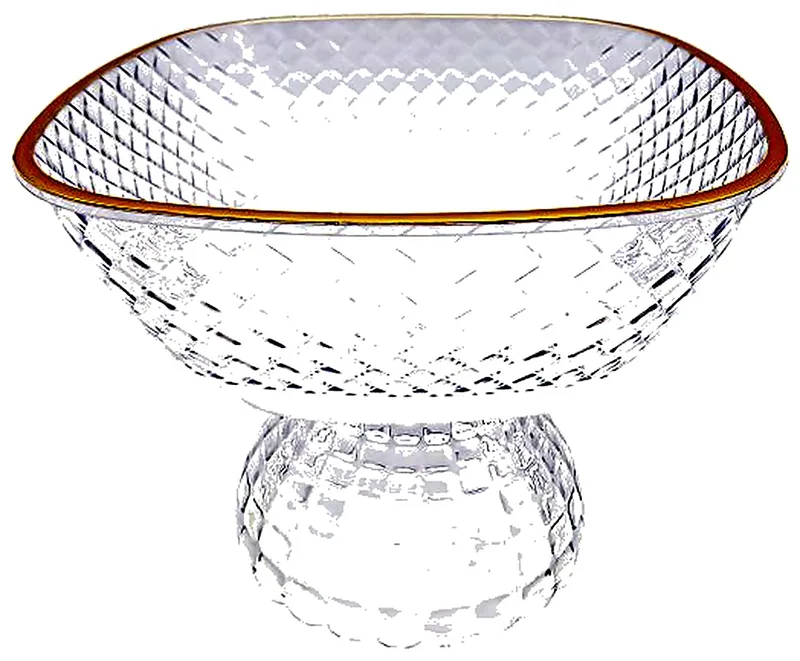
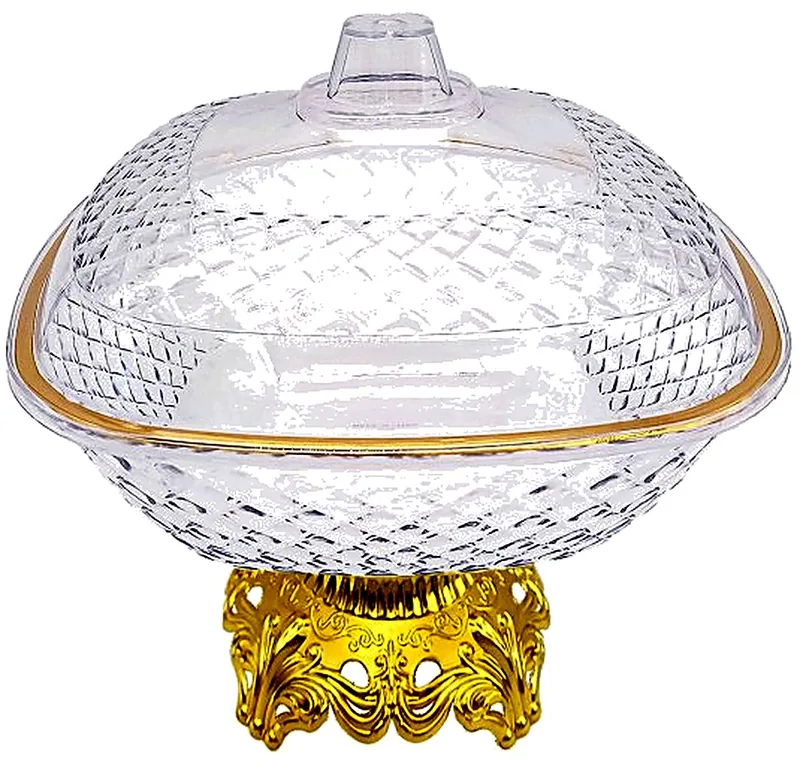
Two products in our Acrylic Bowls, Candy Boxes & Jars line share the same diamond-cut square look and a gold rim: the Diamond-Cut Square Bowl – Gold Rim (TVD-2531) and the Diamond-Cut Square Bowl with Lid (TVD-2532). On a catalogue page they can look like duplicates. They are not quite, and a buyer who orders the wrong one will be unhappy at the first shelf reset. This guide explains what they have in common, where they differ, and which buyer should take which, or both.
What the two bowls have in common
Both are diamond-cut square bowls with a gold rim and a clear see-through finish. That shared look is the specification that matters most for display: the faceted pattern, the gold edge and the clear body. If you are building a shelf or banquet table that needs one consistent style, either bowl fits it. Capacity, dimensions, wall thickness, weight and material grade are not part of the listed features for either product, so they are confirmed on your written quote. We do not state that the two share a size. Ask for the dimensions of each piece, and ask whether the lidded bowl is the same footprint as the open one so they can stack or sit side by side.
How they differ
| Item | TVD-2531 open bowl | TVD-2532 lidded bowl |
|---|---|---|
| Pattern | Diamond-cut | Diamond-cut |
| Gold rim | Yes | Yes |
| Lid | No lid | Clear lid |
| Foot | Footed options | Confirmed on the quote |
| Look | Clear, see-through | Clear, see-through |
In short, the open bowl is a display and serving piece with footed options, while the lidded version adds a clear cover for contents that need protecting. Confirm on the quote whether the lidded bowl has a foot as well; it is not part of the listed features, so do not assume one.
Which buyer suits which bowl
- Gift and décor shops usually want the open footed bowl in the window and the lidded one on the shelf, since a lid lets customers pick up and handle the bowl with contents inside.
- Hotels and banquet venues use the open bowl for fruit, nuts and wrapped sweets on tables, and the lidded bowl for buffet items that wait between guests.
- Restaurants and cafés mostly benefit from the lidded bowl at a counter, where a cover keeps dust and fingers out; the open bowl suits a plated dessert display.
- Online sellers can sell the two as a set or as two listings, and a gold rim photographs very well against a plain background.
- Discount and variety chains stock the lidded bowl as the better value display, as a lid makes it a self-contained gift item.
- Schools and offices are rarer buyers here; a front-desk or reception display is the likely use.
The gold rim: what a Canadian buyer should ask
A decorated rim near the lip is the single detail on these bowls that deserves a careful question. Canada's Glazed Ceramics and Glassware Regulations, made under the Canada Consumer Product Safety Act, set limits on the lead and cadmium that can leach from glazed ceramics and glassware that contact food. Decorated rims and printed or metallic decorations near the lip are a known risk, so ask for a lead and cadmium test report for the finished decorated piece. The material of these bowls is confirmed on the quote, and the regulation relates to glazed ceramic and glass products, so we tell you what applies once the material is known. For any decorated item that might touch the mouth or food, ask the same question. Surface decoration that sits only on the outside edge and away from food contact is a lower concern, but a buyer should not assume that; ask for the test report.
Our listing carries no certification mark for either bowl, so we do not claim one. We confirm certification status and supply the documents with the quote before you order. Health Canada does not pre-approve kitchenware, so buyers commonly ask for food-contact test reports, and the Food and Drugs Act prohibits selling food in or with materials that may make it harmful. See our rules for decorated food-contact pieces for the full document list. Rules change, so confirm with the authority or your customs broker. This is not legal advice.
How to mix them in one order
Products from several factories can share one consolidated container, and the two bowls can share one carton plan if the dimensions allow. A practical split for a first order is two lidded bowls for every open bowl in a gift shop, and one for one in a hotel; adjust once you have seen the shelf. Ask for the gold-rim pieces to be packed in individual poly bags or film so the rim and clear body arrive unscratched, and ask for a sample of each to check the colour of the gold against your brand. Because a gold finish can vary from one production run to another, confirm whether repeat orders match.
Canadian use notes
For a wedding or holiday display, order early: shipments from Asia land at Vancouver or Prince Rupert about two to three weeks port to port, then travel by rail and truck to the Prairies, Toronto area and Montreal, with Atlantic Canada served through Halifax or by rail and truck from Montreal. Cartons shipped in winter can freeze in transit, so let them warm before unpacking. Decorated pieces are best washed by hand unless the factory states otherwise, because strong dishwasher detergent and heat can dull metallic decoration. If you sell in Quebec, product labels and instructions must be available in French.
Where to look next
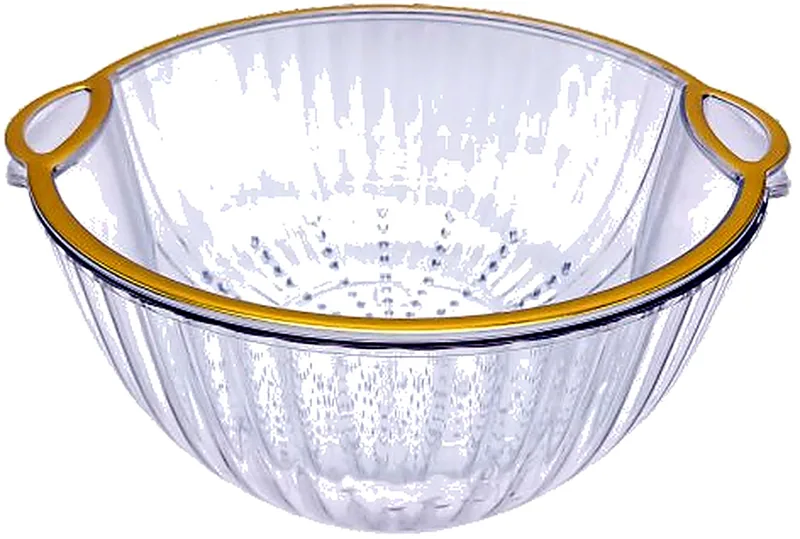
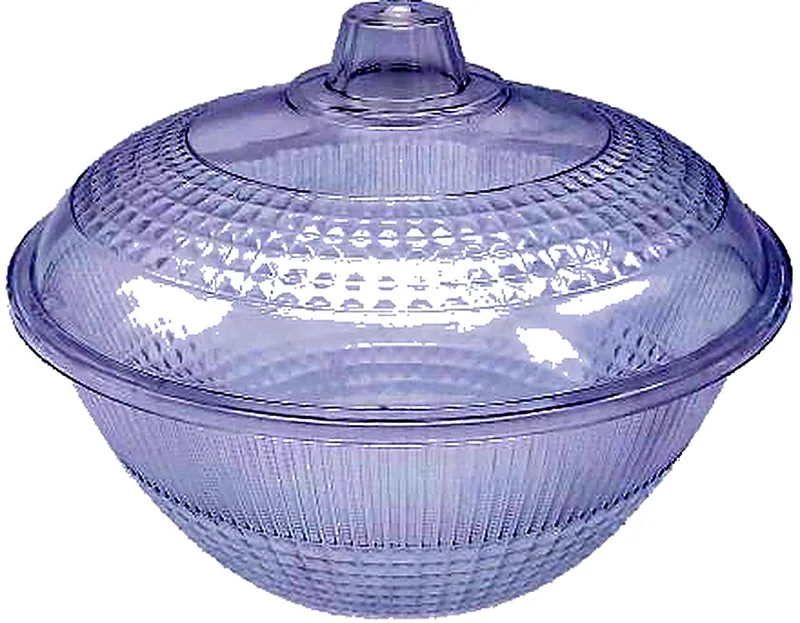
For another gold-detail piece, see the Ribbed Fruit Bowl – Gold Handles (TVD-2500) with gold-tone side handles, and for a lidded bowl without the square shape, the Diamond-Cut Bowl with Lid (TVD-2528) is covered in its own buying guide. A wider fruit display is the Textured Fruit Bowl (TVD-2486).
Every order starts with a written quote: price for your quantity, specifications, certification status and documents, packing, lead time and delivered cost to your address. Samples are available on most items and the sample cost is usually credited to the first order. Many lines have low trial minimums, so you can test a single item before committing to a full range. Payment is 30% deposit and 70% before release, and we deliver to your store, site or warehouse across Canada. Read how ordering works for the full steps, and add the landed cost calculator to see how duties and freight change the shelf cost.
request a quote with the quantity of each bowl and your delivery address. The quote includes the freight and shows how sales tax by province apply.