Certification guide ·
Importing a Digital Cooking Thermometer to Canada: Compliance Checklist
Canada has no approval stamp for cooking thermometers, which surprises many importers. This checklist covers what buyers, retailers and inspectors still expect for TVD-1749.
What is on file for this product
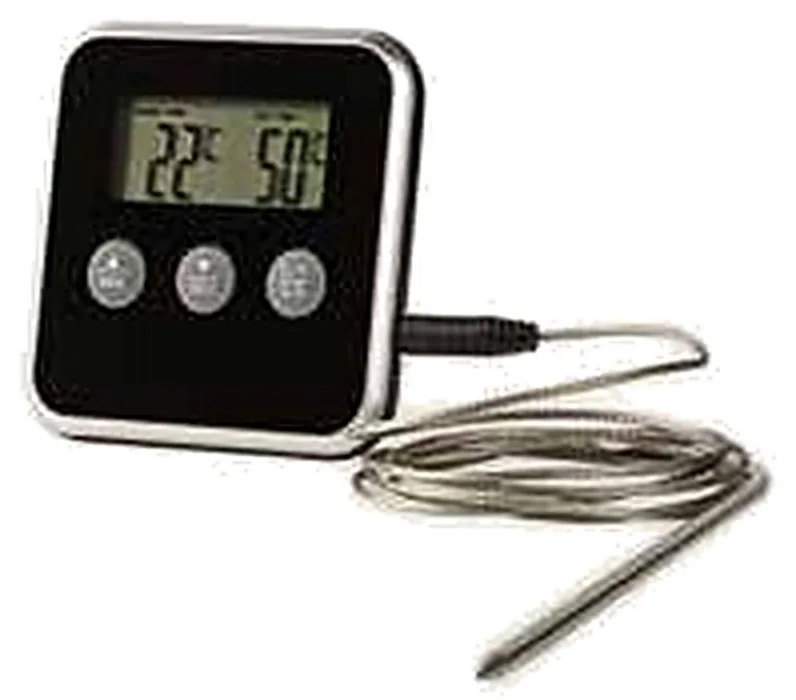
Digital Cooking Thermometer with Timer (TVD-1749) is a digital cooking thermometer with a stainless steel probe on a cable, an alarm and countdown timer, and a stand with a magnet back. No certification mark is on file for this product. We confirm certification status and supply the documents with the quote before you order. The buying side (who buys it, how it compares with other thermometers) is in our product buying guide.
The surprise: Health Canada does not certify cooking thermometers
Many importers ask which stamp a meat thermometer needs. The honest answer is that Health Canada does not certify cooking thermometers. That does not leave the product outside the rules. It falls under general consumer product safety, and it has three features that each draw their own question: it is a digital device with a power source, it has a probe that touches food, and it makes a measurement that a cook relies on.
Check 1: the power source
Digital products with batteries follow general consumer product safety. The Canada Consumer Product Safety Act prohibits products that are a danger to human health or safety, requires incident reporting and allows recalls, and Health Canada enforces it. Two practical points follow.
- Batteries and shipping. Lithium batteries have dangerous-goods shipping rules. If the thermometer or a spare pack contains lithium cells, tell us, because that changes how the goods can be shipped.
- Mains adapters. If any version comes with a plug-in adapter or charger, that part is an electrical product and needs a Canadian certification mark (CSA, cUL or cETL, where the small c means Canada) or a field evaluation label from an accredited body. A US-only mark is not enough. The explainer on CSA, cUL and cETL marks shows the difference.
We confirm the power arrangement for TVD-1749 on the quote. No claim is made that it carries any mark.
Check 2: the probe touches food
The probe is stainless steel, and it goes into meat. The Food and Drugs Act prohibits selling food in or with materials that may make it harmful. Health Canada does not pre-approve kitchenware, so buyers commonly ask the factory for food-contact test reports, such as an FDA or EU migration test, for the probe and any cable coating. Restaurants should also ask their public health inspector what they expect, because inspectors look for equipment that is durable, easy to clean and sanitary, and some landlords ask for NSF/ANSI or an equivalent sanitation certification. We do not claim NSF for this item.
The Consumer Products Containing Lead Regulations set lead limits that include kitchen utensils, so ask whether any painted, plated or printed parts are present.
Check 3: the claims on the pack
A thermometer sells on accuracy and range. Neither is covered by a Health Canada certificate, so the evidence is the factory's own specification and, ideally, a calibration or test report. Ask for the temperature range, the stated accuracy, the probe length and the response time, and for whether Celsius and Fahrenheit can both be displayed, because Canadian cooks use both. Do not print an accuracy figure on your pack unless the factory gives you a report that supports it.
Labelling and language
If you sell the thermometer in a retail pack, the Consumer Packaging and Labelling Act needs bilingual (English and French) product identity and net quantity, plus the dealer's name and place of business. In Quebec, the Charter of the French language requires labels, instructions, manuals and warranty documents to be available in French. A thermometer with an alarm, a timer and several modes leans heavily on its manual, so French instructions are not optional for Quebec shelves. A CE mark does not replace any of this, since Canada does not treat it as proof of compliance.
Document checklist
| Document | Why you want it | Who issues it |
|---|---|---|
| Battery type and shipping information | Lithium batteries have dangerous-goods shipping rules | The factory, confirmed on our quote |
| Canadian electrical mark for any plug-in adapter or charger | Mains-powered parts need CSA, cUL, cETL or a field evaluation label | An accredited certification body |
| Food-contact test report for the probe and cable | Retailers, inspectors and restaurants ask for it | A testing laboratory, via the factory |
| Specification sheet with range, accuracy and response time | Supports the claims on your pack | The factory |
| Calibration or test report for stated accuracy | Protects you if a customer disputes a reading | A testing laboratory or the factory |
| Bilingual label and French manual | Required for prepackaged products and for Quebec sale | You or us, on the quote |
What happens if something is missing
A retailer's buyer may refuse to list a thermometer with no food-contact report, a restaurant inspector can question equipment that is not suitable for the kitchen, and a courier can reject or hold a shipment of undeclared lithium batteries. A consumer product that proves unsafe can be recalled under the Canada Consumer Product Safety Act. These are easy to prevent when the questions are asked before the order.
How we handle it
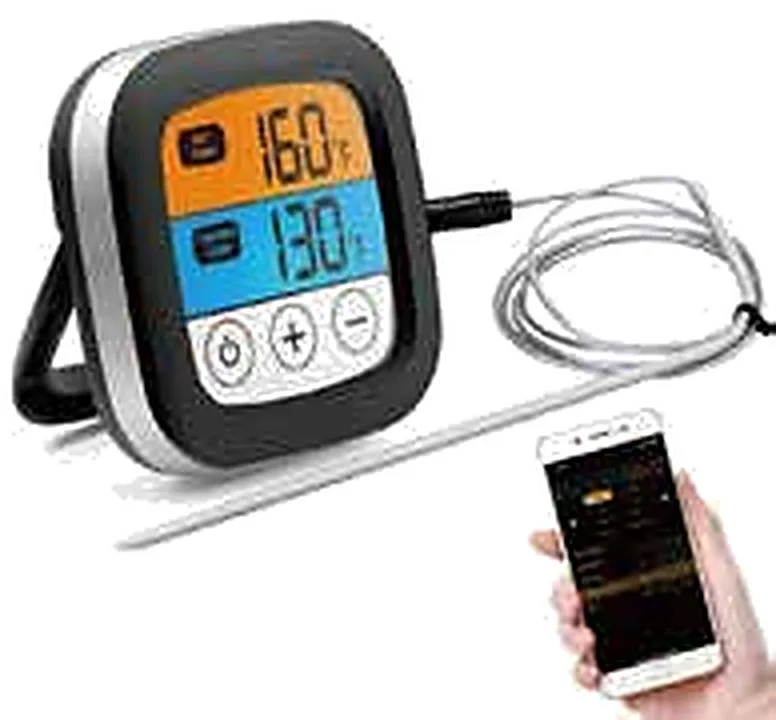
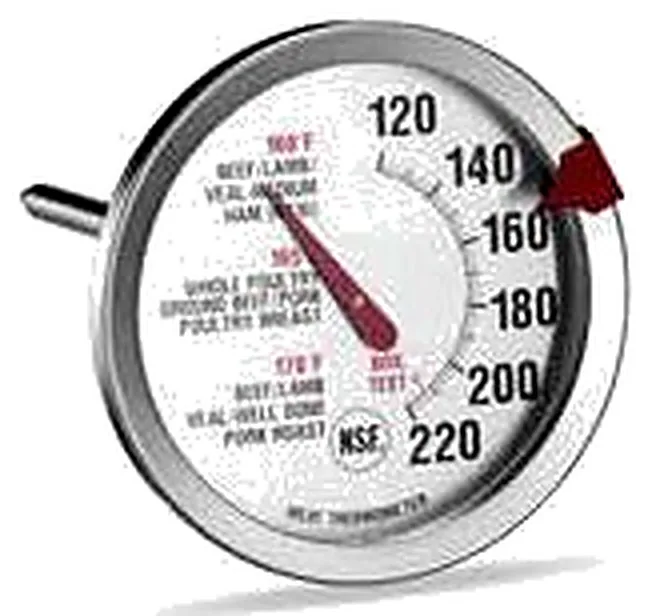
The quote states material and grade of the probe, dimensions, whether the factory rates the item for any special use, the food-contact test reports available for your market, label language, packing and minimum order, together with delivered cost to your address. Compare other thermometers in the Cooking Thermometers line; for example, Bluetooth Wireless Meat Thermometer (TVD-1751) has a Bluetooth app and Dial Meat Thermometer (TVD-1757) is a plain dial model, and each needs its own power and wireless questions answered on its own quote. Start with a quote request, and see how ordering works: 30% deposit and 70% before release.
This is general information, not legal advice. Rules change, so confirm with the relevant authority, your health unit or your customs broker.