Certification guide ·
Cooking and meat thermometers in Canada: certification, food contact and import rules
No certification mark is on file for our thermometer line. Here is what Canadian buyers should ask for, from probes and batteries to French instructions.
A cooking thermometer looks like a small, simple item, and that is exactly why importers get caught out by it. Our cooking thermometer line runs from digital probe timers and wireless barbecue units to dial thermometers for ovens and fridges. Our product listing shows no certification mark for any of them, so this guide does not claim one. It explains which Canadian rules shape a thermometer order, how the rules differ between a battery-powered digital model and a plain dial, and which documents to request before you pay a deposit.
Is a certification mark on file?
No. None of the twelve products in the line shows a certification mark in our listing. For many thermometers that is less alarming than it sounds: Health Canada does not certify cooking thermometers. What a Canadian buyer needs instead is a clear view of the product type, because the rules differ by whether the item is digital, battery-powered, wireless or purely mechanical. We confirm certification status and supply the documents we hold with the quote before you order.
Three kinds of thermometer, three sets of questions
Digital and wireless models
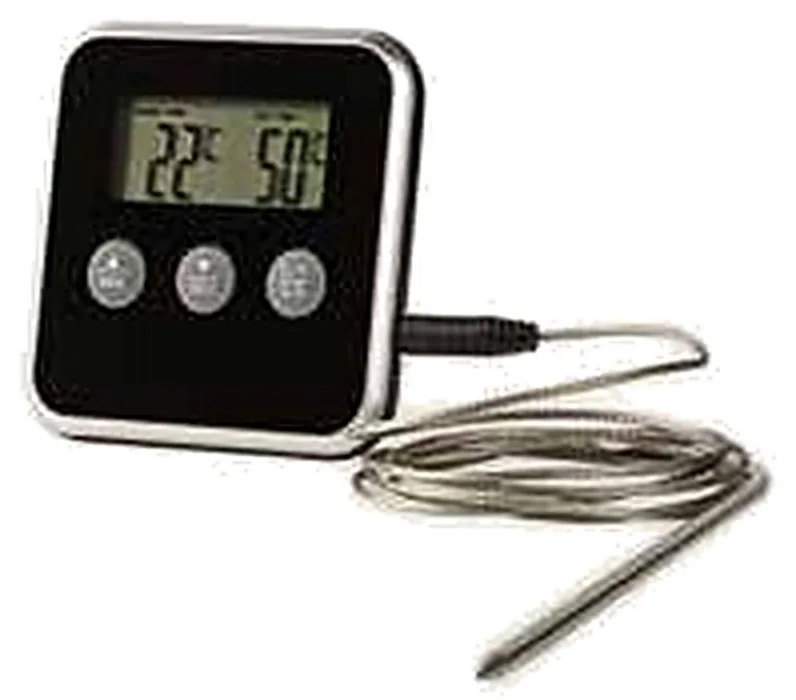
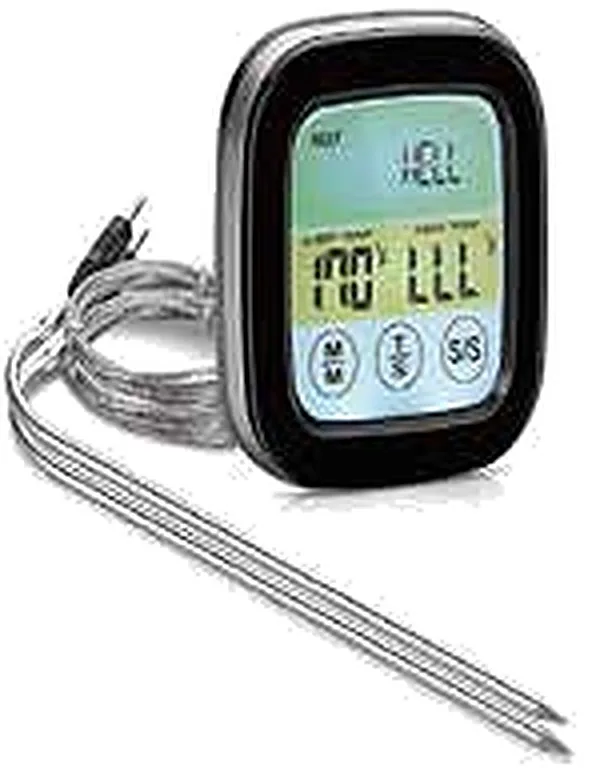
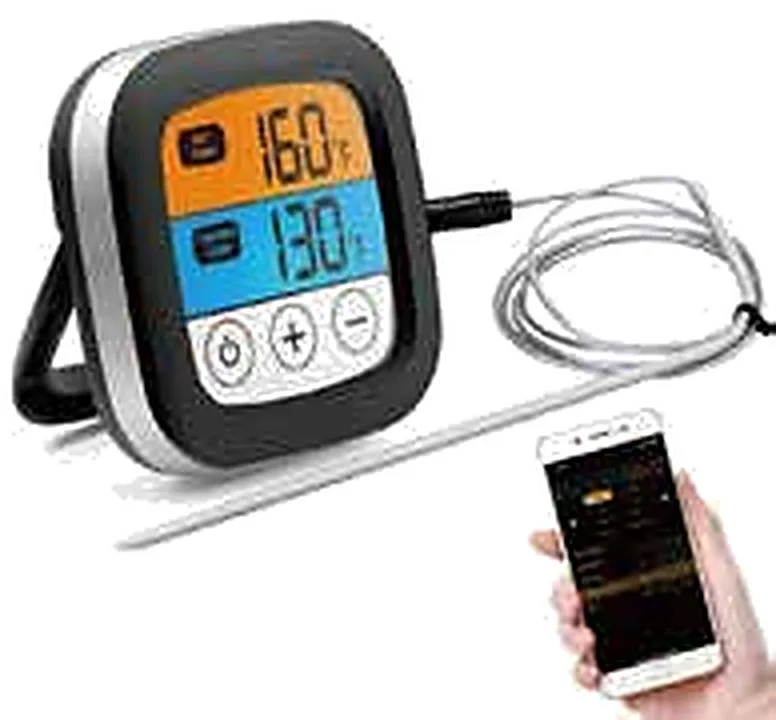
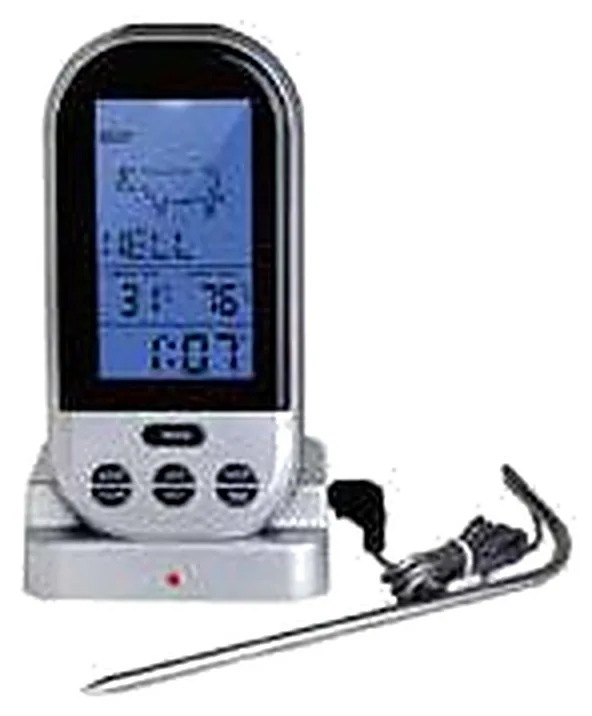
The digital end of the line includes the Digital Cooking Thermometer with Timer (TVD-1749), which comes with a stainless steel probe on a cable, an alarm and countdown timer, and a stand and magnet back; the Touchscreen BBQ Thermometer (TVD-1750), with a colour backlit LCD and dual or single probe; the Bluetooth Wireless Meat Thermometer (TVD-1751), with an app for Android and iOS; and the Remote Wireless BBQ Thermometer (TVD-1752), with a wireless remote receiver. These follow general consumer product safety. Under the Canada Consumer Product Safety Act, products that are a danger to health or safety are prohibited, incidents must be reported and recalls are possible. Where batteries are involved, lithium batteries have dangerous-goods shipping rules, so ask which battery type each model uses.
The listing does not say whether a version uses a mains adapter or charger. If the version you order has a mains plug, a charging cradle or hard-wired power, then it becomes an electrical product and must carry a certification mark from a body accredited by the Standards Council of Canada, such as CSA, cUL or cETL, or a field evaluation label. A US-only mark is not enough. Read our guide to the CSA, cUL and cETL marks if that applies. For the wireless units, ask the factory what wireless approvals it holds for the radio parts and confirm Canadian requirements with your customs broker.
Pocket and instant-read digital models
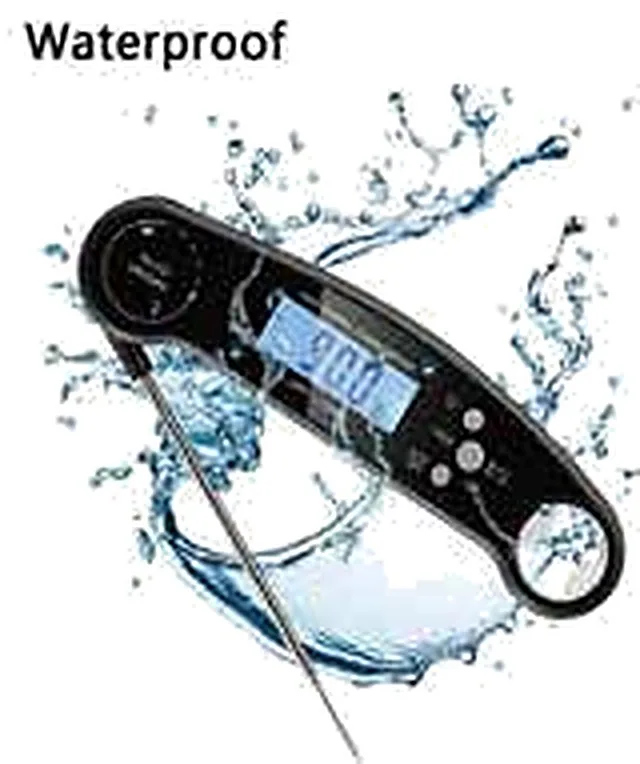
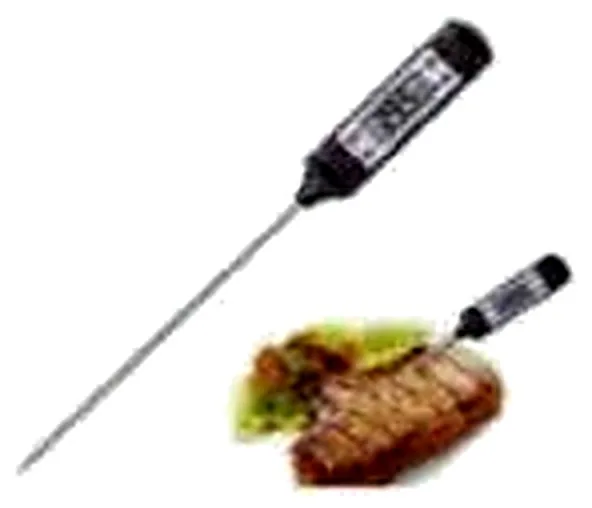
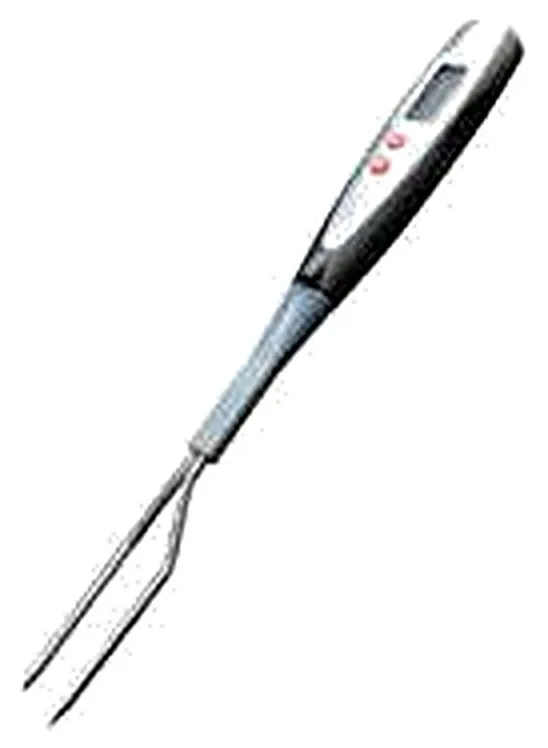
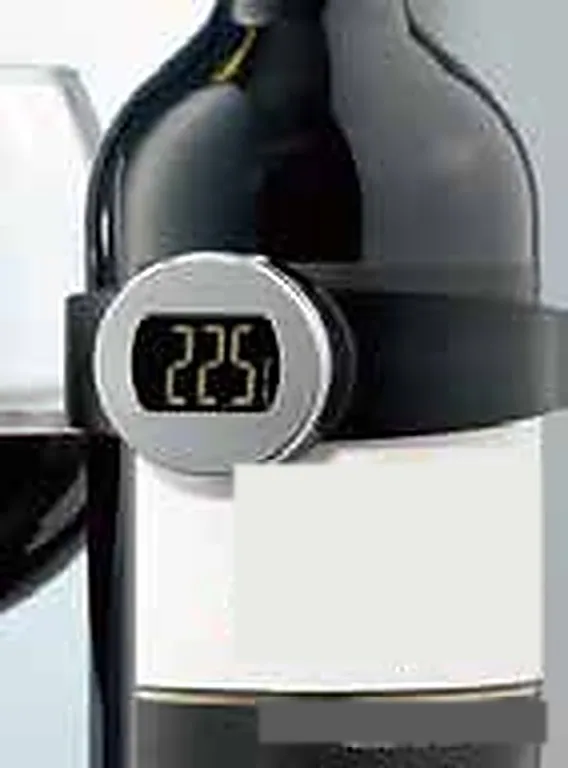
The Instant-Read Folding Thermometer (TVD-1753), the Digital Pen Probe Thermometer (TVD-1754), the Digital Meat Fork Thermometer (TVD-1755) and the Wine Bottle Thermometer (TVD-1756) are simple digital units. Stated features include waterproofing and auto power-off on the folding model, and a temperature alarm on the fork. The questions are battery type, how the factory defines waterproof, and probe material.
Dial thermometers
The Dial Meat Thermometer (TVD-1757), the Oven Dial Thermometer (TVD-1758), the Fridge & Freezer Dial Thermometer (TVD-1759) and the Dial Milk & Cooking Thermometer (TVD-1760) have no electronics, so electrical rules do not enter the picture. Their risk is food contact and accuracy. The stem or case that touches food must be suitable, and an oven thermometer must survive oven heat. The Glass Candy & Deep-Fry Thermometer (TVD-1761) comes with a glass stem and a printed temperature scale, so ask for lead and cadmium information on the printed scale and discuss breakage in transit.
Food contact and probes
A probe goes into meat, milk or candy. The Food and Drugs Act prohibits selling food in or with materials that may make it harmful. Health Canada does not pre-approve kitchenware. Buyers commonly ask the factory for food-contact test reports, such as FDA or EU migration tests, for the probe and for any handle or cable coating that touches food. Where a printed scale sits on glassware, the Glazed Ceramics and Glassware Regulations set lead and cadmium limits for glassware that contacts food, and printed decoration is a known risk. The listed stainless steel probes are the right material to ask about, but "stainless steel" does not name a grade, so the grade is confirmed on the quote.
Document checklist
| Document | Why you want it | Who issues it |
|---|---|---|
| Food-contact test report for probe and handle | Answers a retailer or health unit question on materials | Independent laboratory, requested through the factory |
| Stainless steel grade statement | Confirms what actually touches food | Factory |
| Battery type and shipping information | Lithium batteries have dangerous-goods shipping rules | Factory, confirmed by our freight team |
| Canadian electrical mark or field evaluation, if any mains power or charger is included | Needed for electrical products sold in Canada | Certification body accredited by the Standards Council of Canada |
| Wireless approval information (Bluetooth and remote models) | Supports your own compliance check | Factory; confirm requirements with your customs broker |
| Accuracy and range statement | Prevents disputes on returns | Factory |
| Bilingual packaging artwork and French instructions | Prepackaged sale in Canada and Quebec retail | You, with our input |
| Written quote stating certification status | Records what was confirmed | Thames Valley Distribution |
CE marking and Canada
Canada does not recognise the European CE mark as proof of compliance for electrical or consumer products. A CE-marked thermometer still needs the Canadian points above: general product safety, food-contact evidence, and a Canadian mark if any version is mains-powered.
Provincial differences
The key provincial difference is language. In Quebec, under the Charter of the French language, labels, instructions, manuals and warranty documents must be available in French, and Quebec retailers will ask. Elsewhere, bilingual English and French product identity and net quantity are required on prepackaged consumer goods under the Consumer Packaging and Labelling Act, with the dealer's name and place of business. A thermometer sold to a restaurant is different from one sold to a retail shopper: commercial kitchens answer to provincial food premises rules and a local public health inspector, and some inspectors, landlords or franchisors ask for NSF/ANSI or equivalent sanitation certification on commercial food equipment. Ask your client what they require.
What happens if documents are missing
A retailer may refuse to list a product without test reports. A restaurant's inspector may question a probe whose material is unknown. A battery-powered unit held at the border for missing shipping information costs time. If a product is later found to be dangerous, recalls are possible. All of this is easier to prevent at quote stage than to fix after a container lands.
How we handle it
When you request a quote, tell us the model range, the channel and the province. We confirm the power source and battery type, ask the factory for the reports above and state in writing what is available. Our customs broker confirms tariff classification and origin before we give a delivered cost. Rules change, so confirm with the authority, your inspector or your customs broker. This is not legal advice.
Next steps
For a single-model view, see the Digital Cooking Thermometer with Timer guide and its certification guide, or the Remote Wireless BBQ Thermometer guide. You can also read about the Oven Dial Thermometer and the Fridge & Freezer Dial Thermometer. Browse the Cooking Thermometers line and the wholesale guide, check how ordering works and the landed cost calculator, then send a quote request. Payment is a 30% deposit and 70% before release, and samples are available on most items.