Product guide ·
Divided Rectangular Tray With Lid (TVD-2495): A Sectioned Snack Tray for Caterers, Cafés and Retail
A sectioned clear tray with a flat lid suits grazing platters, office snack stations and giftable retail packs. Here is how to specify TVD-2495 and order it for Canada.
A tray built around sections
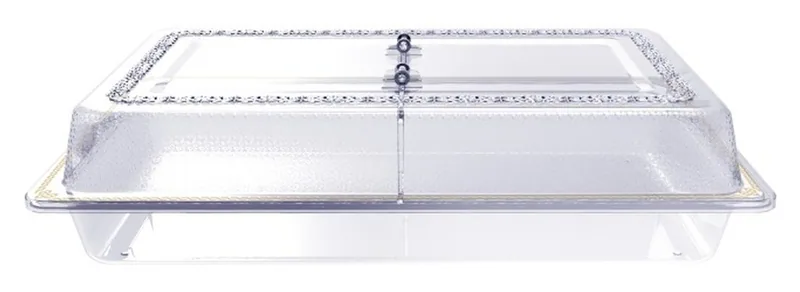
The Divided Rectangular Tray with Lid (TVD-2495) is a sectioned tray with a clear flat lid, in a clear see-through design. The divisions are the point: different snacks, nuts, cut vegetables or confectionery stay apart, and the clear lid lets a customer see what is inside before they open it. Section count, section sizes, overall dimensions and depth are confirmed on your written quote, since the listed features do not give numbers and we do not guess them.
Who buys it and for what
- Caterers and event planners: a rectangular tray with a lid is easier to stack in a van or on a cart than a round bowl, subject to how the flat lid sits; ask for a stacking confirmation.
- Cafés and restaurants: pre-portioned snack or sample trays at a counter, or covered trays for a breakfast spread.
- Offices and meeting-room suppliers: a covered divided tray keeps a shared snack station tidy.
- Gift shops and online sellers: hamper builders like a clear, sectioned base because it lets them place several items neatly.
- Discount and variety chains: a tray with a lid and compartments gives the aisle a practical storage item; volumes are quoted in writing.
What the flat lid changes
Compare the lid styles in this line. The Three-Section Snack Box with Cover (TVD-2481) has a clear domed cover, which gives height to taller items; the Divided Snack Tray with Gold-Trim Cover (TVD-2480) has a clear cover with gold side trim and two sections; this tray uses a flat lid, which tends to be the more compact choice for storage and shipping. A flat lid also gives a surface for a label or a sticker, useful for allergen or ingredient information when you pack food yourself. Ask on the quote whether the lid snaps on, rests on, or seals, because that decides whether the tray is a serving piece or a carry piece.
How to specify it: a checklist
- Number and size of sections, and the tray's outside dimensions and depth.
- Plastic type and grade for tray and lid, and whether both are the same material.
- Lid fit: loose, snap or tight, and whether lids and trays nest or stack separately.
- Factory rating for refrigerator, freezer, microwave or dishwasher use. Confirm; do not assume.
- Food-contact test reports for the material and the Canadian market.
- Whether custom branding on the lid is possible, plus packaging and barcode details.
- Carton quantity, minimum order, sample availability and lead time.
Food contact and labelling in Canada
Under the Food and Drugs Act, food may not be sold in or with materials that may make it harmful. Health Canada does not pre-approve kitchenware, so buyers ask the factory for food-contact migration test reports (FDA or EU tests are common requests). The tray has no certification mark on file, so we do not call it approved; we confirm certification status and supply documents with the quote before you order. Our guide to Canadian food-contact and import rules for acrylic bowls, boxes and jars lists documents worth requesting.
If your business packs food into the tray for sale, provincial food premises rules and your local public health inspector decide what equipment and packaging are acceptable; some landlords and franchisors also ask for sanitation certification on commercial food equipment. Check what your health unit asks for. For prepackaged consumer products, the Consumer Packaging and Labelling Act calls for bilingual identity and net quantity and the dealer's name and place of business, and Quebec expects French labels. Rules change, so confirm with the authority or your customs broker; this is not legal advice.
Canadian use notes
Trays that go from a cold van into a heated kitchen can fog or stress; cold-climate caterers should ask about the temperature range the factory states. Freight to the Prairies and Atlantic Canada can run through winter, so clear plastic needs good packing. Our Canada delivery hub outlines routes, and the sales tax guide explains what applies by province.
Using sections well
A sectioned tray is only as good as the way it is filled. Caterers often pair one section of something crunchy, one of something soft and one of a dip or garnish that will not bleed into its neighbour, and keep wet items away from the lid so condensation stays off the see-through surface. For retail hamper work, a tray with a lid lets you place small wrapped items in order and then close the pack for shrink-wrap or a ribbon. Ask for a sample to test your own fills for section depth: a tray that looks roomy empty can feel shallow once you add a dip bowl or a stack of crackers.
Ordering
Quotes are written for your quantity and delivery address: specifications, documents, packing, lead time and delivered cost. Samples are available on most items with the sample cost usually credited to the first order, many lines have low trial minimums, and payment is 30% deposit and 70% before release. Start on the quote request page after reading how ordering works, or estimate landed cost with the calculator. More shapes sit on the acrylic bowls, candy boxes and jars line page.