Certification guide ·
Double-Wall Beer Glass (TVD-1957) in Canada: Food-Contact and Printed-Decoration Rules
No certification mark is on file for this printed beer glass. Here are the rules, the documents and what we confirm before you order.
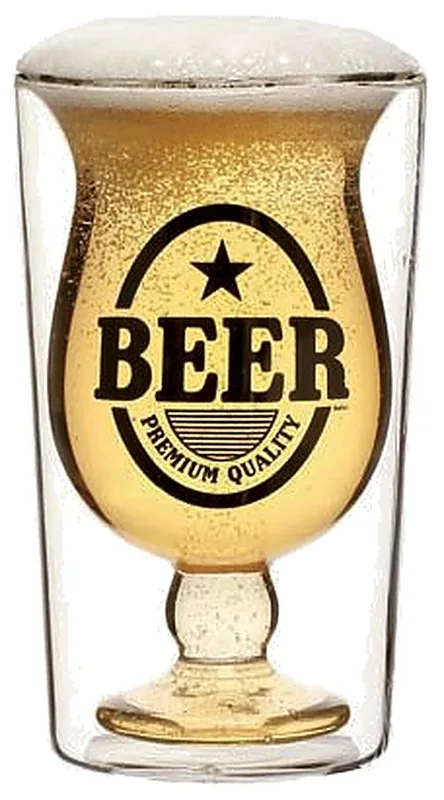
This guide covers what a Canadian buyer should check before bringing in the Double-Wall Beer Glass (TVD-1957): a double-wall glass with a foot and a printed beer-label design. It has no motor, no heating element and no gas connection, so the questions are about food contact, the printed decoration, product safety and labelling. To be plain about status: no certification mark is on file for this product. We confirm certification status and supply the documents with the quote before you order. For the commercial side of the product, read the wholesale guide to the beer glass.
Rules that apply to this glass
- Food and Drugs Act. It prohibits selling food in or with materials that may make it harmful. Health Canada does not pre-approve kitchenware, and it offers voluntary Letters of No Objection only for food packaging materials, so buyers rely on food-contact test reports from the factory.
- Glazed Ceramics and Glassware Regulations. Under the Canada Consumer Product Safety Act, these limit the lead and cadmium that can leach from glassware that contacts food. Printed or metallic decoration near the lip is a known risk, which is the central issue for a printed beer glass.
- Canada Consumer Product Safety Act. Products that are a danger to health or safety are prohibited, incidents must be reported and recalls can be ordered. Health Canada enforces it.
- Consumer Packaging and Labelling Act. If sold prepackaged to consumers, it needs bilingual English and French product identity and net quantity, plus the dealer name and place of business.
- Quebec Charter of the French language. Labels, instructions and warranty documents must be available in French, with French at least as prominent.
- Food premises rules. Provincial regulations and public health inspectors expect food and drink equipment to be durable, easy to clean and sanitary, and some inspectors, landlords and franchisors ask for NSF/ANSI or equivalent sanitation certification.
CE mark versus Canadian requirements
Canada does not recognise the European CE mark as proof of compliance for consumer products. If a factory offers a European food-contact migration report, that is useful evidence for a health unit or franchisor, but it does not replace the Canadian lead and cadmium limits above. Electrical marks such as CSA, cUL and cETL, explained in our guide to certification marks, do not apply to a plain glass.
Document checklist
| Document | Why it matters | Who issues it |
|---|---|---|
| Lead and cadmium test report covering the printed area | Shows the decoration stays within Canadian limits for glassware that contacts food | Test laboratory, requested through the factory |
| Food-contact test report | Supports your health inspector, landlord or franchisor | Factory or test laboratory |
| Print position drawing | Confirms the print sits away from the lip | Factory |
| Glass type and grade statement | Our listing does not state the material | Factory |
| Bilingual label artwork | Needed if you sell prepackaged glasses to consumers | You and us, agreed before production |
| French insert or label | Required for Quebec | Agreed before ordering |
| Tariff classification | Duty depends on the HS code and origin | Our customs broker |
Provincial differences
The federal glassware rules apply nationwide. The differences come from the province. In Quebec, French labelling is a legal expectation and retailers will ask for it. Public health units in every province inspect licensed food premises, and what each asks for in terms of sanitation certification varies, as do landlord and franchise requirements. Check with your own health unit before you order stock for a new bar or taproom.
What happens if the paperwork is missing
Without a lead and cadmium report, a printed glass is difficult to defend. A health inspector can ask where the evidence is, a retail buyer can decline to stock it, and a franchisor can refuse the supplier. If a consumer product were found to be a danger, a recall is the worst case. The simplest protection is to hold the reports before the glass arrives, not after.
How we handle it
On your quote we state certification status for the beer glass and supply the documents we can obtain, including the test reports for the printed design. Our customs broker confirms the tariff classification before we quote a delivered cost, and duties and GST, HST, PST or QST apply per province; see the sales tax guide. If a report is missing, we say so before you pay a deposit; payment is a 30% deposit with the balance before release, so you can decide on the facts. You can also check the full glassware rules guide for the other glasses in the line, compare with the clear wine glass certification guide and see the double-wall family guide. Rules change, so confirm with the authority, your health unit or your customs broker. This is not legal advice.
Request documents through the quote request and read how ordering works. A free account shows the full specifications on the product page.