Product guide ·
Round Double-Wall Glass Cups for Cafés and Retailers: What to Confirm Before You Order
A handleless double-wall glass cup looks good on the counter and keeps a hot drink away from the hand. It is also a hand-blown glass product, so the quote needs more detail than most housewares.
The product in a paragraph
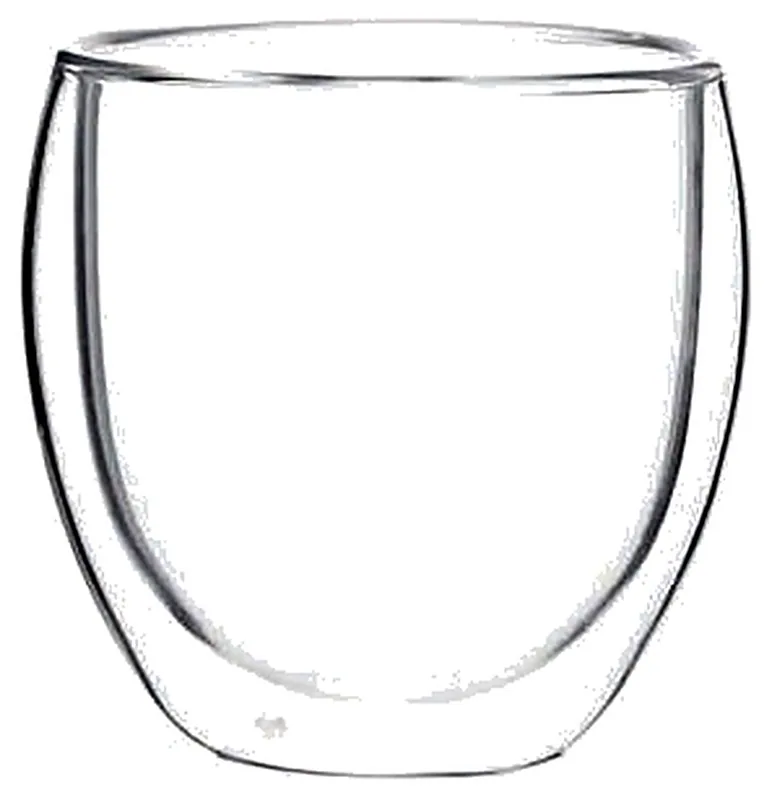
TVD-1936, the Double-Wall Glass Cup in a round handleless shape, is made from borosilicate double-wall glass and is designed to keep drinks hot or cold. It belongs to our double-wall glassware line, 30 products of cups, mugs and tumblers in round, fluted, heart and novelty shapes.
The buyers we see asking for this style are cafés that want espresso, tea and latte service with a visible drink, hotels outfitting breakfast rooms and minibars, and retailers selling gift sets and coffee-lover shelves. The same cup suits all three, but each needs a different pack, so we start from how you plan to use it.
Why the double wall matters at the counter
- Borosilicate double-wall glass. Two layers of glass with air between them slow heat moving to the outside. Customers can hold a hot drink without a sleeve, and an iced drink sweats less on the table. Borosilicate is the glass type named on the product; confirm the exact grade on your quote.
- Round handleless shape. No handle means a clean silhouette, easy stacking in a rack and nothing to snap off. It also means customers cradle the cup, so ask about wall comfort and rim finish when you evaluate samples.
- Keeps drinks hot or cold. That is the claim on the product and it is the reason the cup sells. We do not publish a temperature or time figure; the factory's test data, if you want it, is requested with your quote.
The hand-blown reality
Our buying tip for this line is plain: double-wall cups are hand-blown, so expect small variation in weight and capacity. For a café that fills to a line, that matters. A few millilitres of difference changes the pour. For a retailer displaying a set, tiny differences are part of the look. Either way, ask for the stated capacity tolerance in writing, and use samples to check that a stack of cups looks even on your counter.
A quote checklist built for glass
- Material and grade of the glass.
- Dimensions and capacity of each cup, the capacity tolerance, and the piece count in a pack.
- Whether the factory recommends hand washing or rates the cup for dishwasher, microwave or freezer use. If you run a café dish machine, this answer decides whether the cup is practical.
- Food-contact test reports for the product and for your market, including a lead and cadmium report for glassware.
- Packaging: individual gift boxes or dividers to limit breakage in transit, and carton quantity and size.
- Retail packaging type, labelling language and barcode if the cups are going on a shelf.
- Minimum order, sample availability and lead time.
- Whether custom branding such as a printed logo is possible, and what that does to the lead time and the test paperwork.
Choosing among the double-wall range
Once you know the round cup suits your service, compare it with its neighbours:
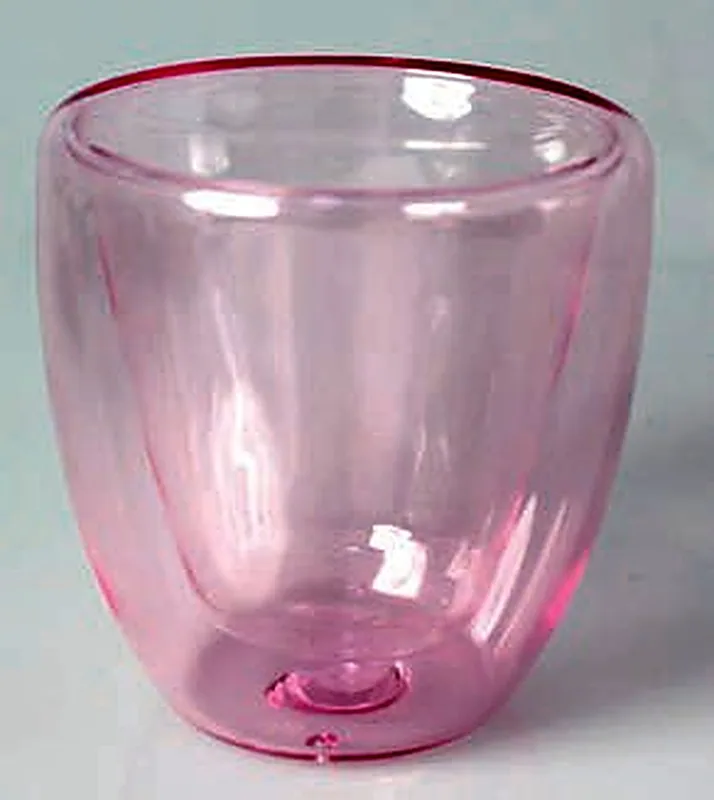
- TVD-1937 Double-Wall Cup, Coloured Round uses the same round handleless idea in tinted colours: clear, blue, orange, green, grey and pink. Choose it when a palette is part of your display.
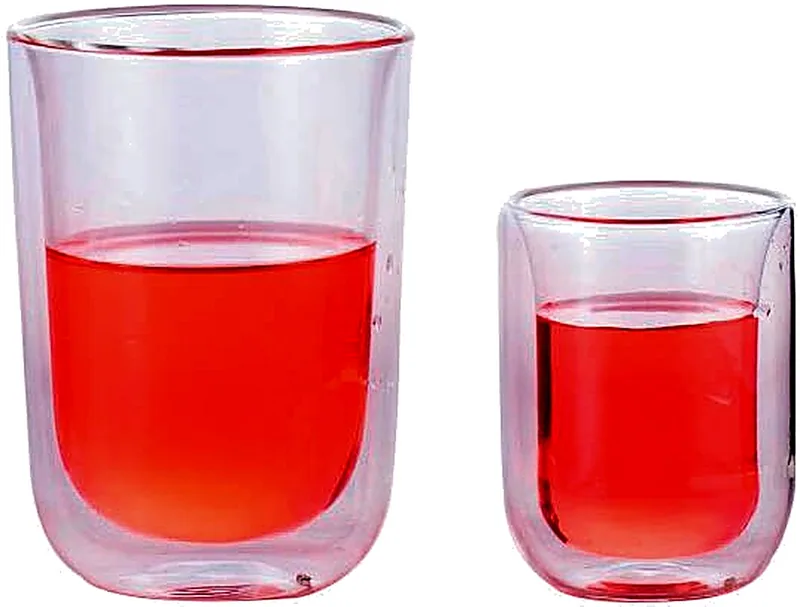
- TVD-1941 Tall Double-Wall Glass is the latte and juice shape, offered in large and small sizes.
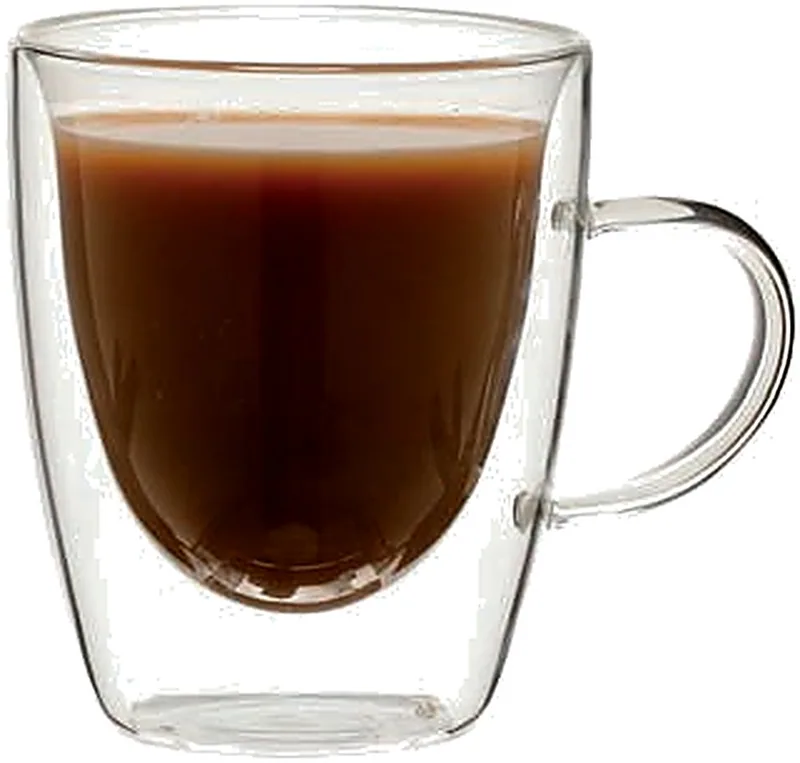
- TVD-1944 Double-Wall Mug, Classic has a handle, which suits table service where guests hold the drink for longer.
- TVD-1940 Double-Wall Tumbler with Lid and Straw is the cold-drink and smoothie option with a coloured lid.
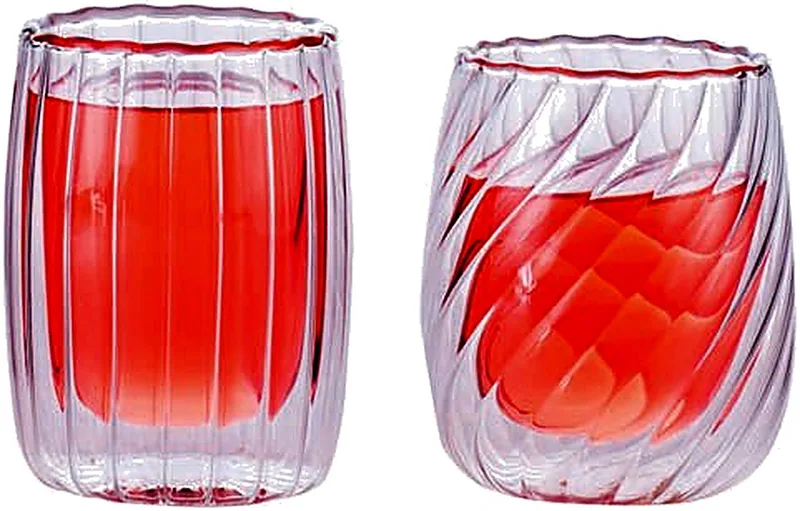
- TVD-1942 Fluted and Swirl Double-Wall Glasses add ribbed or swirl texture for hot and cold drinks in several sizes.
Many cafés order the round cup for espresso and cortado and add one taller glass for lattes, so the two share one container with other items.
Glassware rules a Canadian buyer should know
Canada regulates the lead and cadmium that can leach from glazed ceramics and glassware that touch food, under the Glazed Ceramics and Glassware Regulations of the Canada Consumer Product Safety Act. Decorated rims and printed or metallic decorations near the lip are the known risk, which is why a plain clear cup is a simple case, while a printed or tinted one calls for a test report on the decoration. The Food and Drugs Act also prohibits selling food in or with materials that may make it harmful, and Health Canada does not pre-approve kitchenware, so buyers usually request food-contact test reports from the factory.
No certification mark is on file for this cup, and we do not suggest it carries one. We confirm certification status and supply the documents with the quote before you order. Standards and rules change, so confirm with Health Canada, your health unit or your customs broker. This is not legal advice. For a wider view of what applies to a glass range, see our guides to electrical certification marks (not relevant to an unpowered cup, but useful when you buy equipment alongside) and the home kitchen and tableware range.
Canadian logistics for fragile glass
- Packing. Ocean freight lands at Vancouver or Prince Rupert and travels by rail or truck to the rest of the country. Dividers and tight cartons matter more than the route.
- Winter. Cold winter transit is a bigger worry for liquids and electronics than for empty glass, but ask the factory for its sudden-temperature-change guidance so you can put it on your staff care sheet.
- Quebec. Retail packaging and any care card for Quebec shops must be available in French.
- Sales tax. GST, HST, PST or QST applies according to your province of delivery. The sales tax by province guide explains the difference.
How ordering works
You ask; we quote in writing for the quantity, specifications, documents, packing, lead time and delivered cost to your address. Trial minimums are low on many lines, and samples are available on most items, with the sample cost usually credited to the first order. Payment is a 30% deposit and 70% before release. See how ordering works, plan your landed cost with the landed cost calculator and request a quote on the quote page. Our wholesale guide to double-wall glassware compares the range in more detail, and the Canada delivery hub lists where we deliver.