Certification guide ·
Double-wall glass cups in Canada: what to ask for before you import
Lead and cadmium limits, food-contact evidence for glass and silicone, and bilingual labels: a document guide for the whole double-wall glassware line. No certification mark is on file, and we say so plainly.
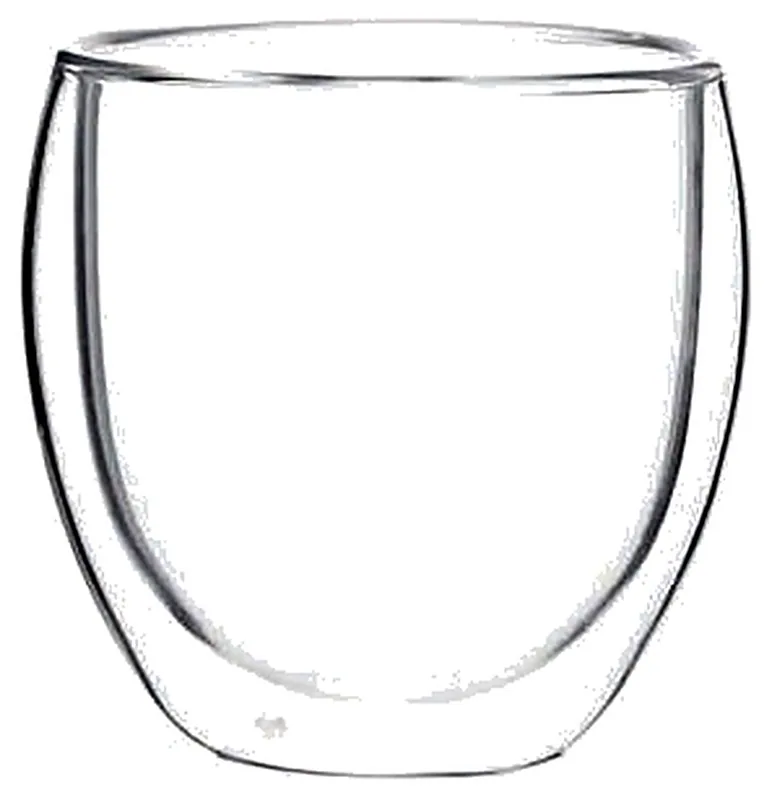
Double-wall glassware is sold in a huge range of shapes, from a plain round cup (TVD-1936) to a character glass with an animal inner shape (TVD-1972). Our product listings show borosilicate glass on many of the cups, and for this family no certification mark is on file for any product. This guide explains what a Canadian buyer should ask for, why the evidence differs from one cup to the next, and how we handle the paperwork. It covers the Double-Wall Glassware line, the double-wall glassware wholesale guide and the products named below.
Which Canadian rules touch a glass cup
Drinkware is a food-contact product, and several rules apply together. Here is the short version in plain English.
- Food and Drugs Act. It prohibits selling food in or with materials that may make it harmful. Health Canada does not pre-approve kitchenware, so the seller needs evidence.
- Glazed Ceramics and Glassware Regulations (under the Canada Consumer Product Safety Act). They set limits on lead and cadmium that can leach from glassware that contacts food. Decorated rims and printed or metallic decorations near the lip are the known risk, so decorated pieces deserve a test report.
- Canada Consumer Product Safety Act. It prohibits products that are a danger to human health or safety, requires incident reporting and allows recalls. Health Canada enforces it.
- Consumer Packaging and Labelling Act. A gift-boxed or shrink-wrapped cup is a prepackaged consumer product: it needs bilingual (English and French) product identity and net quantity, plus the dealer's name and place of business.
- Quebec's Charter of the French language. Labels, instructions and warranty documents must be available in French, with French at least as prominent.
Rules change. Always confirm current requirements with the authority, your inspector or your customs broker. This is not legal advice.
Where the line splits: what each design adds
All of these cups share a double-wall glass body, but the extras change the evidence you need.
Plain clear glass
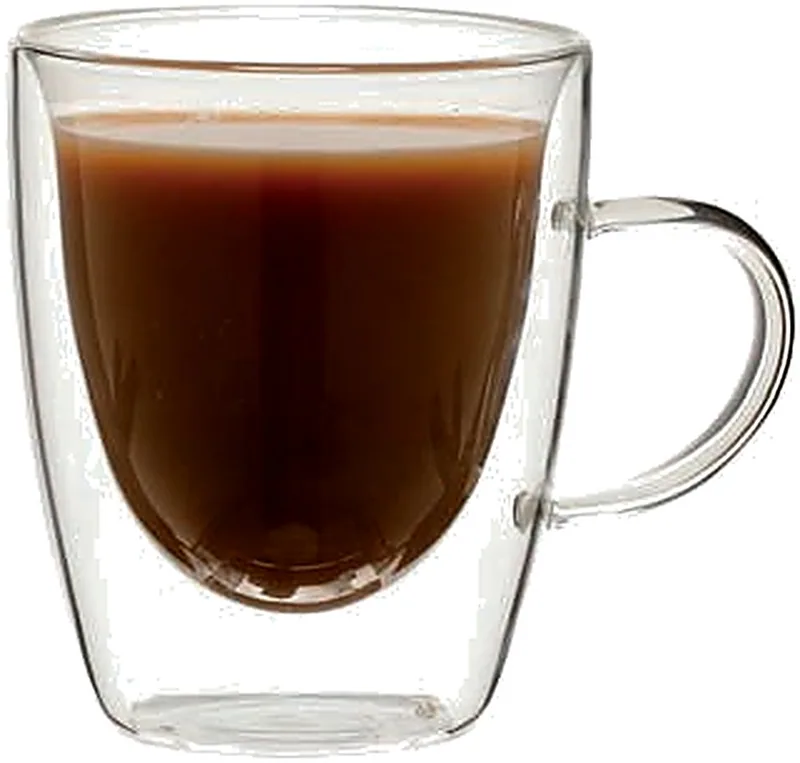
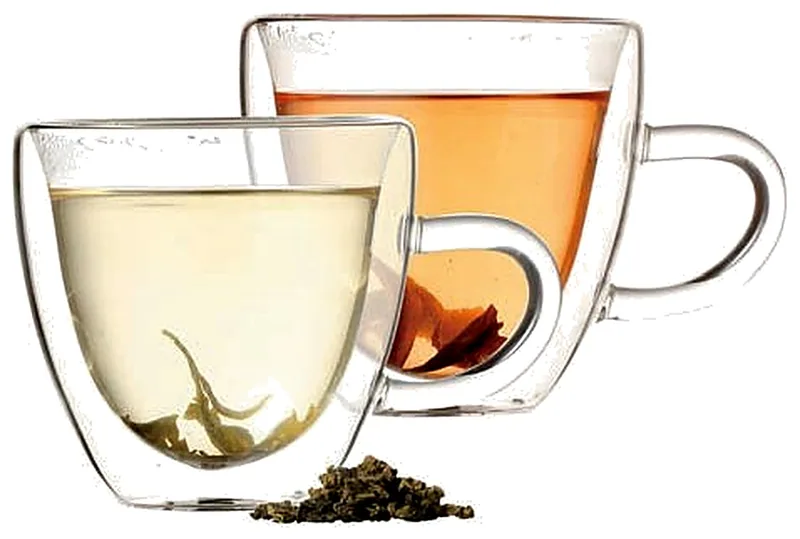
Clear cups such as the classic mug (TVD-1944), the teardrop cup (TVD-1951) and the latte glass with handle (TVD-1946) have the shortest document list: a lead and cadmium report on the glass and a food-contact report. On pieces with handles, ask how the handle is joined to the body and whether the factory tests the joint.
Tinted, coloured, glitter and decorated pieces
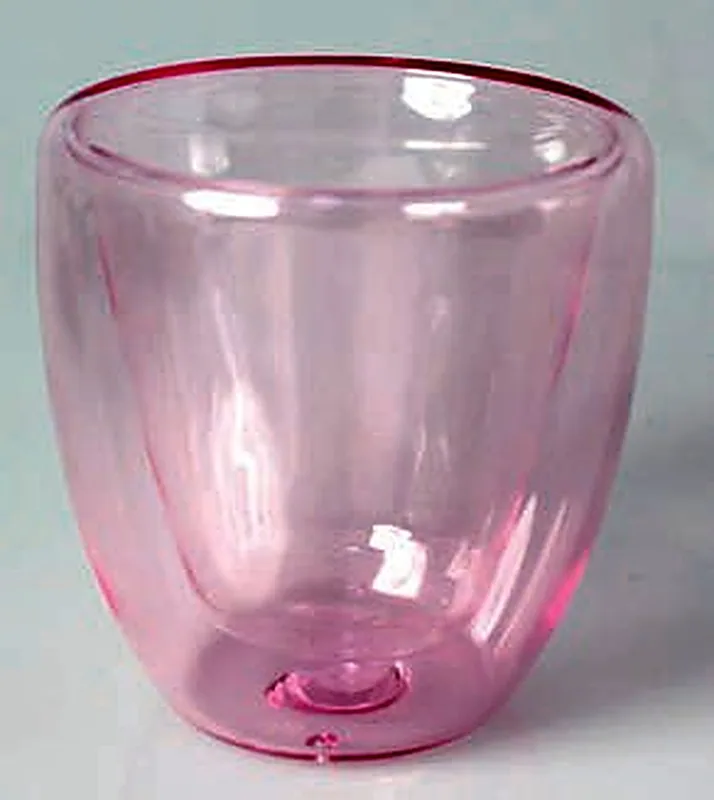
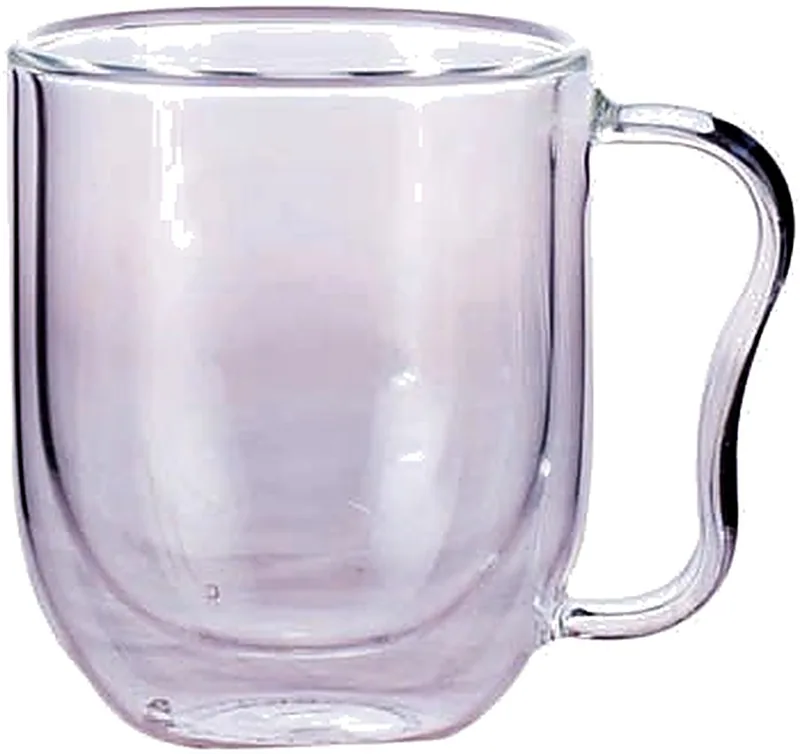
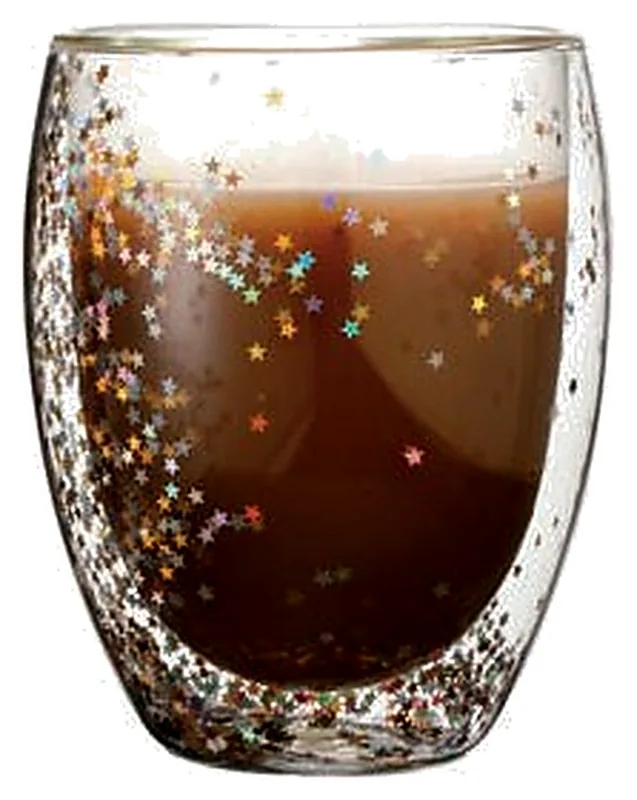
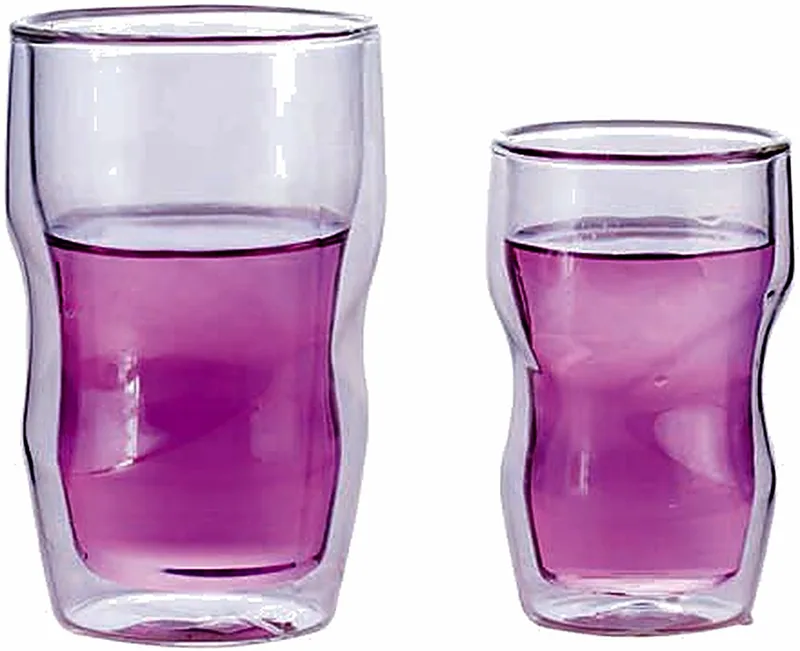
The coloured round cup (TVD-1937) comes in clear, blue, orange, green, grey and pink; the tinted pastel mug (TVD-1945) is pink and lilac; the glitter glass and mug (TVD-1952) has a glitter fill. Colour, tint and any decoration give the most room for metals to appear in the glass, so a lead and cadmium report is not optional for these. For the glitter pieces, ask where the glitter sits and confirm in writing that it is sealed away from the drink.
Silicone lids, bases and sleeves
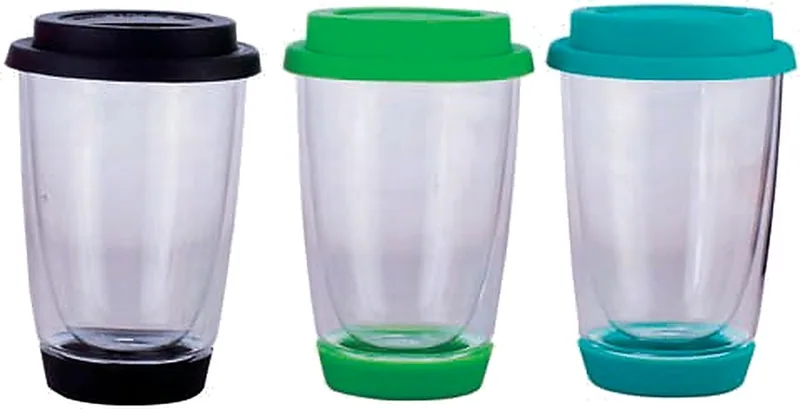
The travel cup with silicone lid (TVD-1968), the Irish coffee glass with silicone lid (TVD-1969), the glass with silicone sleeve (TVD-1970) and the mug with silicone base (TVD-1971) bring a second material. Silicone lids can touch the drink or the user's mouth, so ask for a food-contact test report on the silicone as well as the glass, and ask whether the factory recommends hand washing for the assembled piece.
Document checklist
| Document | Why you need it | Who issues it |
|---|---|---|
| Lead and cadmium leaching test report | Shows the glass and any decoration respect Canadian limits for glassware that contacts food | A testing laboratory, via the factory |
| Food-contact migration report (FDA or EU style) | The evidence buyers commonly ask for; Health Canada does not pre-approve kitchenware | Testing laboratory, via the factory |
| Silicone food-contact report | Covers lids, bases and sleeves that touch the drink | Testing laboratory, via the factory |
| Bilingual label and carton artwork | Consumer Packaging and Labelling Act; French in Quebec | You and the factory, checked on our proof |
| Packing specification | Dividers or gift boxes to limit transit breakage of hand-made glass | Factory, confirmed on the quote |
| Written quote with certification status | Records what is and is not on file before you pay a deposit | Thames Valley Distribution |
No mark on file: what that means for you
Because no certification mark is on file for these cups, we do not claim any product is certified, approved or compliant. What we do is confirm certification status and supply the documents with the quote before you order. If a report is missing, the right outcome is that the item waits until it exists. For a store, the risk of skipping this is real: a retailer or franchisor may refuse to list drinkware without a lead and cadmium report, and a recalled product is a recall for you too.
Does the CE mark help?
The European CE mark is not recognised in Canada as proof of compliance for consumer products. Food-contact migration reports under European or American methods are useful evidence, but they do not replace the Canadian limits on lead and cadmium in glassware.
Provincial and buyer differences
The glassware rules above are federal, but how they bite depends on who is buying. A Quebec retailer will insist on French labels and instructions. Cafés and hotels may carry their own specification for drinkware and ask for the reports with the order. Gift shops focus on packaging language. Always check what your health unit, landlord or franchisor requires. Electrical and gas rules would only arise if you pair a cup with a powered accessory, and none of these cups is one.
How we handle it
We put your product list to the factory, ask for the reports named above for every design in your order, review them and attach what exists to your written quote. Hand-made glass varies a little in weight and capacity, so we also record capacity tolerances and packing method. You can see the product family in the Double-Wall Glassware line, compare the contour glasses (TVD-1958) with the ring or foot handle cup (TVD-1949), and read the round cup guide (TVD-1936). Ordering steps are on the how ordering works page; send us your list for a quote. Payment is 30% deposit and 70% before release, delivered to your site across Canada.