Product guide ·
Double-Wall Glass Cups (TVD-2788) for Cafés and Hotels: Wholesale Guide for Canada
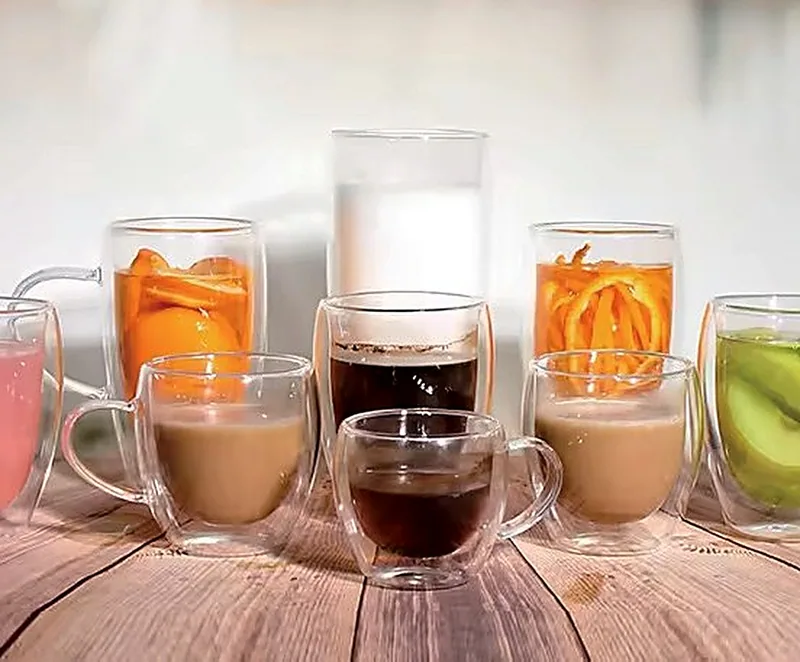
Double-wall insulated glass lets a customer see the drink while the outside stays easier to hold. This guide covers who buys TVD-2788, what to confirm before ordering and how the order runs.
What the Double-Wall Glass Cups are
The Double-Wall Glass Cups (TVD-2788) are insulated glass cups made with two layers of glass. They come in several sizes, some with a handle, and the listed purpose is to keep drinks hot or cold. That is the whole description we hold to: we do not add a capacity, a temperature range or a dishwasher claim, because those are confirmed on your written quote. A free account on the product page shows the full specifications.
The appeal is easy to see across a café counter. A latte, a tea or an iced drink in a double-wall cup looks good on the saucer, and the air gap between the layers means the outside of the cup does not carry all the heat or all the chill of the drink. For a business that wants one glass type for hot and cold service, that is the selling point.
Who buys it and why
- Cafés and coffee bars use the smaller sizes for espresso drinks and the sizes with a handle for tea and filter coffee, so the guest can hold the cup without a sleeve.
- Hotels put them in the breakfast room and on the room-service tray, where one cup type serves both hot drinks and cold juice.
- Event planners and caterers like a glass cup that looks more considered than paper when a reception serves hot cider in one hour and cold drinks the next. Breakage allowances matter more at events, so plan spares.
- Gift shops and retailers can present them as a drinkware gift, where the two-layer look is the first thing a shopper notices.
What the listed features mean in practice
Double-wall insulated glass. Two layers of glass with a gap between them slow the movement of heat. In use, this means a hot drink feels less hot through the outer wall and a cold drink forms less condensation on the outside, which saves the table from rings. The outer layer is still glass, so it can chip if it knocks a counter edge.
Several sizes, some with handle. The range covers more than one cup, so your quote should name the size you want for each code in the order. Handles on glass cups add a joint or a moulded part that sees extra stress, so ask the factory how the handle is attached and what carton packing protects it.
Keeps drinks hot or cold. Treat this as a general benefit, not a test result. If you plan to print a time or temperature claim on a menu card or packaging, ask the factory for the supporting test data first.
How to specify it: a checklist
- Glass type and grade, for example borosilicate or another glass, so you know what heat range the factory rates the cup for.
- Capacity and dimensions of each size, and which sizes have a handle.
- Whether the factory rates it for microwave, freezer, oven or dishwasher use. None of those appears in the listed features, so assume nothing until the quote says so. Sealed double-wall glass and microwaves are a combination to ask about explicitly.
- Food-contact test reports for the product and for Canada.
- Whether any print, colour or logo is applied to the glass, and a lead and cadmium report if it is.
- Retail or bulk packaging, label language, barcode, carton quantity and size, and inner dividers.
- Minimum order per size, sample availability and lead time.
How it compares with other glass in the line
- The Glass Pitchers with Lid (TVD-2789) serve the table, while these cups serve the guest. A café that sells loose-leaf tea might combine the two.
- Premium Dining Stemware (TVD-4119) suits wine service, whereas the double-wall cups suit hot and cold soft drinks and coffee.
- Fluted Glass Tumblers & Coupes (TVD-4120) have a single wall and a patterned look. They are a different style from a clear insulated cup, and the choice is partly about whether you want the insulation.
Canadian use notes
Canadian cafés run hot and cold service all year, and a winter delivery can turn a cold truck into a hazard for glass. Ask the factory how the cups are packed and whether cartons carry inner dividers, then allow the cartons to come to room temperature before you unpack and wash them, so a sudden change in temperature does not stress the glass. Commercial dishwashers add their own stress, so confirm dishwasher suitability before you load them for the first time.
Food-contact rules apply because these cups touch drinks. The Food and Drugs Act prohibits selling food in or with materials that may make it harmful, and Health Canada does not approve kitchenware in advance, so buyers commonly request food-contact test reports. Glass that carries a decoration near the lip also falls under the lead and cadmium limits in the Glazed Ceramics and Glassware Regulations. No certification mark is on file for TVD-2788: we confirm certification status and supply the documents with the quote before you order. Rules change, so confirm with your health inspector or a customs broker; this is not legal advice. The line-wide glassware compliance guide covers the topic in more depth.
How ordering works
Send the quantity and delivery address through the quote request. We reply in writing with the price for the quantity, specifications, certification status and documents, packing, lead time and delivered cost to your address. Samples are available on most items, with the sample cost usually credited to the first order. Payment is a 30% deposit and 70% before release. Our ordering guide explains each step, and the landed cost calculator helps you plan the budget. If you are shopping the whole line, start at the Glassware & Drinkware page.