Product guide ·
Commercial Espresso Machines for Canadian Cafés: 2 Group and 3 Group
Two espresso machines share a commercial boiler build and differ by group heads. Here is how to choose and how to order them together.
Two espresso machines, sized by group heads
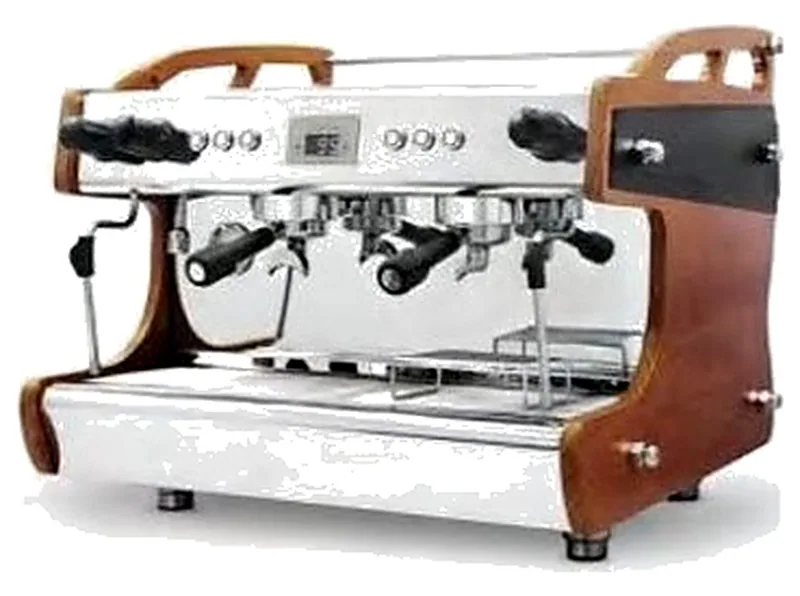
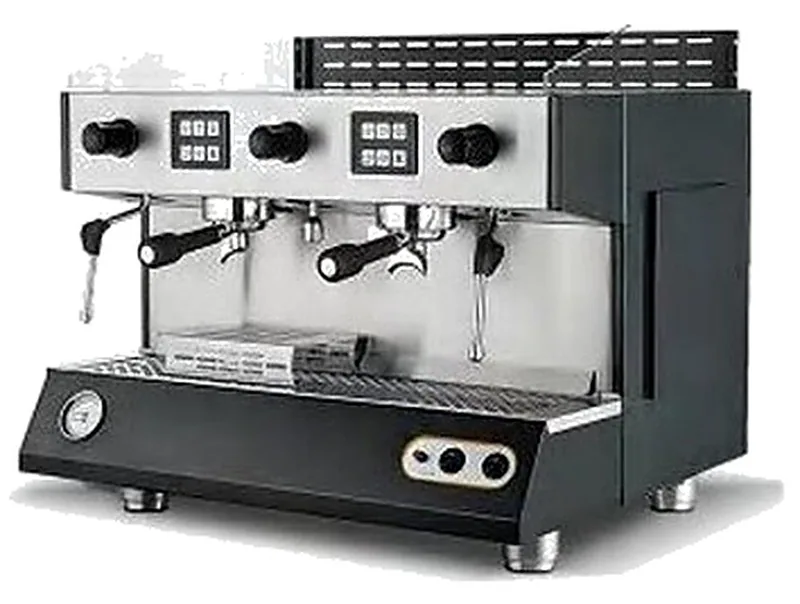
An espresso machine is bought by the number of group heads, because that decides how many drinks can be pulled at once and how many baristas can work side by side. We list two commercial units that share the same product's listed points: one to three group heads, commercial boilers, and a focus on cafés and amenity lounges. The names tell you the split. The Espresso Machine, 3 Group (TVD-618) is the larger machine and the Espresso Machine, 2 Group (TVD-10828) is the smaller. This guide sets out how to choose between them and how to order them together.
Product pages show full specifications to signed-in buyers, and a free account is enough. We stay with the published listed points here; boiler volume, power draw, dimensions and weight are confirmed on your written quote.
What the shared listed points mean
- 1 to 3 group heads. The range is one to three, and the two products sit at different points in it. The 2 group suits a steady café; the 3 group suits a busier bar or a counter where two people work the machine. Which machine matches your service is a question of peak queue, not of average day.
- Commercial boilers. Commercial boilers mean the machine is built to work through a service rather than to produce a few cups for an office. A boiler holds heated water under pressure, so you should ask for the boiler capacity, the heating element rating and the safety devices in writing.
- Cafés and amenity lounges. The named settings are cafés and amenity lounges, such as the coffee station in a hotel, a lobby or a corporate dining area. That tells you the machine is meant for front-of-house, where noise, appearance and cleaning routine are part of the experience.
Choosing between 2 group and 3 group
| Consideration | 2 Group (TVD-10828) | 3 Group (TVD-618) |
|---|---|---|
| Group heads | Two, within the 1-3 range | Three, the top of the range |
| Typical setting from the listed points | Café or amenity lounge with a steady flow | Café or lounge with peak queues and two staff |
| Counter space | Smaller; width confirmed on the quote | Larger; width confirmed on the quote |
| Electrical load | Confirmed on the quote | Confirmed on the quote; usually the bigger load of the two |
| Boiler volume and output | Commercial boiler; size confirmed in writing | Commercial boiler; size confirmed in writing |
| Certification on file | None; confirmed before you order | None; confirmed before you order |
One rule of thumb: count the drinks you expect to serve in your busiest ten minutes, and do not buy for the average hour. A machine that matches the average fails on the morning rush. We do not publish output per hour, so ask us for the manufacturer's rated output on the quote and compare it with your own count.
Mixing both in one order
Many hotels and multi-site cafés run the larger machine in the main lounge and the smaller one in a satellite space such as a conference break area. You can quote both together, and they ship in the same container with other kitchen equipment. If you are fitting out a full food service area, see the Gas Range with Oven (TVD-593), the Combi Oven (TVD-596) and the Tilting Kettle & Braising Pan (TVD-597) in the same line. The commercial kitchen equipment line shows the rest.
Canadian use notes
An espresso machine is a high-load electric appliance. Canadian supply is 120 V or 240 V single-phase, with 208 V or 600 V three-phase in many commercial buildings, at 60 Hz. A machine built for 220 V and 50 Hz needs written confirmation that it can run on Canadian voltage and frequency, because heating controls and pumps can misbehave. A larger machine may need a dedicated circuit, and your electrician should see the amperage on the quote before the lounge is wired.
Neither machine has a certification mark on file at the time of writing. Electrical equipment in Canada needs a mark from an accredited body or a field evaluation label; see our guide to CSA, cUL and cETL marks. For how we handle a certification question for a machine like this, read the range certification post as a model.
Water also matters. Café water supplies in Canada vary by region, and a boiler benefits from a water supply that suits it; ask the factory what water conditions they expect and whether treatment is advisable. Quebec buyers should request French manuals and warranty text.
How ordering works
Use the quote request, telling us the number of group heads you want, the delivery postal code and the power available. We reply in writing with the specification, certification status, packing, lead time and delivered cost, without any price on the site. Samples are available on most items, trial quantities are common, and sample costs are usually credited to the first order. Payment is 30% on order and 70% before release; see how ordering works. For taxes on delivery, use the sales tax guide.
Rules change; confirm electrical and customs points with your authority or customs broker. This is not legal advice.