Product guide ·
Glass Canisters with Metal or Silicone Lids (TVD-2016): How to Specify Them for Canadian Retail
Tall clear glass canisters in three sizes with a choice of metal or silicone lid, plain or printed. Here is what to decide and what to ask before ordering.
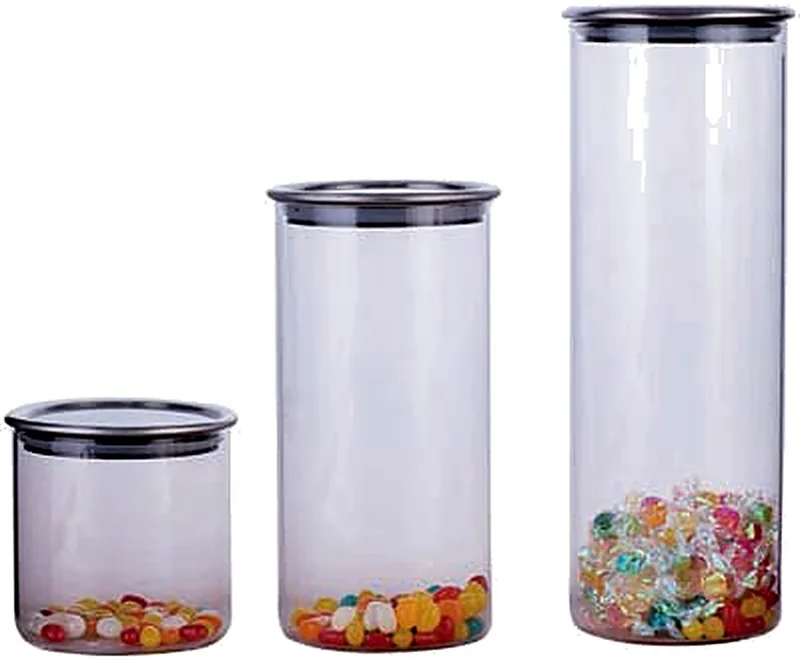
Tall, clear glass canisters with a choice of metal or silicone lid are a pantry and kitchen-counter staple, and the Glass Canisters – Metal or Silicone Lid (TVD-2016) come in three sizes, plain or printed. This guide is for buyers deciding how to specify them: which lid, which size mix, whether to take them printed, and what to ask the factory before the order is confirmed.
What the listing tells you
Tall clear glass canisters. A choice of metal lid or silicone lid. Three sizes. Plain or printed. Those four points are the full set of facts on our listing; capacities, glass grade, lid seal and print method are confirmed on your written quote. Do not assume borosilicate: that word is not on this listing, so ask for the glass type in writing.
The unusual feature is the lid choice, which really gives you two different products in one family. A metal lid reads as an apothecary or café jar. A silicone lid reads as a modern kitchen jar and tends to grip the rim for a snug fit. Both can sit in the same three-size range.
Choosing the lid
| Lid | Look and feel | Questions to ask |
|---|---|---|
| Metal | Classic café and apothecary look | Metal type, coating or finish, and whether it can rust in a damp kitchen or in the dishwasher |
| Silicone | Soft, modern, grips the rim | Silicone grade, colour options, food-contact test reports, odour on opening the carton |
If the metal lid has a painted or lacquered coating, that coating is a food-contact and surface-finish question worth raising at quote stage, not after the container lands. For silicone, buyers commonly ask for food-contact reports from the factory. In both cases the plain-language answer to give your shopper about heat, dishwasher and freezer use comes from a written factory rating, not from us guessing.
Printed or plain
This is the point that changes the compliance conversation. A plain clear canister has little decoration to worry about. A printed canister has ink or decal on glass, and Canada's Glazed Ceramics and Glassware Regulations, made under the Canada Consumer Product Safety Act, limit lead and cadmium that can leach from glazed ceramics and glassware that contact food. Printed or metallic decoration near the lip is a known risk. For a canister, ask where the print sits, whether it touches the rim or the inside, and request a lead and cadmium test report covering the printed version. Take the plain version if you want the simplest documentation path.
The Consumer Products Containing Lead Regulations also set lead limits, covering kitchen utensils and products for young children; a canister is not a utensil, but if you plan to market it for a children's snack range, raise that with us first. We hold no certification on file for this product and make no certification claim; we confirm certification status and send documents with the quote. Our guide to Canadian import rules for decorated food glass and ceramics walks through the paperwork. Rules change, so confirm with the authority, your inspector or your customs broker; this is not legal advice.
Who buys canisters like these
- Retailers. Our line's typical buyers are retailers, and canisters fit a three-tier price ladder of small, medium and large without needing three different products.
- Meal-prep and pantry businesses. Dry goods in tall jars look good in a meal-kit box or a refill shop. Ask about stackability in a case.
- Cafés and tea shops. Tall canisters show off beans and leaves on a back shelf. Metal lids look at home there.
- Online sellers. Printed and plain, metal and silicone, three sizes: that is a variation matrix. Keep it tidy by choosing two lids and two print options, not all of them at once.
- Gift shops. A printed canister is easy to give as a set with a food item inside.
Specification checklist
- State your three sizes and ask for capacity, height and diameter for each.
- Choose lid type per size and confirm whether metal and silicone lids use the same neck finish.
- Decide plain or printed per size, and ask for the print method and lead and cadmium report if printed.
- Ask for the glass type and wall thickness in writing.
- Ask whether the factory rates the glass or lids for dishwasher, microwave or freezer. No rating is stated in our listing.
- Confirm barcode, retail packaging, labelling language and carton quantity, plus minimum order per size and lid.
Packing tall glass
Tall glass is more breakable per unit than a squat jar. Ask for fitted dividers, ask how lids are packed (loose lids are scratched lids), and ask about the drop height the master carton is built for. A sample carton shipped to you before the container tells you more than a spec sheet. For winter delivery, avoid opening cold cartons on a warm shop floor; condensation can mark printed glass and stain cardboard.
Labelling for Canada
An empty jar sold to consumers still carries product identity and quantity, and the Consumer Packaging and Labelling Act requires bilingual English and French identity and net quantity on prepackaged consumer products, with the dealer's name and place of business. If you sell the canisters filled, food labelling rules are a further topic to confirm with the authority. In Quebec, the Charter of the French language expects labels and instructions in French.
Comparing with other jars in the range
If you prefer a natural lid, see Glass Food Container – Bamboo Lid (TVD-2017), a food box in borosilicate glass with a bamboo lid, or Glass Storage Jar – Bamboo Lid (TVD-2015), a clear canister with a bamboo or cork lid. For all-glass lids with a vented seal, Glass-Lid Food Containers (TVD-776) is the plastic-free option. For a heavy-duty meal-prep range, Deep Glass Food Containers (TVD-775) has deep sizes with leak-proof snap lids. A free account shows full specifications on each product page.
Ordering
We quote in writing for the quantity, specification, packing, lead time and delivered cost to your address. We do not publish prices. Samples are available on most items, with sample cost usually credited to the first order. Payment is 30% deposit and 70% before release, and the canisters can share a consolidated container with products from other factories. See how ordering works, request a quote, estimate the total with the landed cost calculator and read the sales tax by province guide. The product line page shows the rest of the range.