Certification guide ·
Gold & Silver Mirror Trays in Canada: Food-Contact, Labelling and Import Rules
No certification mark is on file for these trays, so here is what a Canadian buyer should ask for before ordering, and the documents we confirm on the quote.
Mirror trays look simple, but a Canadian buyer still has questions to answer before a pallet is released: does the tray touch food, does the gold or silver finish carry a metal risk, is the box labelled correctly, and what happens if a retailer or venue asks for papers. This guide covers the whole gold and silver mirror tray line, from the plain Gold Mirror Tray – Rectangular (TVD-2672) to the printed Printed Mirror Tray – Silver, Rectangular (TVD-2691).
Is any mark on file?
No. No certification mark is on file for any tray in this line, so we do not say that any of them is certified, approved or compliant with a named standard. What we do is confirm certification status and supply the documents with the quote before you order. Most trays in this line are decorative: they have a mirror base and a metal-look or silver frame, with handles, pierced borders or printed designs. The features show no powered, battery or padded part, so electrical and upholstery rules are not triggered by the tray itself. If a version you order includes a light, a charger or any plug-in part, Canadian electrical certification applies to that part; our guide to CSA, cUL and cETL marks explains how to read the marks.
Which Canadian rules touch a mirror tray
- Canada Consumer Product Safety Act (CCPSA). It applies to consumer products: it prohibits products that are a danger to human health or safety, requires incident reporting and allows recalls. Health Canada enforces it. A cracked mirror edge or a sharp frame corner on a consumer tray is the kind of hazard to design out.
- Food-contact materials. If a tray is used to serve food, the Food and Drugs Act prohibits selling food in or with materials that may make it harmful. Health Canada does not pre-approve kitchenware. Buyers commonly ask the factory for food-contact test reports.
- Lead and cadmium. The Glazed Ceramics and Glassware Regulations set limits on lead and cadmium that can leach from glazed ceramics and glassware that contact food, and decorations or metallic prints near where food rests are a known risk. A mirror is glass and the gold and silver finishes and the printed designs on the TVD-2691 to TVD-2694 trays are decorations, so ask for a lead and cadmium report whenever the tray may carry food.
- Consumer Packaging and Labelling Act. Prepackaged consumer products need bilingual English and French product identity and net quantity, plus the dealer's name and place of business.
- Quebec. Labels, instructions, manuals and warranty documents must be available in French, with French at least as prominent. Retailers in Quebec will ask for this.
Rules change, so confirm with the authority, your inspector or a customs broker. This is not legal advice.
Document checklist
| Document | Why you want it | Who issues it |
|---|---|---|
| Food-contact test report for tray surface and finish | Shows whether serving food on the tray is supported | Factory or an independent laboratory |
| Lead and cadmium test result for frame finish and printed designs | Answers the metallic-decoration question | Factory or an independent laboratory |
| Written statement of intended use (display only or food service) | Fixes what the product is sold for | Factory, confirmed by us on the quote |
| Bilingual box artwork or overprint plan | Meets retail packaging rules | You and the factory, agreed on the quote |
| French-language care leaflet for Quebec | Meets the Charter of the French language | Translated copy supplied on request |
| Packing specification and drop-test result | Shows corners and mirror are protected | Factory |
| Customs classification confirmation | Sets duty and delivered cost | Our customs broker |
CE marking and Canadian expectations
Canada does not recognise the European CE mark as proof of compliance for electrical, gas or consumer products. A tray that arrives with CE paperwork still needs the Canadian points above. For a mirror tray the practical difference is small, because the main checks are food-contact and metal limits and not an electrical mark, but do not accept CE papers as a substitute for food-contact or lead and cadmium reports.
How the rules differ across the line
The line shares a mirror base, but the finish and shape change the questions:
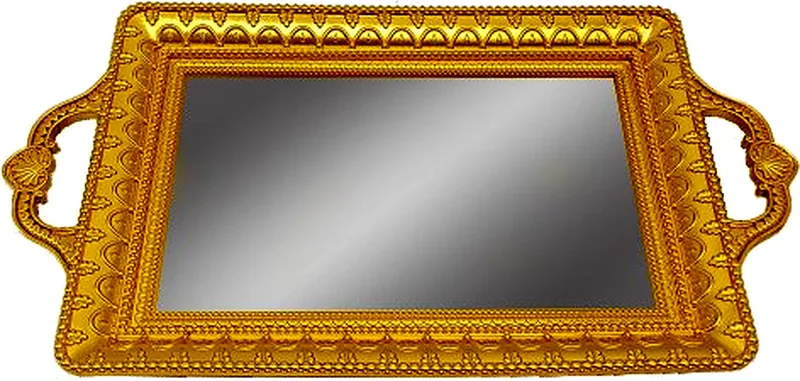
- Gold Mirror Tray – Rectangular (TVD-2672) has a gold frame and side handles. Ask for the finish report and the packing method for flat mirror and corners.
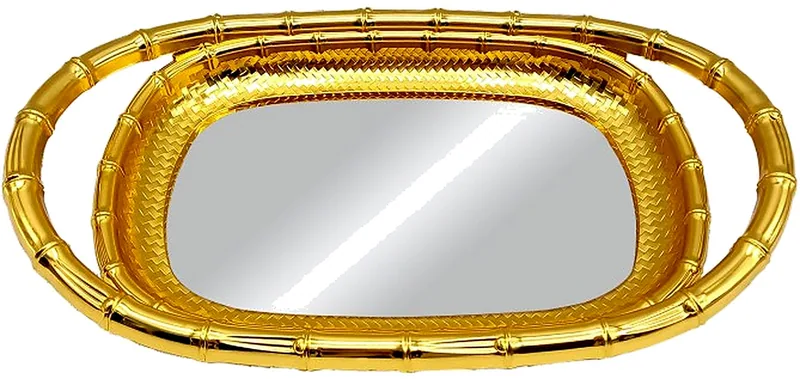
- Gold Bamboo-Rim Oval Mirror Tray (TVD-2679) is described with a bamboo-style rim. If that rim is real bamboo or wood, food-contact tests on its finish and glue are the standard request; if it is a moulded look, the material is confirmed on the quote.
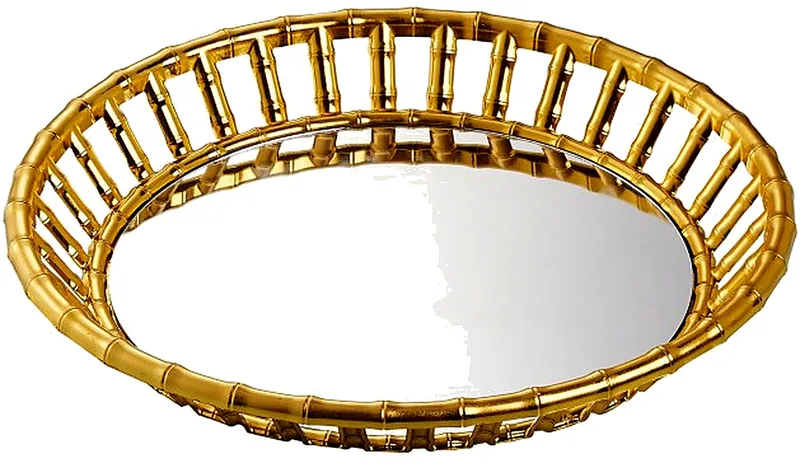
- Gold Slatted Mirror Basket – Oval (TVD-2687) has slatted sides, so crumbs and liquids can collect, which matters for cleaning guidance and inspector expectations in a food premises.
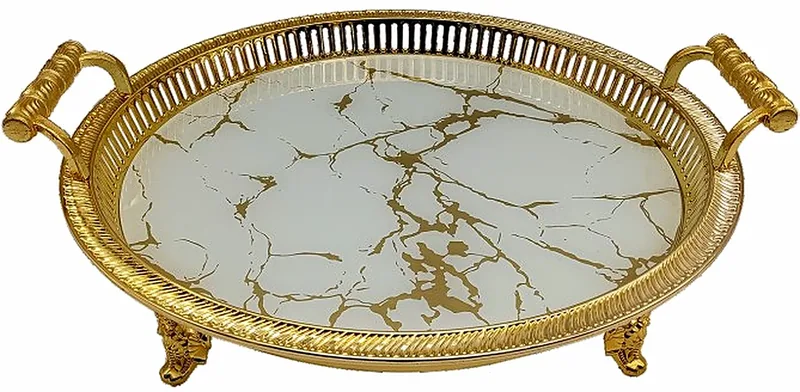
- Footed Pierced-Rim Tray – Gold (TVD-2689) comes with a marble, lace or mirror base according to our listing, so a marble or lace version needs its own material statement and a food-contact answer.
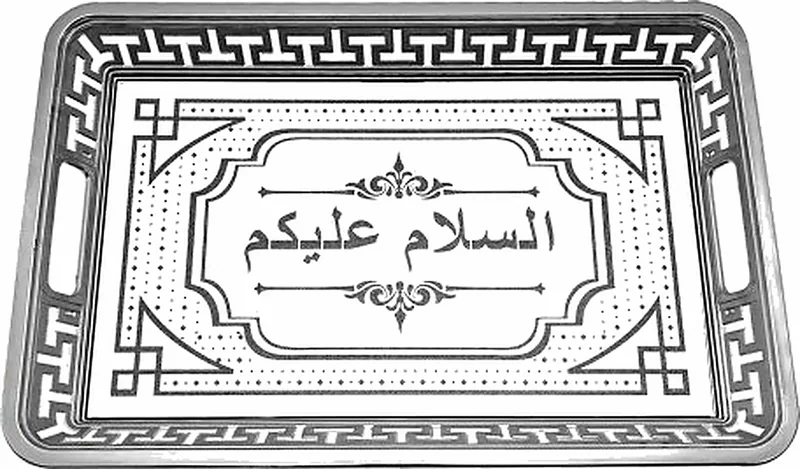
- Printed Mirror Tray – Silver, Rectangular (TVD-2691) carries printed Arabic and Ramadan designs. Printed decoration is where the lead and cadmium question is sharpest, and the designs make seasonal timing important for retailers.
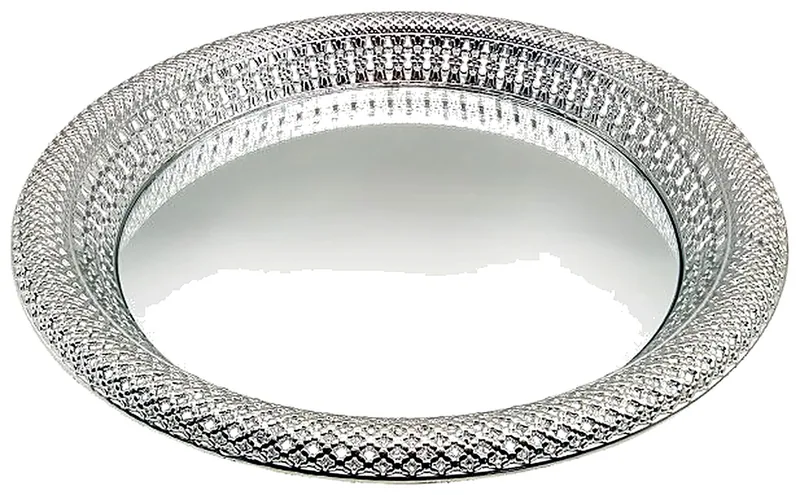
- Silver Round Mirror Tray – Pierced Rim (TVD-2683) has a silver finish and a pierced border; ask what the silver finish is and how it is protected from tarnish.
Each tray has its own guide if you want the detail: the rectangular and oval tray guide, the slatted basket guide, the bamboo-rim oval tray guide and the silver pierced-rim tray guide.
What happens if a document is missing
A retailer's compliance team may refuse to list a tray without a lead and cadmium result or a bilingual box. A health inspector can object to a decorative surface used for food if cleaning is difficult. Customs delays follow a wrong classification. A tray reported as hazardous after sale can trigger incident reporting and recall obligations under the CCPSA. These are avoidable if the documents are requested before the order, not after the container lands.
How we handle it
We confirm certification status and documents on the quote, ask the factory for the food-contact and lead and cadmium results relevant to the tray you choose, and tell you plainly what exists and what does not. Samples let you check finish, edge and packing before you commit. Duty depends on tariff classification and origin, and GST, HST, PST or QST follow the province of delivery; our sales tax guide and landed cost calculator show how those fit together.
Canadian use notes
Plan for breakage and winter condensation: let cartons warm before opening. Browse the gold and silver mirror trays line, the mirror tray wholesale guide and the home kitchen and tableware hub. Orders are quoted in writing; samples are usually credited to the first order, payment is 30% deposit and 70% before release, and you can start on the quote page or see how ordering works.