Certification guide ·
Kids Plates – Set of 2 (TVD-2702): Canadian Certification and Children's Product Checklist
No certification mark is on file for this printed kids plate set. This guide lists the food-contact, lead, coating and labelling rules to check and the documents we confirm on your quote.
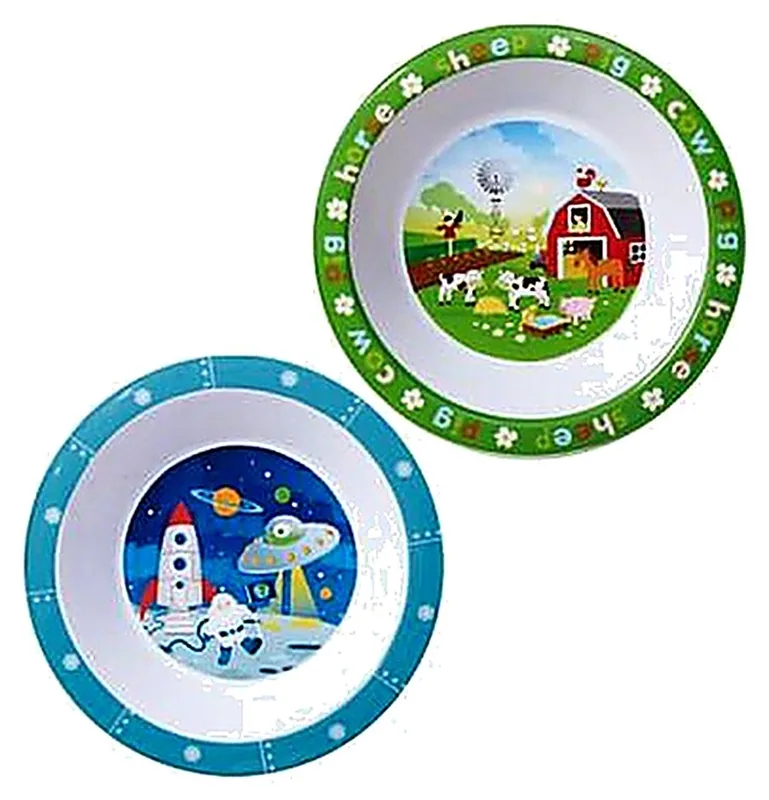
The Kids Plates – Set of 2 (TVD-2702) is a printed kids plate, and printed plates for children are the sort of product Canadian retailers check twice. We have no certification mark on file for this set, so this guide does not call it certified, approved or safe for children. It sets out the rules a Canadian buyer should check, the documents to ask for and how we handle the paperwork on your quote.
Where a kids plate meets Canadian law
A plate for children is a food-contact article and a children's product at the same time. That means two groups of rules, plus labelling.
Food contact
The Food and Drugs Act prohibits selling food in or with materials that may make it harmful. Health Canada does not pre-approve kitchenware, but it offers voluntary Letters of No Objection for food packaging materials, which is a different thing. Retail buyers commonly ask the factory for food-contact test reports, such as FDA or EU migration tests, and many keep them for a complaint or an inspection.
Lead and coatings
The Consumer Products Containing Lead Regulations set lead limits that include kitchen utensils and products for young children. The Surface Coating Materials Regulations limit lead to 90 mg/kg and also limit mercury in paints and coatings on children's products. A printed design is a decoration, and whether it counts as a surface coating for a particular plate depends on how it is applied, so ask the factory to describe the print and supply a lead test report.
Ceramic or glass
Our listing says printed kids plates and does not state the material. If the version you order is glazed ceramic or glass, the Glazed Ceramics and Glassware Regulations set lead and cadmium limits for pieces that touch food. Decorated rims and printed decoration near the edge are a known risk, so ask for a lead and cadmium test report. If it is plastic, the glaze rules do not apply, but the test report is still a sensible request.
Soft vinyl
Phthalate limits apply to soft vinyl in childcare articles and toys. A hard plate is not soft vinyl, but if the set includes any soft part, ask what material it is.
General consumer safety
The Canada Consumer Product Safety Act prohibits products that are a danger to human health or safety, requires incident reporting and allows recalls. Health Canada enforces it. A retailer who sells children's plates should know how to trace a batch.
Labelling
A prepackaged set needs bilingual English and French product identity and net quantity, plus the dealer's name and place of business, under the Consumer Packaging and Labelling Act. For a set of two, net quantity is the count of plates. In Quebec, the Charter of the French language requires labels, instructions and warranty documents to be available in French, with French at least as prominent. Quebec retailers will ask for it before listing.
What does not apply
There is no electrical part in the listed features, so CSA, cUL and cETL marks do not enter the picture; the guide to those marks is there for other products. A CE mark is not accepted in Canada as proof of compliance for consumer products.
Document checklist
| Document | Why you want it | Who issues it |
|---|---|---|
| Material and grade statement for the plate | States whether it is plastic, ceramic or glass | Factory |
| Food-contact test report | Shows migration testing for the plate material | Factory or independent laboratory |
| Lead test report on plate and print | Addresses lead limits for products used by young children | Independent laboratory |
| Lead and cadmium test report if ceramic or glass | Addresses limits for glazed ceramics and glassware | Independent laboratory |
| Print method description | Shows how the design is applied and whether it sits on the surface | Factory |
| Care and rating statement | Confirms dishwasher and microwave claims, if any | Factory, through us |
| Bilingual packaging proof | Identity, net quantity and dealer details | You and us |
What happens when a document is missing
A major retailer's buyer will usually refuse to list a children's item without test reports. A daycare or school purchasing officer may ask for the same papers. If a problem is reported to Health Canada, the consumer product rules require incident reporting and allow recalls, so a seller without traceable paperwork is in a weak position. Insurers can also ask questions after a claim.
How we handle it
We confirm the material, the print method and the reports that exist, and we supply the documents with the written quote before you order. Samples are available on most items and are usually credited to the first order. The commercial side, including the Set of 3 and the Set of 4, is covered in our kids plates buying guide. Other sizes have their own pages: Set of 3 and Set of 4. For the whole line, see the line compliance guide and the product line page. Ask for pricing through the quote request; payment is 30% deposit and 70% before release, as explained in how ordering works.
Rules change, so confirm the current position with Health Canada, your provincial authority, your inspector or your customs broker. This is general information, not legal advice.