Certification guide ·
Marble Silicone Air Fryer Liner (TVD-10744): Food-Contact, Labelling and Documents for Canada
No certification mark is on file for this silicone liner, so a Canadian buyer needs to know which documents to request and which rules sit with the liner and which with the air fryer. Here is the checklist.
Status: nothing on file, so ask for documents
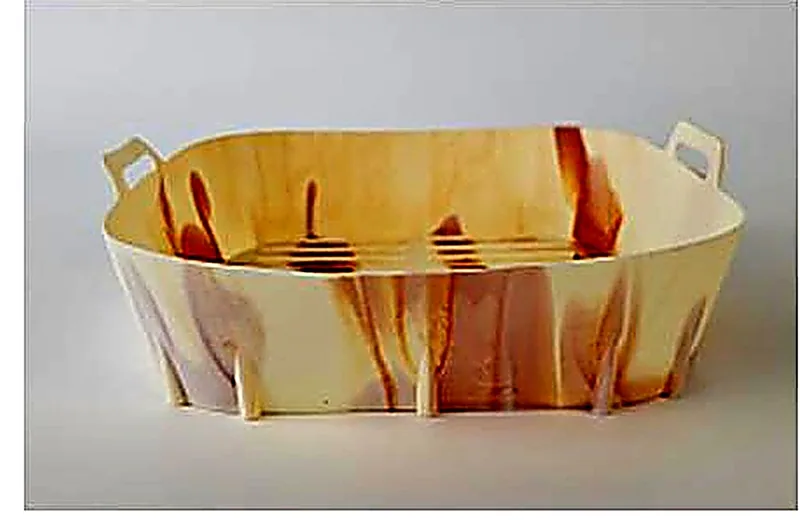
The Marble Silicone Air Fryer Liner (TVD-10744) is made of cream and marble-tone silicone and shown in round, loaf and muffin forms. We hold no certification or test report for it, and we do not say or imply that it is certified, approved or compliant with any standard. What we do is confirm certification status and supply the documents with the quote before you order. The rest of this page explains which documents a retailer in Canada should expect to need.
Which rules apply: the liner versus the air fryer
Many buyers assume an air fryer accessory needs an electrical mark. It does not, unless the accessory itself is powered. Electrical products sold or installed in Canada must carry a certification mark from a body accredited by the Standards Council of Canada, such as CSA, cUL or cETL, or a field evaluation label. That obligation applies to the air fryer. A plain silicone liner with no heating element, motor, battery or plug is a food-contact kitchen accessory, so the questions that matter are about material, heat and labelling. If a version you order has any powered or battery part, tell us, because the electrical rules would then apply. For background on the marks, read our guide to CSA, cUL and cETL certification marks.
Food-contact materials
The Food and Drugs Act prohibits selling food in or with materials that may make it harmful. Health Canada does not pre-approve kitchenware, but it does offer voluntary Letters of No Objection for food packaging materials. For silicone bakeware, buyers commonly ask the factory for food-contact test reports, for example FDA or EU food-contact migration tests. Ask for the report to name the silicone material and to state the temperature at which it was tested. A report at room temperature says little about a liner that lives in a hot air stream.
The Consumer Products Containing Lead Regulations set lead limits that include kitchen utensils. If any pigment is used to make the marble tone, ask the factory to confirm lead content in that colourant.
Heat claims on packaging
A heat range printed on retail packaging is a promise to your customer. Our standing advice is to ask for the stated temperature range for oven and freezer use, and to confirm it covers typical air fryer settings before you print any claim. If the factory gives a lower limit, your packaging must show that lower limit. This is not a federal certification question, but a misleading claim can attract a customer complaint, a returns problem or a retailer's quality audit. Keep the factory's written statement on file.
Labelling and packaging in Canada
- Under the Consumer Packaging and Labelling Act, prepackaged consumer products need bilingual (English and French) product identity and net quantity, plus the dealer's name and place of business.
- In Quebec, the Charter of the French language requires labels, instructions, manuals and warranty documents to be available in French, with French at least as prominent as other languages.
- Our listing shows round, loaf and muffin forms in several styles; if your pack includes more than one piece, count and describe each correctly in both languages. We confirm piece counts on the quote.
Document checklist
| Document | Why you need it | Who issues it |
|---|---|---|
| Food-contact migration test report for the silicone | Supports sale as a food-contact item; retailers ask for it | Independent laboratory, via the factory |
| Stated maximum and minimum temperature in writing | Backs any heat claim printed on the pack | The factory |
| Lead statement for colourants | Addresses lead limits for kitchen utensils | Laboratory or factory declaration |
| Bilingual label proofs | Needed for prepackaged consumer sale | You, with our help if needed |
| French instructions (Quebec) | Required for Quebec sales | You or us, agreed at order |
| Customs classification | Duty depends on tariff class and origin | Our customs broker |
Provincial and retailer differences
The federal rules above apply across Canada. Quebec adds the French requirement and retailers there will ask for it. Large retail chains often add their own document requirements, such as test reports within a certain date, which are a buyer specification and not federal law. Ask your buyer for the checklist before you place an order, so the reports we collect match what they want.
What happens if documents are missing
- A retailer's compliance team may refuse to list a food-contact product with no reports.
- Under the Canada Consumer Product Safety Act, products that are a danger to human health or safety are prohibited, incidents must be reported, and recalls are possible.
- Packaging that is not bilingual can be a problem on the shelf, and in Quebec a retailer may reject it.
How we handle it
We confirm certification status and request the reports with the quote, before you order or pay a deposit. If a report does not exist, the quote says so, and you can ask for testing or choose another product. Rules change, so confirm with the authority, your inspector or your customs broker; this is not legal advice. For the full buying guide, see the marble silicone air fryer liner product guide. The wider rule set for the whole range is in our bakeware and ice moulds compliance guide. Ordering is by written quote, with a 30% deposit and 70% before release: request a quote or see how ordering works.