Certification guide ·
Open Multi-Deck Display Chiller in Canada: Certification, Energy and Sanitation Checks
An open-front chiller moves a lot of air, carries lighting and holds food in public view. That mix decides which papers a Canadian inspector will ask for on TVD-10825.
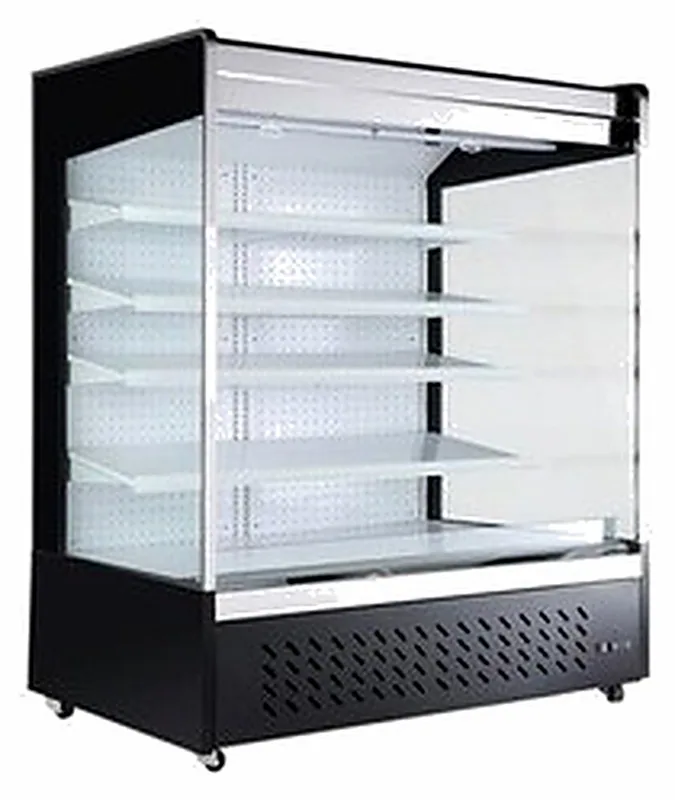
The Open Multi-Deck Display Chiller (TVD-10825) is a tiered, open-air display with LED lighting for beverages and grab-and-go lines. Because customers handle the product directly and there is no door, the unit is looked at differently from a closed cabinet. No certification mark is on file for TVD-10825. We confirm status and supply documents with the quote before you order, and this page explains what you should expect to receive.
Why an open-front unit raises its own questions
A closed cabinet keeps product behind a gasket. An open chiller does the same job with moving air, a bigger evaporator and a larger electrical load, and it is installed in the same room as customers, queues and carts. Several consequences follow for the paperwork.
- Higher electrical demand. Fans, lighting, defrost and compressor all share one supply. The electrician needs rated amperage, phase and whether the unit is cord-connected or hard-wired, because a hard-wired connection is installed work that the electrical authority may inspect.
- Public exposure. Shoppers touch shelves and packaging. Health units look at cleanability, the condition of shelf edges and how spills are handled.
- Energy reporting. Commercial refrigeration can fall under Natural Resources Canada's Energy Efficiency Regulations. An open multi-deck display is a type of equipment where that question is worth asking, so we check the category and report the result.
Electrical mark: what Canada accepts
An electrical appliance sold or installed here needs a mark from a certifier accredited by the Standards Council of Canada, or a field evaluation or special inspection label. The common marks are CSA, cUL and cETL, where the small "c" means Canadian evaluation. A mark with no "c" is a US mark and falls short. A CE-marked cabinet still has to meet the Canadian requirements; the European marking is not a stand-in. Refrigeration equipment is assessed under the CSA C22.2 standard for refrigeration equipment. The explainer on CSA, cUL and cETL marks helps you read what the factory sends.
Voltage, frequency and compressor type
Because the cabinet may run a larger compressor than a small showcase, the supply question deserves care. Canada provides 120 V or 240 V single-phase and 208 V or 600 V three-phase, all at 60 Hz. If the factory builds for 220 V and 50 Hz, we need written confirmation that this unit is built for Canadian voltage and 60 Hz, because motors, timers and compressors can misbehave on the wrong frequency. Ask also whether the compressor is inside the cabinet or remote, since remote refrigeration adds lines and an installer.
Document table for TVD-10825
| Document | Question it answers | Issued by |
|---|---|---|
| Canadian mark or field evaluation label | Will the electrical inspector connect it? | Standards Council of Canada accredited body |
| Electrical data sheet | What circuit, plug or hard-wire connection is needed? | Factory; reviewed on our quote |
| Refrigerant and compressor description | Self-contained or remote, and what refrigerant is used? | Factory |
| Energy category screening | Does the cabinet fall under federal energy rules? | Our review with the factory data |
| Sanitation certificate such as NSF/ANSI 7 or equivalent | Will the health unit accept it for open food? | Sanitation certification body, if requested |
| Shelf and trim material statement | Are surfaces that touch packaged or unwrapped food suitable? | Factory, with test reports where available |
| French manual and labels | Can Quebec staff and retailers read the instructions? | Factory |
Food-contact points
The Food and Drugs Act prohibits selling food in or with materials that may make it harmful. Health Canada does not pre-approve kitchenware, so buyers ask the factory for food-contact test reports. On an open display, the surfaces most likely to touch product are the shelves, the shelf edge trim and any dividers. Ask for a written statement of what they are made from, and whether any coatings are used.
Provincial notes
- Ontario: the Electrical Safety Authority enforces electrical equipment rules; local health units handle food premises.
- Quebec: French labels and manuals are expected under the Charter of the French language.
- British Columbia, Alberta and Atlantic Canada: each has its own electrical safety body and health authority, so ask what they want to see on a display unit before you lock in a fit-out date.
Consequences if the mark is missing
An open chiller usually goes in during the last stage of a fit-out, close to opening day. An inspector who declines to connect it leaves an empty bay in the store plan, and a field evaluation takes time that opening schedules rarely have. A retailer or landlord can also refuse to list a unit without documents. Insurers may question uncertified equipment after a loss.
How we handle it
Our written quote states certification status, lists the documents that come with the unit and says if a field evaluation would be needed. We review the energy category before you pay a deposit of 30%, with 70% due before release. See how ordering works and the commercial kitchen category in Canada for delivery details. If you are comparing refrigeration cabinets, read the fryer certification guide to see how a gas-capable appliance differs, and use the landed cost calculator for budgeting.
Regulations change. This is general information and not legal advice; confirm with your electrical authority, health inspector or customs broker.