Certification guide ·
Outdoor Lantern Sconce with Photocell and GFCI: Canadian Certification Guide
A wall light with a photocell and a built-in outlet is judged as a complete assembly. Here is what a Canadian buyer needs, and where TVD-726 stands today.
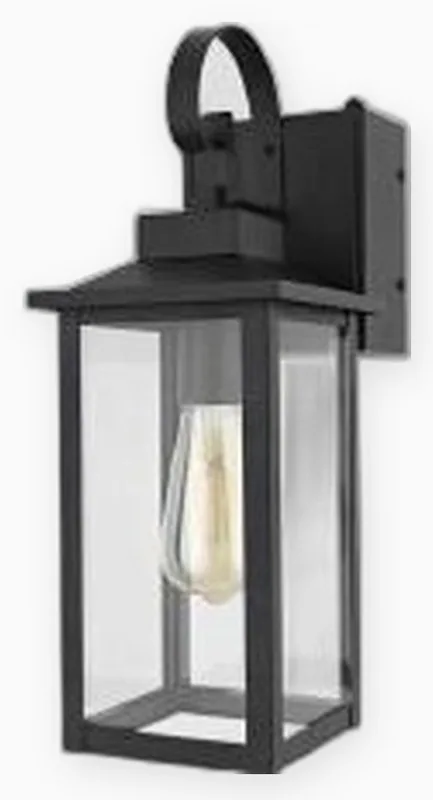
The Outdoor Lantern Sconce – Photocell + GFCI (TVD-726) is an exterior wall light with two features that raise the compliance bar: a dusk-to-dawn photocell and a built-in GFCI outlet. That makes it more than a simple lantern. It is a fixture, a sensing control and a receptacle in one housing, and Canadian electrical authorities care about all three. This guide explains what a buyer needs in hand before importing it, and what we can and cannot say today.
Where the certification status stands
No certification mark is on file for this product. We make no certification claim for it. Before you order, we confirm certification status and supply the documents with the quote. If a recognised mark is available we state exactly that mark and file number; if it is not, the quote says so and we discuss whether a field evaluation is a sensible route for your quantity.
Which Canadian rules apply
Electrical products sold or installed in Canada must carry a certification mark from a certification body accredited by the Standards Council of Canada, for example CSA, cUL or cETL, where the small "c" means Canada. The other accepted route is a field evaluation or special inspection label from an accredited body. Provincial and territorial electrical safety authorities enforce this, for example the Electrical Safety Authority in Ontario. An inspector can refuse uncertified equipment, and an insurer may question it after a claim.
A US-only mark (UL without the "c", ETL without the "c") is not enough. The European CE mark is not accepted as proof of compliance for electrical products either, so a CE-marked sample from a factory does not settle the question. Our explainer on CSA, cUL and cETL marks covers the difference in plain terms.
Luminaires are certified to the Canadian luminaire standard (CSA C22.2 No. 250.0, also shared as UL 1598 for North America). The driver or control gear is treated as a component of the complete fixture, which is why a loose driver certificate rarely satisfies an inspector on its own.
Why the photocell and the outlet change the question
- The complete assembly matters. The buying tip for this line is to confirm that the electrical listing covers the complete assembly when a sconce has a photocell or a built-in receptacle. A mark on the lamp body only may not cover the outlet.
- Location rating. An exposed exterior wall is a wet location. Ask which location rating (dry, damp or wet) the mark covers, and for this fixture the answer should be written on the documents, not assumed.
- GFCI function. A built-in GFCI outlet is a safety device. We do not state how it is tested or rated beyond the product's listed points; the test documentation comes with the quote.
- Supply. Canadian supply is 120 V or 240 V single-phase at 60 Hz. A part rated for 220 V and 50 Hz must be confirmed as built for Canadian voltage and 60 Hz, and timers and sensors can misbehave on the wrong frequency.
Document checklist
| Document | Why you want it | Who issues it |
|---|---|---|
| Certification mark and file number for the complete fixture | Shows the whole assembly, including photocell and outlet, is covered, and which location rating applies | Certification body accredited by the Standards Council of Canada |
| Field evaluation report or label (if no mark exists) | Alternative route accepted by electrical safety authorities | Accredited field evaluation body |
| Rating plate wording and input voltage and frequency | Confirms 120 V and 60 Hz use and lets the inspector read the data on site | Factory, checked by us against the quote |
| Installation instructions | Inspectors and electricians follow them; Quebec buyers will need French versions | Factory; French version on request |
| Carton labelling proof | Retail packs need bilingual product identity and dealer details under the Consumer Packaging and Labelling Act | Us, with the factory |
| Written quote with certification status | Records what was promised before you pay the deposit | Thames Valley Distribution |
Provincial differences
- Ontario: the Electrical Safety Authority expects a mark recognised in Ontario on installed electrical products.
- Other provinces and territories: each has its own electrical safety authority or branch with its own inspection process. Check with yours before a volume order.
- Quebec: labels, instructions, manuals and warranty documents must be available in French under the Charter of the French language, and retailers there will ask for it.
What happens when the paperwork is missing
A contractor who installs an unmarked exterior sconce risks a failed inspection and a rip-out at their own cost. A retailer may find a store or marketplace will not list the item. If a consumer product is found to be a danger to health or safety, the Canada Consumer Product Safety Act allows recalls and requires incident reporting, with Health Canada enforcing it. None of that is hypothetical for an outdoor fixture with an outlet in a damp setting, which is why we ask for the paper before the deposit, not after the container lands.
How we handle it
We confirm certification status and supply documents with the written quote. Where a mark is missing, we outline the field evaluation option and what it adds to lead time, so that you can decide before ordering. Our customs broker also confirms the tariff classification before we quote a delivered cost. For the buying side of this fixture, including comparison with other sconces, read the product guide for TVD-726. Orders follow the usual route: a written quote, a sample on most items, then a 30% deposit and 70% before release. See how ordering works, browse the wall sconces, vanity and track lights line, or request a quote with your province and quantity.
Rules change. Confirm what applies with your provincial electrical safety authority, your inspector or your customs broker. This is general information, not legal advice. You can also check how sales tax is applied by province or the Canada delivery hub.