Product guide ·
Outdoor Lantern Sconce with Photocell and GFCI: Wholesale for Canada
A porch and garage wall light that switches itself on at dusk and includes an outlet. Here is how to specify TVD-726 and what to confirm before you order.
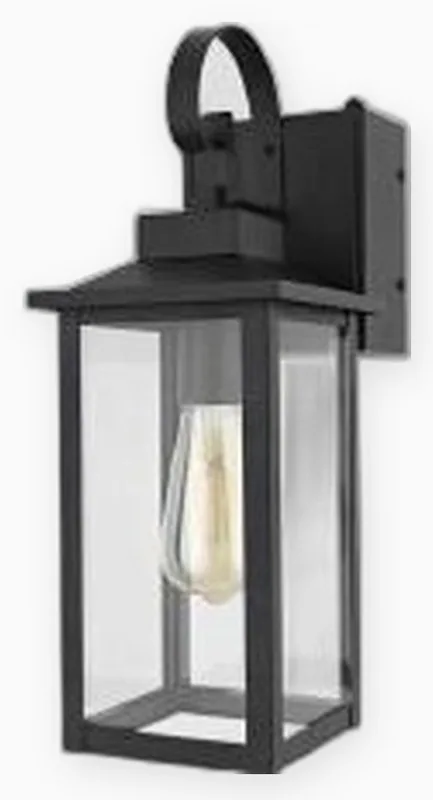
The Outdoor Lantern Sconce – Photocell + GFCI (TVD-726) is an outdoor lantern-style wall light with a dusk-to-dawn photocell and a built-in GFCI outlet, intended for entries, garages and porches. This guide is for the buyer deciding whether it belongs in a range or on a job: who orders it, what to put in the specification, how it differs from the other sconces in the line and how an order runs.
What it is and who buys it
Think of it as a porch light that switches itself on at dusk and also gives you a protected outlet at the door. The product's listed points are short: dusk-to-dawn photocell, built-in GFCI outlet, and use at entries, garages and porches. Everything else (size, finish, wattage, glass, weight) is confirmed on your written quote.
The line's typical buyers are builders, electrical contractors and retailers, and each has a different reason to ask for this item.
- Builders want an exterior fixture that handles the lighting and the outlet in one hole in the cladding, with fewer parts to install at each door.
- Electrical contractors specify it for garages and porches where a switched light and a convenience outlet are both required, and they care most about the certification mark on the complete assembly.
- Retailers stock it as a practical lantern that sells on function, next to decorative sconces.
What the listed points mean in practice
- Dusk-to-dawn photocell: the light follows daylight, which suits a garage side door or a rear porch that nobody switches on by hand. Ask how the photocell can be overridden and whether it works on a dimmer.
- Built-in GFCI outlet: you gain a protected outdoor receptacle for seasonal lights or a small tool. Ask whether the outlet sits on the same circuit as the lamp, and how it is tested and reset.
- Entries, garages, porches: these are exposed or semi-exposed positions. The location rating (dry, damp or wet) should be stated on the quote and the documents.
How to specify it: a checklist
- State the location rating you need and ask for it in writing: dry for interior walls, damp for covered porches, wet for exposed exterior walls.
- Confirm input voltage and frequency, normally 120 V at 60 Hz for Canada.
- Ask for the certification mark and file number, and confirm it covers the complete assembly including the photocell and the outlet.
- Confirm wattage, lumen output, colour temperature in kelvin and colour rendering index.
- Check the dimming type, or confirm whether dimming is not offered with the photocell.
- Get the fixture dimensions, canopy size and net weight so the trim fits your cladding.
- Confirm finish colour, glass or diffuser material and whether bulbs are included.
- Confirm carton dimensions, units per carton and the language of the instructions.
TVD-726 compared with other sconces in the line
The line is mostly decorative, so the useful comparison is by function.
| Product | What the listed points say | Choose it when |
|---|---|---|
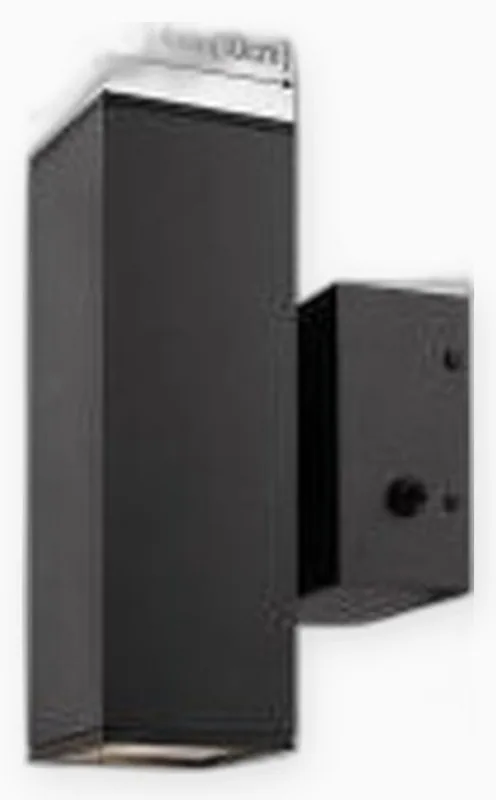
| 2-Light Square Sconce with GFCI (TVD-728) | Built-in GFCI outlet, matte black iron and glass, patios and garages | You want the outlet without a photocell |
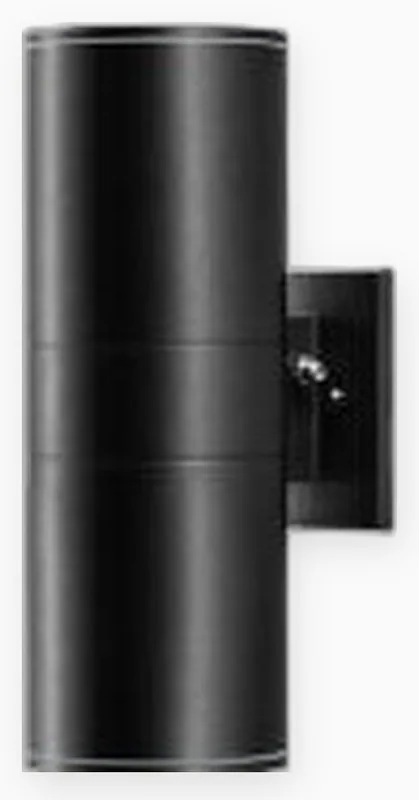
| 2-Light Cylinder Wall Sconce (TVD-727) | Up and down light, E26 x 2, matte black, IP44, exterior walls and entries | You want a two-way wall light with no outlet |
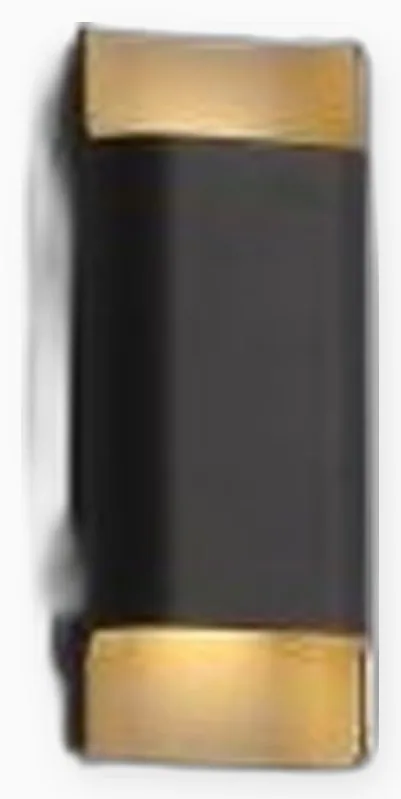
| Up & Down LED Wall Light (TVD-729) | Integrated 2 x 10 W LED, 3000K, 120 V, IP44, condos, townhouses and storefronts | You want an integrated LED rather than lamp sockets |
| TVD-726 (this fixture) | Dusk-to-dawn photocell and built-in GFCI outlet, entries, garages and porches | You want automatic lighting and an outlet in one fixture |
The full range sits in the wall sconces, vanity and track lights line, and the wholesale guide explains how the whole line is quoted.
Canadian use notes
- Climate: exterior fixtures face rain, snow and freeze-thaw cycles across most of the country. Ask for the location rating and for any cold-temperature guidance to be written on the quote. Electronics and liquids can freeze in winter transit, so we plan shipping with that in mind.
- Voltage: Canadian supply is 120 V or 240 V single-phase at 60 Hz. Anything rated 220 V and 50 Hz must be confirmed as built for Canadian voltage and 60 Hz before ordering.
- Freight: containers usually land at Vancouver or Prince Rupert and move by rail to the Prairies, Toronto-area and Montreal terminals, with delivery to your site, store or warehouse. See the Canada delivery hub for regional detail.
- Certification: no mark is on file for this product today. Electrical products installed in Canada need a mark from a Standards Council of Canada accredited body or a field evaluation label, and the certification guide for TVD-726 sets out the document list. Our CSA, cUL and cETL explainer is a good short read.
How ordering works
Every order is quoted in writing for your quantity and delivery address, with specifications, certification status and documents, packing, lead time and delivered cost. Many lines have low trial minimum order quantities, and samples are available on most items, with the sample cost usually credited to the first order. Payment is a 30% deposit and 70% before release. Products from several factories can share one container, so a lighting order can travel with other items. Read how ordering works, estimate the import side with the landed cost calculator, and check sales tax by province for your delivery address. Ready to go? Request a quote.