Certification guide ·
PEP Wall Panel, Travertine Look (TVD-8492): What a Canadian Inspector Will Ask
No mark is on file for TVD-8492. Here are the questions that decide whether it passes inspection, and the papers to collect before you pay a deposit.
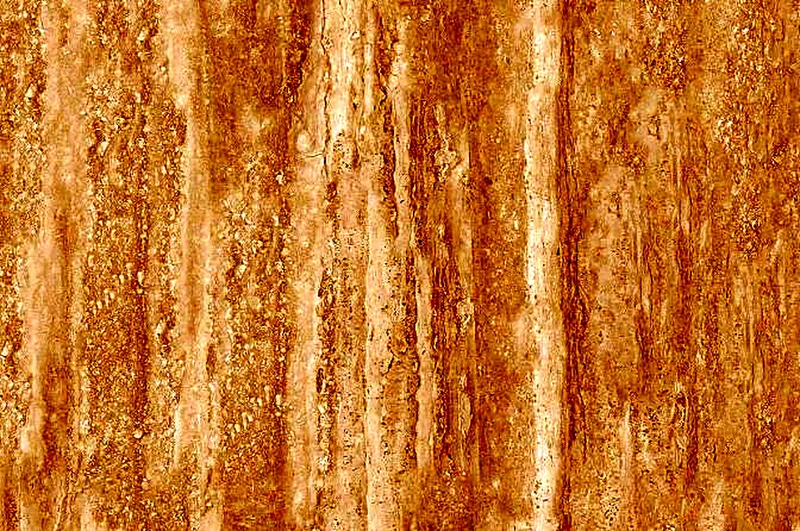
Start with the plain position: for PEP Wall Panel - Travertine Look (TVD-8492) we hold no certificate or test report on file at the time of writing. We do not say the panel is certified, approved or compliant with anything. What follows is the list of questions that a Canadian building official, a store buyer or an insurer is likely to raise about a thin decorative panel of this type, so you can ask the right things before ordering. Our listing gives panels of 1.22 x 0.6 m at 2.0 mm and sheets of 1.22 x 2.44 m at 1.8 mm, in stone and wood designs.
Question 1: what is the flame-spread rating?
The National Building Code of Canada limits the flame-spread rating of interior wall and ceiling finishes, and each province adopts the code with its own changes. Quebec, Ontario, British Columbia and Alberta publish their own codes. The test method is CAN/ULC-S102. How strict the limit is depends on where the finish goes: exits and corridors are strictest, and a private room is easier. So the first thing to settle is the building use and the exact location of the walls.
US test reports under ASTM E84 are common in imported goods. Canadian designers and building officials usually want CAN/ULC-S102, though a report under E84 may be reviewed case by case. Because TVD-8492 is a thin skin, ask whether the test report was made at this exact thickness and whether it was tested bonded to a substrate, since a thin facing can behave differently from a thick one.
Question 2: is there composite wood in it?
Canada's formaldehyde emission rules for composite wood products have applied since 2023. They cover hardwood plywood, particleboard, MDF and laminated products, which must meet emission limits, be certified by an approved third-party certifier and be labelled. The relevant paperwork is aligned with the US TSCA Title VI certificate. Our listing does not name the core of TVD-8492, so we cannot say whether this rule applies. If the version you order has a wood-based core, ask for the certificate. If it has none, ask the maker to state that in writing.
Question 3: has anyone claimed non-combustibility?
Non-combustible construction requirements in Canada refer to a separate test, CAN/ULC-S114. We do not claim that this panel is non-combustible. If your project demands that, a thin decorative panel will not be the right answer unless a report proves otherwise, and we have none.
Question 4: what duties and taxes follow?
Import duty depends on the tariff classification and the country of origin. GST, HST, PST or QST then apply according to the province of delivery. Our customs broker confirms the classification before we quote a delivered cost. Read the sales tax by province guide for how the provinces differ.
Question 5: is French available?
For sales in Quebec, the Charter of the French language requires product labels, instructions, manuals and warranty documents to be available in French. Where panels are sold prepackaged to consumers, federal labelling rules call for bilingual product identity and net quantity, with the dealer's name and place of business. Tell us early if the panels are headed to a retailer or a Quebec site.
Document checklist
| Document | Why you need it | Who issues it |
|---|---|---|
| Flame-spread report at this thickness | Proves the finish against the building code limit for its use | Accredited test laboratory |
| Core and construction statement | Decides whether composite wood rules apply | Manufacturer |
| Formaldehyde certificate (if wood core) | Required for regulated composite wood products | Approved third-party certifier |
| Installation guide | Substrate, adhesive and expansion gaps | Manufacturer |
| Tariff classification and duty note | Sets duties and taxes on the delivered cost | Our customs broker |
| French documents for Quebec | Satisfy language rules and retail buyers | Manufacturer, translated |
What happens if something is missing
An inspector can ask for a panel to come down if the flame-spread evidence does not suit the location, and in a finished building that is slow and costly. A store may refuse to list a product with no documents. A contractor's insurer may ask questions after a claim. These are possibilities, not certainties, and they are the reason to collect documents before you buy rather than after.
Electrical marks do not apply here
People sometimes look for CSA, cUL or cETL marks on any imported item. Those marks apply to powered equipment and lighting. A plain wall panel does not carry one, and a CE marking would not substitute for Canadian requirements in any case. See the explanation of those marks if your project also includes electrical fixtures.
How we handle it
On the quote request, tell us the building type, the province and where the panels will go. We confirm certification status and which documents exist, and attach them to the written quote before you order. If a report is missing for your thickness, we say so, and you can decide whether to commission a test. Orders follow the usual sequence: 30% deposit, 70% before release. This is general information, not legal advice. Rules change, so confirm with your building official, inspector or customs broker.
For buying advice on the panel itself, read the product guide for TVD-8492. The rules for the other panels in the family are in the line-wide compliance guide, and you can compare a wet-area option in Glazed Tile-Look Wall Panels (TVD-1453).