Certification guide ·
Printed Oven Mitt (TVD-2914): Canadian Labelling and Compliance Checklist
No certification mark is on file for the Printed Oven Mitt, and an oven mitt does not need a mark like a plug-in appliance does. This guide covers the labelling and safety rules that do apply.
Where the mitt stands today
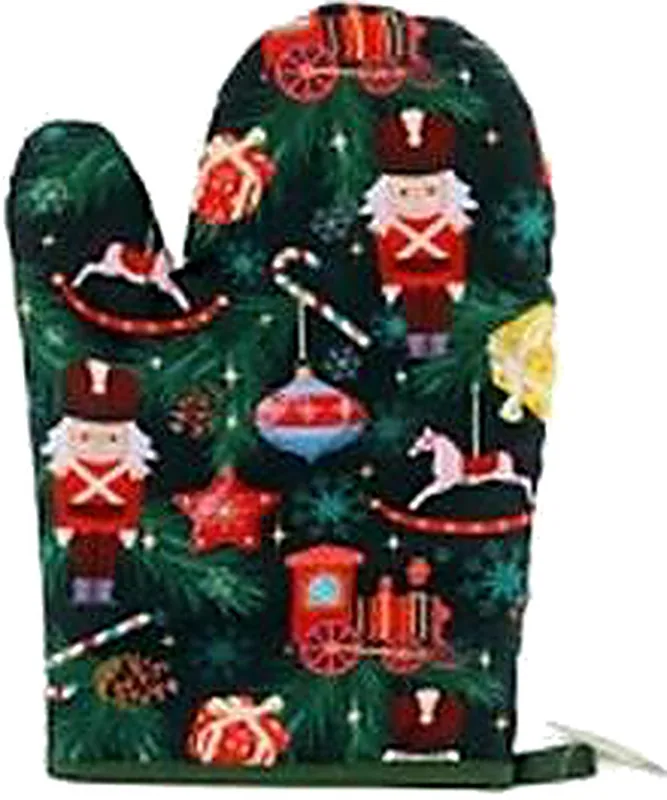
The Printed Oven Mitt (TVD-2914) is a 20 x 27 cm fabric mitt with a Christmas print and several styles available. State it plainly: no certification is on file for this product. That means we do not describe it as certified, listed, approved or compliant with any standard, and you should not either. What a Canadian buyer needs is a set of documents and label decisions, and we confirm certification status and supply the documents with the quote before you order. The commercial overview of the mitt is in our product guide.
Which Canadian rules touch an oven mitt
An oven mitt is a consumer textile article that is used near heat, so three areas matter.
- Textile labelling. The Textile Labelling Act covers consumer textile articles and requires fibre-content and dealer identity labelling. A fabric mitt is a textile, so ask for the fibre content of the outer fabric and lining and decide where the label sits.
- Consumer product safety. The Canada Consumer Product Safety Act prohibits consumer products that are a danger to human health or safety, requires incident reporting and allows recalls. Health Canada enforces it. A mitt that fails to protect a hand because of a wrong heat claim is the kind of issue that act addresses.
- Packaging and language. If the mitt is sold prepackaged to consumers, the Consumer Packaging and Labelling Act calls for bilingual (English and French) product identity and net quantity plus the dealer's name and place of business.
Electrical and gas rules do not apply to a plain fabric mitt, because it has no powered or gas part. If a version you order includes any electrical or heating component, that changes and we would confirm the Canadian certification mark needed before quoting. Rules change, so confirm with the authority, your inspector or your customs broker. This is not legal advice.
Heat claims: the area that needs the most care
Our listing gives size and print only. It does not give a temperature rating, filling or insulation description. A retailer that prints "heat resistant to" a number on the pack carries that claim, so require three things in writing: the filling material, the maximum temperature the factory states and the test the number is based on. If none of that arrives, leave the claim off and describe only what is confirmed. No Canadian rule in our reference set names a specific mitt test, so we do not cite one; ask the factory what it tested to and show us the report.
Document checklist
| Document | Why you need it | Who issues it |
|---|---|---|
| Fibre-content statement for outer fabric and lining | Needed for the fibre-content label on a consumer textile article | Factory, checked by us at quote |
| Written heat statement with the test basis | Supports any temperature claim on the pack or in your listing | Factory |
| Care and washing instructions | Needed for the label and to avoid wrong "washable" claims | Factory |
| Print and dye information | Colourfastness and decorated-fabric questions from your buyer | Factory |
| French and English pack text | Consumer Packaging and Labelling Act; Quebec French requirement | You, with our proofing |
| Certification status note | Confirms that no mark is on file and what documents exist | Thames Valley Distribution, with the quote |
| Customs classification confirmation | Duty and taxes depend on tariff classification and origin | Our customs broker |
Differences by province
Federal labelling rules apply across Canada, but retail practice differs. In Quebec, the Charter of the French language requires labels, instructions and warranty documents to be available in French, with French at least as prominent, and Quebec retailers will ask for it. Quebec repealed its rule for upholstered and stuffed articles on 9 December 2021, so no stuffing permit label arises for a padded oven mitt; the Textile Labelling Act fibre-content label is the point we confirm with you for the style you pick. Provinces also differ in sales tax, which we cover in the sales tax by province guide.
What happens if documents are missing
A mitt does not face an inspector's refusal the way a plugged-in product might, but missing information has consequences. A retailer's buyer may refuse a pack that lacks the bilingual identity or fibre content. A customer complaint about heat protection can trigger a store review and, in a serious case, an incident report and recall under the consumer product safety act. Marketplace platforms also ask for documents when a listing is flagged. Collect the table above before you print packaging, not after.
Print and decoration questions
A printed Christmas mitt raises one buyer question that a plain mitt does not: what is in the dye or print. The Canadian lead rules for glazed ceramics and kitchen utensils are not about fabric prints, so we do not claim they apply to this mitt. A reasonable request is a written statement from the factory about the print inks, and an assurance of colourfastness after washing. If your buyer is a major chain, ask what its vendor manual requires before you place the order.
How we handle it
When you request a quote we ask the factory for each item in the table, review the replies and tell you what is confirmed and what is missing. We do not fill gaps with assumptions. If you need a signed fibre-content statement, we request it and send it with the quote. Samples are available on most items, with the sample cost usually credited to the first order, so check the label position, the print and the heat feel yourself. Payment is 30% deposit and 70% before release. Read how ordering works, then send the quote request. For the wider rules on food-contact tools in the same line, see the kitchen utensils compliance guide, or learn when marks matter in CSA, cUL and cETL marks explained.