Certification guide ·
Round Mirror Tray - Gold Scallop Rim (TVD-2392): Canadian Compliance Guide
A mirror-base tray with a gold-tone rim raises materials, edge and labelling questions rather than electrical ones. Here is what to check before you import it, and which documents to ask for.
What this tray is, and why that shapes the rules
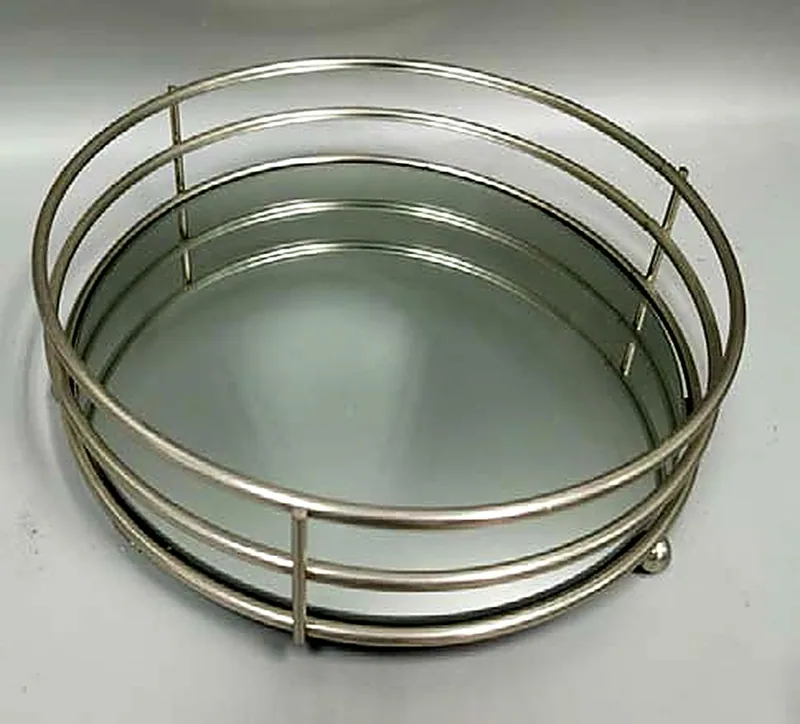
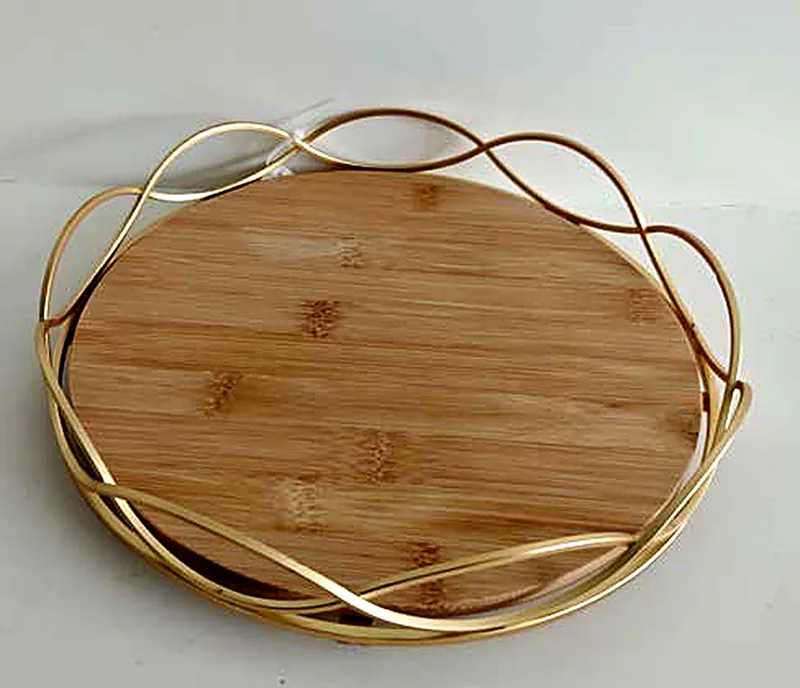
The Round Mirror Tray - Gold Scallop Rim (TVD-2392) is a metal and wood serving piece with a mirror base, a gold-tone rim and a scalloped outline, intended for table and counter use. Nothing in our product listing points to a motor, lamp, heating element, battery or cord. An unpowered tray does not raise the electrical questions that a lamp does, so the questions that matter are materials, edges, finishes, labels and, if food will sit on it, food contact.
Certification status: no certification mark is on file for this tray. We do not describe it as certified, listed or approved, and you should not describe it that way to your customers. What we do is confirm the certification status and supply the documents with the quote before you order, so you know exactly what exists and what does not.
Where the electrical rules would come in
If a version of a mirror tray ever came with LED edge lighting, a plug or a charging cable, the position changes. Electrical products sold or installed in Canada must carry a certification mark from a body accredited by the Standards Council of Canada, such as CSA, cUL or cETL, or a field evaluation label. A US-only mark is not enough, and the European CE mark is not accepted in Canada as proof of compliance. Our guide to the CSA, cUL and cETL marks explains how to read the small "c". For the tray as listed, this is a conditional only: confirm on the quote that the version you order has no powered part.
Rules that do apply to a mirror-and-metal tray
The Canada Consumer Product Safety Act applies to consumer products. It prohibits products that are a danger to human health or safety, requires incident reporting and allows recalls, and Health Canada enforces it. For a mirror tray the practical hazards are easy to name: a glass panel that works loose from the frame, a chipped or sharp mirror edge, a rim with a burr, and a backing or coating that flakes. Ask the factory how the mirror is seated, how the edge is finished and what the backing and coating are.
Food contact: only if the tray touches food
A mirror tray can be a display piece on a dresser or a serving piece on a buffet, and the compliance picture differs. If you will present food directly on the surface, the Food and Drugs Act prohibits selling food in or with materials that may make it harmful. Health Canada does not pre-approve kitchenware. Buyers commonly ask the factory for food-contact test reports instead, and our listing does not state that this tray is food-safe, so treat that as something to confirm.
The gold-tone rim deserves a specific question. The Glazed Ceramics and Glassware Regulations set limits on lead and cadmium that can leach from glazed ceramics and glassware that contact food, and decorated rims and metallic decorations near the lip are a known risk. If the version you order has glass or ceramic parts that touch food and a metallic finish near the edge, ask for a lead and cadmium test report. If it is sold for display only, say so on the packaging.
Document checklist for TVD-2392
| Document | Why you want it | Who issues it |
|---|---|---|
| Written statement of certification status | Shows exactly what is and is not on file, with no assumptions | Thames Valley Distribution, on the quote |
| Material and finish description (mirror glass, backing, coating, wood part, rim finish) | Lets you answer a buyer or inspector about what the tray is made of | Factory, confirmed on the quote |
| Food-contact test report, if the tray will carry food | Supports the Food and Drugs Act position for your market | Factory or an independent test lab |
| Lead and cadmium test report for the gold-tone rim | Addresses the known risk of metallic decoration near the lip | Test laboratory |
| Packing and breakage confirmation | A mirror that arrives cracked is a loss and a safety issue | Factory, checked on the sample |
| Bilingual label or insert artwork proof | Needed for prepackaged consumer sale in Canada | You and us, before print |
| Customs classification | Duty and tax depend on the tariff code and origin | Our customs broker |
Labelling: English and French
If the tray is sold prepackaged to consumers, the Consumer Packaging and Labelling Act requires bilingual (English and French) product identity and net quantity, plus the dealer name and place of business. A gift shop that boxes the tray as a single retail item should settle the box artwork before the order is placed. In Quebec the Charter of the French language also requires labels, instructions, manuals and warranty documents to be available in French, with French at least as prominent as any other language. Quebec retailers will ask for this, so a one-line care card in French is worth planning from the start.
CE versus Canadian marks, in one paragraph
A factory may mention a European CE marking on its paperwork. For an unpowered tray it does not answer any Canadian question: Canada does not recognise the CE mark as proof of compliance for electrical, gas or consumer products. Ask for the Canadian-relevant documents in the table above instead.
What happens when a document is missing
- A retailer's buying office may decline to list the tray until finish and food-contact statements are supplied.
- A restaurant or caterer may be asked by a public health inspector what a serving surface is made of.
- An online marketplace can remove a listing after a complaint about a sharp mirror edge.
- A hazardous product can lead to incident reporting duties and, in the worst case, a recall.
How we handle it
Every order is quoted in writing: quantity, specification, certification status and documents, packing, lead time and delivered cost to your address. Samples are available on most items and the sample cost is usually credited to your first order. Payment is a 30% deposit and 70% before release. Read the wholesale guide to this tray for the buying side of this tray, compare the silver sibling in our silver mirror tray compliance guide, and see how ordering works. Rules change, so confirm requirements with the relevant authority, your inspector or your customs broker; this is general information, not legal advice. Start with a quote request for the quantity and delivery address you have in mind.