Certification guide ·
Round Mirror Tray - Silver (TVD-2393): What Canada Requires and Which Documents to Ask For
Mirror edges, a silver rim and possible food contact set the compliance checklist for this tray. No mark is on file, so here is how to build a clean document file before ordering.
One tray, three questions: glass, silver finish, food
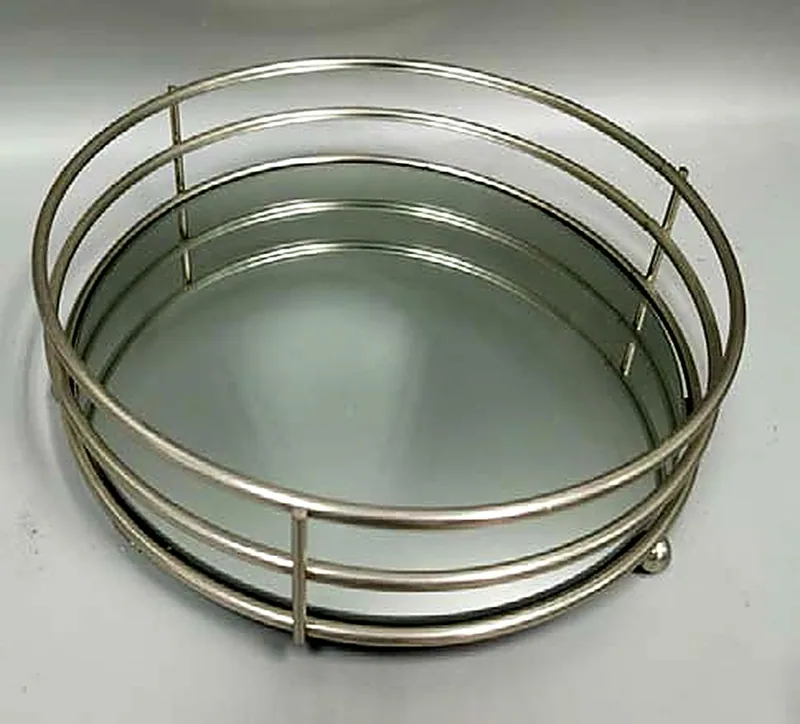
The Round Mirror Tray - Silver (TVD-2393) is a metal and wood serving piece with a mirror base and a silver rim for table and counter use. Compliance planning for it comes down to three questions. What is the mirror and its backing made of and how is the edge finished? What is the silver finish on the rim? And will food touch the tray? Electrical rules, which dominate compliance for lamps and appliances, are a conditional here because the listing shows no powered part.
Mark on file: none. No certification mark is on file for TVD-2393. We do not call it certified, listed or approved. We confirm certification status and supply the documents with the quote before you order, so your file is complete before the container is booked.
Start with the Consumer Product Safety Act
The Canada Consumer Product Safety Act applies to consumer products, prohibits products that are a danger to human health or safety, requires incident reporting and allows recalls. Health Canada enforces it. It does not hand you a checklist of numbers for a mirror tray; it sets a general duty. Your practical response is documented diligence: a sample inspection report, notes on the edge finish and mirror fixing, and a photo of the retail packaging as shipped. If a customer reports a cut from a chipped edge, those notes show you looked.
Mirror edges, backing and coatings
Mirrors are made by backing glass with a reflective layer and a protective coat. Ask the factory what the backing and coating are, how they hold up to wiping, and whether cleaning with water or a mild cleaner lifts the backing at the edge. A silver rim next to a mirror can create a seam where moisture collects, so ask how the joint is sealed. The answers go in your product file and are confirmed on the written quote. If you sell in coastal BC or Atlantic Canada, where interiors are humid, the sample should be tested wet as well as dry.
Food contact, only if you plan it
The listing describes the tray for table and counter use and does not claim it is food-safe. If you will serve food directly on it, the Food and Drugs Act prohibits selling food in or with materials that may make it harmful. Health Canada does not pre-approve kitchenware, although it offers voluntary Letters of No Objection for food packaging materials, and buyers commonly ask the factory for food-contact test reports such as FDA or EU migration tests. If the tray contains glass that contacts food, the Glazed Ceramics and Glassware Regulations set lead and cadmium limits and decorated rims or metallic decoration near the lip are a known risk, so ask for a lead and cadmium report on the silver rim. If the tray is for display only, label and market it that way.
Documents to request
| Document | What it proves | Typical source |
|---|---|---|
| Certification status statement | States plainly that no mark is on file and what documents do exist | Thames Valley Distribution, with the quote |
| Food-contact report (if used for food) | Materials are suitable for the intended food contact | Factory or accredited laboratory |
| Lead and cadmium report on the silver rim | Addresses metallic-decoration risk near the lip | Laboratory |
| Material and backing description for the mirror | Lets you answer buyer questions about construction | Factory |
| Edge and seating inspection photos from the sample | Evidence of due diligence if a safety complaint arises | You, from the sample |
| Bilingual retail packaging proof | Consumer Packaging and Labelling Act, if sold prepackaged | You, with our help |
| French instruction or care card | Quebec Charter of the French language | Us or the factory, on request |
Labelling in English and French
For a prepackaged consumer sale, bilingual (English and French) product identity and net quantity are required, together with the dealer name and place of business. For TVD-2393 that means a retail box that names the product in both languages and gives the quantity (for example one tray). Quebec adds the Charter of the French language: labels, instructions, manuals and warranty documents must be available in French, with French at least as prominent as any other language. A Quebec retailer will ask for this before listing; a gift shop in Toronto will not, but the same bilingual box serves both.
Why a CE mark on the paperwork does not settle anything
Canada does not recognise the European CE mark as proof of compliance for electrical, gas or consumer products. If the factory sends a CE declaration, file it, but do not treat it as the answer. If a lit or powered version ever appears, it would need a Canadian mark from an accredited body (see our marks explainer) and a US-only mark would not be enough.
Provincial and channel differences
- Quebec: French documents and labels are expected by retailers and required by the Charter.
- Ontario, Alberta, BC: federal rules apply uniformly; local public health inspectors ask restaurant buyers about food-contact materials.
- Large retail and marketplaces: they often add their own document demands beyond federal law; confirm what your listing programme requires.
If something is missing
A buying office can pause a listing, an inspector can question a serving surface in a restaurant, and a safety complaint can bring incident-reporting duties and, at worst, a recall. Fixing a document gap before the order costs far less than after delivery. When the quote arrives, check the document list line by line and ask us to chase any that are missing.
How we handle it
We confirm certification status and supply the documents with the quote before you order. Payment is a 30% deposit and 70% before release, and the sample cost is usually credited to your first order. Compare this tray with the gold-rimmed compliance guide for TVD-2392, read the wholesale guide to this tray for specification and ordering, and send a quote request. Rules change, so confirm requirements with the relevant authority, your inspector or your customs broker. This is general information, not legal advice.
More reading: the Trays and Spice Racks line, how ordering works, the Canada wholesale page and the wholesale guide.