Product guide ·
Soft Serve Machines for Canadian Dessert Counters: Floor Model and Slim Model
Two soft serve units share the same flavour and placement options. Here is how to tell them apart on paper, and how to order one or both.
Two soft serve machines, one shared job
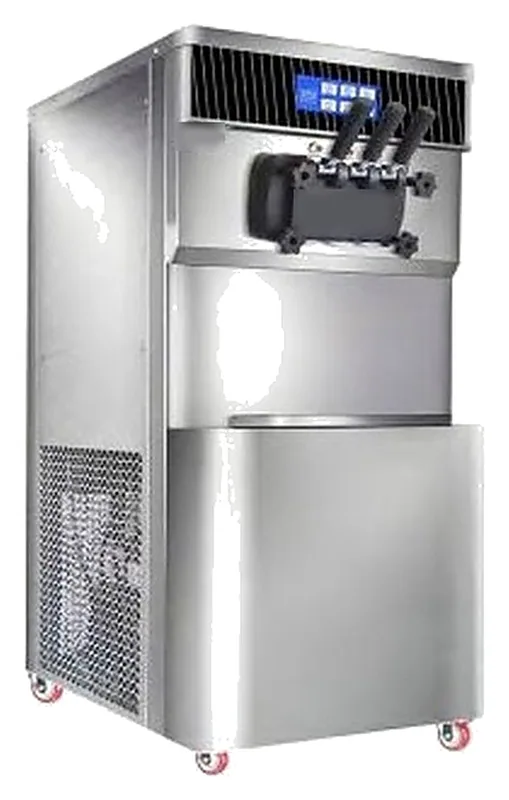
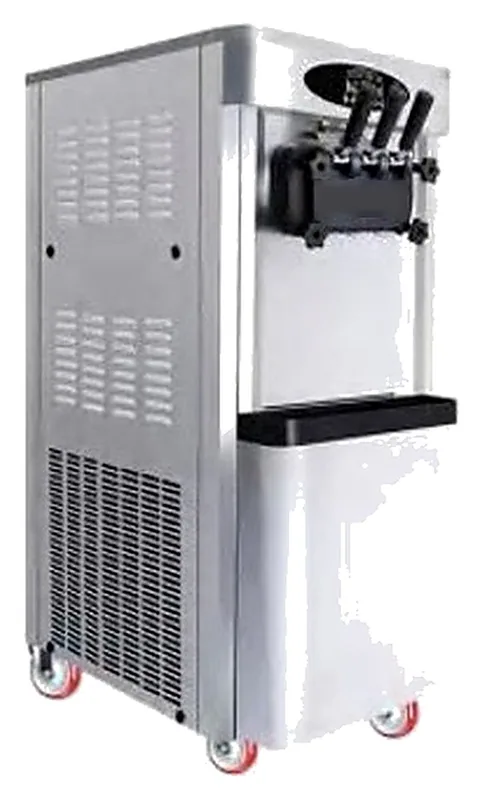
Soft serve is a dessert counter business: one machine, one or two flavours, a steady queue. We list two units in this group. The Soft Serve Machine, Floor Model (TVD-615) and the Soft Serve Machine, Slim Model (TVD-10827) share the same three product's listed points: single and twin flavour options, countertop and floor placement, and dessert service. This guide sets out what that means for a buyer, how the two names differ, and how to order one or both in a single shipment.
Product pages show full specifications only to signed-in buyers; a free account shows them. Everything below sticks to the listed points we publish, and anything else, such as hopper size, output per hour, power draw or footprint, is confirmed on your written quote.
What the shared listed points tell you
- Single and twin flavour. You can specify a machine that serves one flavour or two. Twin-flavour units suit a counter that wants vanilla plus a second choice; single-flavour units suit a small kiosk or a hotel breakfast bar where one product is enough. Whether a twist outlet is included is confirmed on the quote.
- Countertop and floor. Both names are listed with countertop and floor options. That is a placement choice you settle at specification stage, since it changes the clearance, the counter strength and the connection layout.
- Desserts. This is a food-service machine for serving frozen dessert, not a kitchen cooking appliance. It sits near the front of house, which affects power, drainage and cleaning routines.
How the two products differ
The names carry the main difference: one is sold as the floor model and the other as the slim model, which points to a slimmer body for tight counters. We do not publish dimensions, weights or capacities in these listed points, so the actual width, depth and height of each are given in writing on your quote. If floor space is your constraint, request both and compare the crated and installed sizes side by side before you choose.
| Question | Floor Model (TVD-615) | Slim Model (TVD-10827) |
|---|---|---|
| Listed flavour options | Single and twin | Single and twin |
| Placement listed | Countertop and floor | Countertop and floor |
| Best fit by name | Open dessert counters with room to spare | Tight counters and narrow service lines |
| Dimensions, output, hopper | Confirmed on your written quote | Confirmed on your written quote |
| Certification on file | None; status confirmed before you order | None; status confirmed before you order |
Which buyer suits which unit
Restaurants, hotels and institutions are the typical buyers across this line. A restaurant adding a dessert station to an existing service line will usually care most about footprint, which points to the Slim Model. A hotel running a buffet or an institution serving a cafeteria, where the machine has its own floor position and a queue forms in front of it, may prefer the Floor Model. These are starting points. The final choice depends on the measured space and on the output you expect at peak.
Mixing both in one order
You can quote both units together, for example a Floor Model for a main counter and a Slim Model for a satellite cart or second site. They ship together, and they can also share a container with other kitchen items. If you are fitting out a full dessert and hot-line kitchen, look at the Combi Oven (TVD-596) and the Tilting Kettle & Braising Pan (TVD-597) in the same line, and read the guide to the Gas Range with Oven (TVD-593) for the cooking side. Our commercial kitchen equipment line lists every product in the family.
Canadian use notes
Both machines are electrical, and a refrigeration circuit inside any soft serve unit makes the power supply worth checking. Canadian supply is 120 V or 240 V single-phase, with 208 V or 600 V three-phase common in commercial buildings, all at 60 Hz. Equipment rated for 220 V and 50 Hz needs written confirmation that it works on Canadian voltage and frequency. We state the voltage, phase, amperage and plug or hard-wire connection on each quote.
Neither machine has a certification mark on file at the time of writing. Electrical equipment sold in Canada needs a mark from a Standards Council of Canada accredited body or a field evaluation label, and health inspectors may ask for sanitation certification on food equipment. For the document list, start with our explainer on CSA, cUL and cETL marks, and compare the range certification post, which shows how we treat a gas appliance.
Quebec buyers should ask for French manuals and warranty text, since Quebec rules expect them. Freight across Canada is arranged to your site, store or warehouse, and the landed cost calculator helps you plan the full delivered figure before you request a quote.
How ordering works
Send the quantity, flavour layout and delivery postal code through the quote form. We reply with a written quote covering specification, certification status, packing, lead time and delivered cost. Many lines have low trial order quantities and most items can be sampled, with the sample cost usually credited to the first order. Payment is 30% on order and 70% before release. The ordering page explains each step, and the sales tax guide covers GST, HST, PST and QST by province.
Rules change; confirm electrical, sanitation and customs points with your authority, inspector or customs broker. This is not legal advice.