Product guide ·
Stackable Round Glass Containers, Set of 3 (TVD-1875): Wholesale Guide
A round, stackable set of three with clip-lock lids is as much a packaging decision as a product decision. Here is how to think about footprint, set composition and retail presentation.
The product in one paragraph
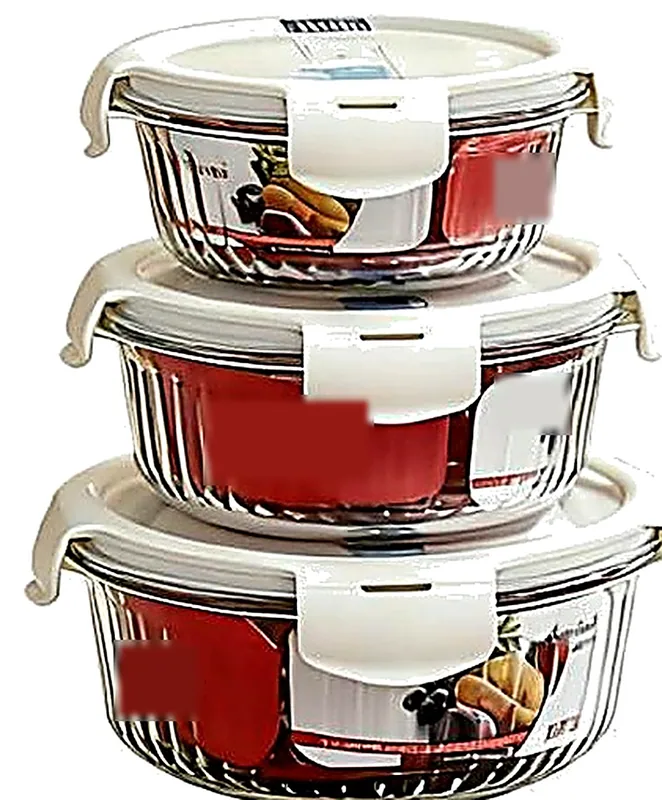
The TVD-1875 (Stackable Round Glass Containers – Set) is a set of three round containers with borosilicate glass bodies and clip-lock lids. Three pieces, one footprint idea: they are meant to be stored together and to stack efficiently. That makes it a retail-ready set rather than an item you buy by the single piece, and it changes the questions you should ask.
Why a set of three
A set of three is a classic retail shape. It fits a gift box, it has a clear "good value for a household" story, and it covers a small, a medium and a large need in a single purchase. For a retailer, a set sells with fewer shelf decisions than three separate items. For a meal-prep or café buyer, a set is a way to standardise portions across a kitchen without ordering by size.
What your buyers will want to know is simple and worth settling on the quote: are the three pieces different sizes, do they nest when empty, do the lids interchange, and does the set stack when full?
Who buys it
- Housewares retailers who want a boxed set for the kitchen aisle or a gift table.
- Online sellers who sell bundles; a set of three is an easy listing with one photograph.
- Meal-prep businesses that sell a "starter set" with a subscription.
- Cafés and small restaurants that store prepped toppings, sauces and sides in round containers on shelf rows.
- Gift and promotional buyers who want a useful, giftable item.
What the features mean in practice
Round shape. Round containers are easier to clean in the corners, since there are none to scrub into, and they pour soup and stew more cleanly than square containers. They do waste shelf space compared with rectangles, so tell customers that a round set is a fridge-door and cupboard solution, not a packing-density one.
Stackable. Stackability depends on lid shape and on the rim of the body beneath. Request a sample and stack it three high with weight on top, since a design that looks tidy when empty may behave differently in a loaded fridge.
Clip-lock lids. A clip-lock lid compresses a seal against the glass rim, which is the usual route to a leak-resistant closure. Our listing does not state the seal type or whether it is leak-tested, so ask: what is the lid material, is the seal removable for washing, and has the closure been leak tested with liquid?
Borosilicate glass. The glass type is named, but heat ratings are not, so seek a written rating for oven, microwave, freezer and dishwasher, listed separately for the lid and body.
Specification checklist
- Diameter, height and capacity for each of the three pieces.
- Whether each piece has its own lid and whether lids interchange.
- How the set stacks, with and without lids.
- Lid material, seal type and leak-test information.
- Factory heat and dishwasher ratings in writing.
- Retail packaging type (gift box, sleeve, shrink), barcode and bilingual label content.
- Carton quantity, carton size, minimum order and sample lead time.
Alternatives in the line
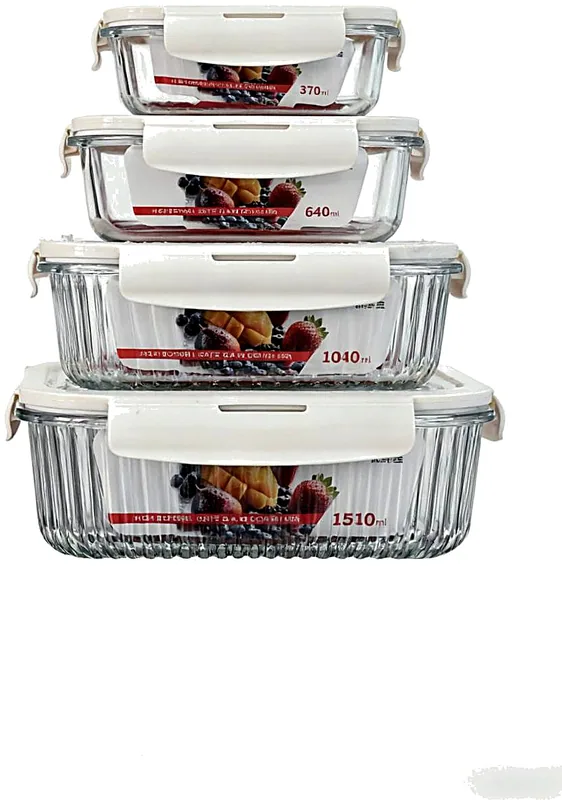
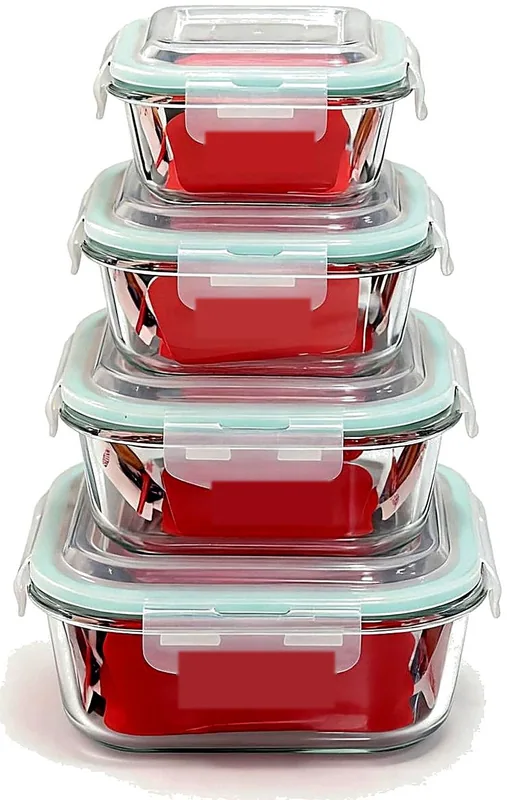
If you want mixed shapes in one set, Glass Container Set – Mixed Shapes, White Lid (TVD-1876) pairs round and rectangular shapes with white clip-lock lids. For a square nesting set see TVD-1869 (Square Glass Food Containers – Teal Lid). For detachable clip handles choose Glass Containers – Removable Ears (TVD-774), described as borosilicate and oven-safe in its own listing. For single round bowls without lids see Ribbed Glass Round Bowls (TVD-1874).
Canadian use notes
Round glass sets are popular with Canadian households that batch-cook for the week and freeze portions. Because freezer use is common, ask the factory for a written freezer rating and the advised headspace for liquids; glass that is overfilled and frozen can crack. Cold freight is also an issue: a set that arrives from a minus-twenty trailer should reach room temperature before it is washed in hot water. For breakage, request how the three pieces are separated inside the box, since glass touching glass is the common failure. See the Canada delivery hub for freight routes and the sales tax by province guide for tax by province.
Rules to know
The Food and Drugs Act prohibits selling food in or with materials that may make it harmful, and Health Canada does not pre-approve kitchenware, so buyers ask for food-contact test reports. Glass that touches food is also covered by the Glazed Ceramics and Glassware Regulations on lead and cadmium; plain clear glass with no decoration is a simpler case, but if the version you order has colour or print near the lip, ask for a lead and cadmium report. Retail sets need bilingual product identity and net quantity, and Quebec retailers ask for French labels. Rules change; confirm with the authority or your inspector. This is not legal advice. No certification is on file for this item, and we confirm certification status and documents on the quote before you order. See the food-contact and glass rules for the whole line.
How ordering works
Each order is quoted in writing: price for your quantity, specification, documents, packing, lead time and delivered cost. Payment is 30% deposit and 70% before release. Samples are available on most items and the sample cost is usually credited to the first order. Send the quote request or read how ordering works for the steps, and see the Glass Food Storage & Tableware line for the rest of the range.