Certification guide ·
Commercial Dishwasher Certification in Canada: Marks, Voltage and Documents
Before an undercounter glass dishwasher is installed in a Canadian bar or kitchen, the electrical mark, the power supply and the sanitation question all need an answer. Here is the checklist.
Why dishwasher paperwork trips up importers
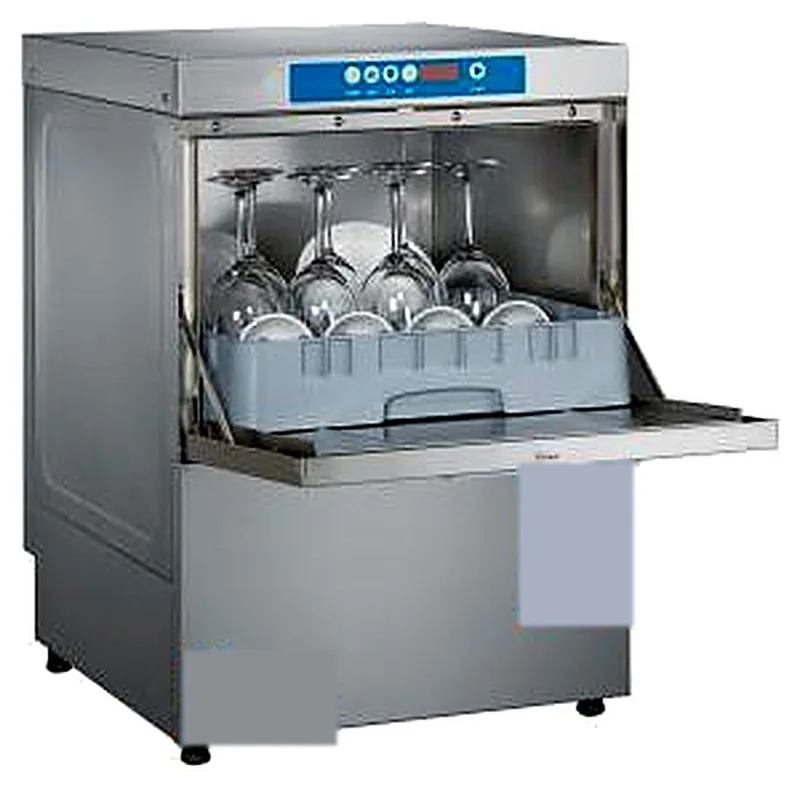
A commercial dishwasher is three regulated things at once: an electrical appliance, a piece of food-service equipment, and a machine that plugs into building water and drains. Imported machines most often stall on the first two. This guide covers the Undercounter Glass Dishwasher (TVD-2110), a front-loading machine that fits under a counter for glass and dish washing, and explains what a Canadian buyer should have in hand before it is ordered. No certification mark is on file for TVD-2110 at the time of writing. That is why we confirm certification status and supply the documents with your written quote before you order.
Which Canadian rules apply to this machine
- Electrical certification. Electrical products sold or installed in Canada must carry a mark from a certification body accredited by the Standards Council of Canada, such as CSA, cUL or cETL, or a field evaluation label from an accredited body. The small “c” means Canada. A mark without the “c” is a US mark and is not enough. Our post on CSA, cUL and cETL marks explained walks through the differences.
- Provincial enforcement. Provincial and territorial electrical safety authorities, such as the Electrical Safety Authority in Ontario, enforce this. An inspector can refuse uncertified equipment, and an insurer may question it.
- Food premises rules. Provincial regulations and local public health inspectors expect food equipment to be durable, easy to clean and sanitary. Many inspectors, landlords and franchisors ask for NSF/ANSI or equivalent sanitation certification on commercial equipment, and NSF/ANSI 3 is the one aimed at dishwashers. Ask your health unit what it wants.
- Energy rules. Some commercial equipment can fall under Natural Resources Canada's Energy Efficiency Regulations. Check whether this category is regulated for your machine.
Voltage and frequency come before the marks
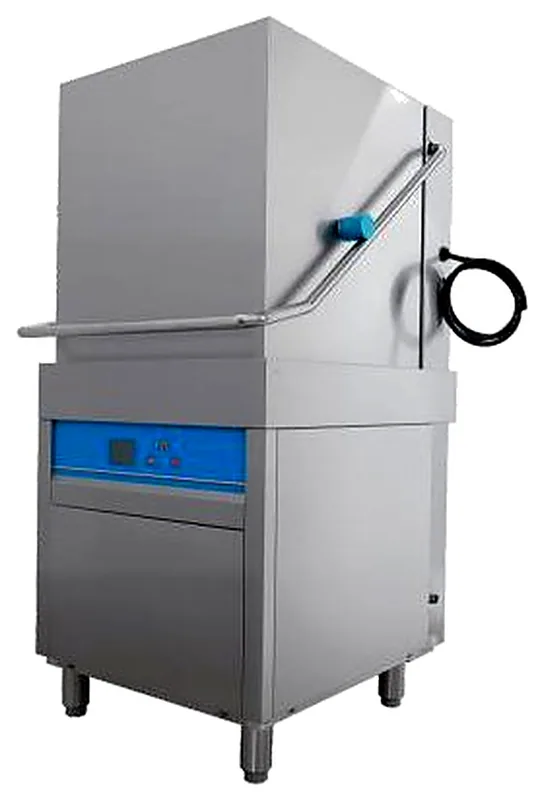
Canadian supply is 120 V and 240 V single-phase, and 208 V or 600 V three-phase, all at 60 Hz. Equipment rated 220 V at 50 Hz must be confirmed as built for Canadian voltage and 60 Hz, because motors, timers and pumps can misbehave on the wrong frequency. The product page for TVD-2110 does not state its electrical rating, so we confirm voltage, phase, frequency, amperage and whether it is plug-in or hard-wired on the quote. For comparison, the Hood-Type Dishwasher (TVD-2111) is rated at 220 / 380 V and 6.5 / 13.8 kW; a figure like that needs a check against your building's three-phase service before anything ships.
Document checklist
| Document | Why you need it | Who issues it |
|---|---|---|
| Certification report showing a Canadian mark | Proves the machine may be installed and inspected as electrical equipment in Canada | An accredited certification body |
| Field evaluation label (if no mark) | Allows a one-off inspection route for equipment without a Canadian mark | An accredited body, after inspecting the machine on site |
| Rating plate details: voltage, phase, frequency, amperage | Lets your electrician size the circuit and check 60 Hz suitability | The manufacturer; confirmed on our quote |
| Sanitation certification or test report | Answers a health inspector, landlord or franchisor | An accredited sanitation certifier, where one exists |
| French manual and labels (Quebec) | Quebec's Charter of the French language requires French instructions and labels to be available | The manufacturer; we ask for it on request |
| Water and drain connection drawing | Your plumber needs inlet temperature, drain type and connection sizes | The manufacturer; confirmed on our quote |
| Customs classification and duty confirmation | Duty depends on tariff classification and origin | Our customs broker |
CE marking does not count
Canada does not recognise the European CE mark as proof of compliance for electrical or consumer products. A machine with a CE label still needs the Canadian requirements above. If a seller offers you a dishwasher and points to CE as the answer, ask for a Canadian mark or for a plan for field evaluation.
Province by province differences
The Canadian mark requirement is national, but the people who check it are provincial. In Ontario that is the Electrical Safety Authority; other provinces and territories have their own authority. Quebec adds French-language requirements for labels, manuals and warranty documents, and retailers and buyers in Quebec will ask for them. Taxes follow the province of delivery, and our sales tax by province guide explains the difference.
What happens if the paperwork is missing
- The electrical inspector can refuse to pass the installation, and the machine sits idle in your kitchen.
- Your insurer may question the equipment after a fire or water loss.
- A health inspector, landlord or franchisor may decline equipment without sanitation certification.
- A field evaluation after delivery is possible, but it costs time and money you did not plan for.
How we handle it
We confirm certification status and supply the documents with the quote, not after the deposit. If TVD-2110 has no Canadian mark when you ask, we tell you plainly and discuss options: sourcing a version with a recognised mark, or arranging a field evaluation before you commit. Duty classification is checked by our customs broker before we quote a delivered cost. Rules change, so confirm with the authority, your inspector or your customs broker. This is not legal advice.
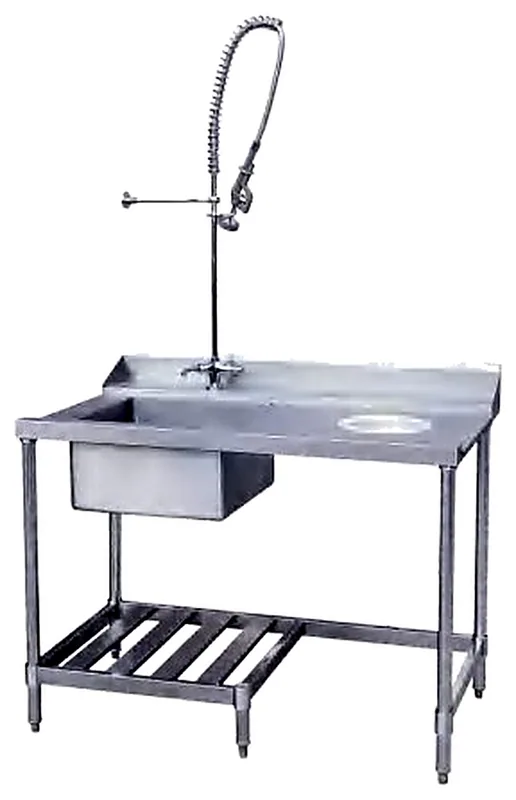
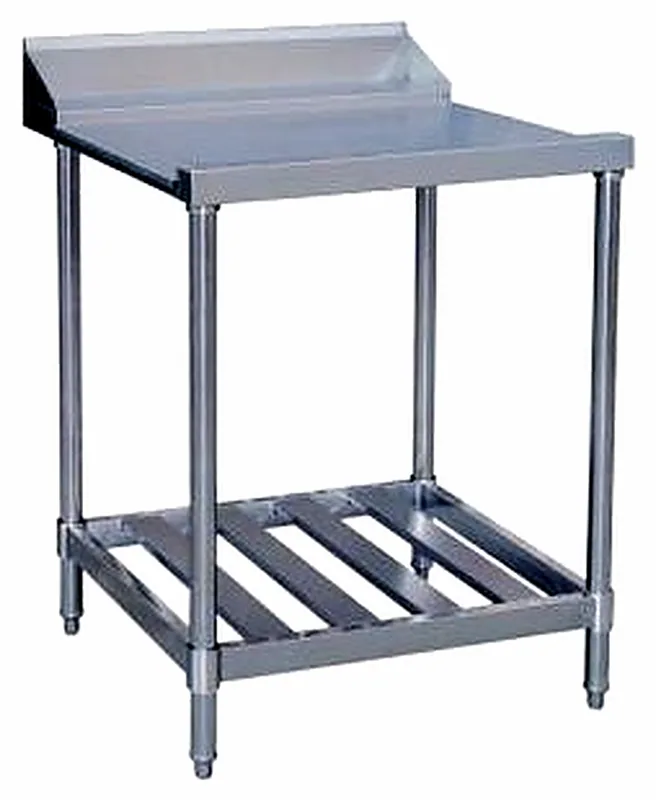
Every order is quoted in writing, with payment of 30% deposit and 70% before release; see how ordering works. If you are planning a full dish pit, the Dishwasher Pre-Rinse Table (TVD-2112) and the Dishwasher Exit Table (TVD-2113) fit dishwasher lines. The sibling article on buying TVD-2110 wholesale covers sizing and layout. Browse the Dishwashing line or send a quote request.