Product guide ·
Undercounter Glass Dishwasher: Wholesale Guide for Bars and Cafés in Canada
A front-loading machine that slides under the counter for glass and dish washing. Learn what to measure, what to ask the quote to confirm, and how it fits a dish line.
A glass washer sized for the bar, not the dish pit
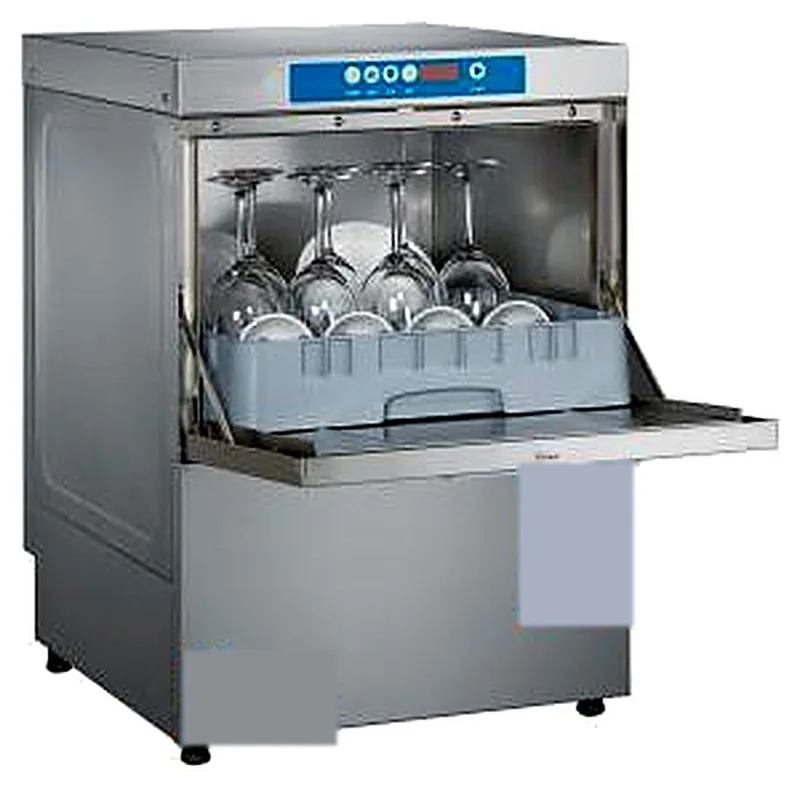
The Undercounter Glass Dishwasher (TVD-2110) is a front-loading machine that fits under a counter and washes glasses and dishes. That makes it the right tool for a bar, a café or a small restaurant where glassware has to come back to the shelf quickly and a large hood machine would take up too much room. If you are comparing a commercial dishwasher wholesale in Canada, start with the layout: where the machine sits decides most of what else you order.
Who buys it
The typical buyers in the Dishwashing line are bars, restaurants and cafés. In practice that means a bar that wants to wash pint glasses where they are poured, a café that handles cups and plates behind the counter, or a small restaurant that uses it as a second machine for glassware beside a larger one.
Reading the three listed points
- Fits under a counter. Measure the opening, not the room. Ask for overall and crated dimensions on the quote, and check door swing, the height of your counter and the space for hoses and the drain behind the machine.
- Glass and dish washing. It is built for glassware and plates. Ask what racks come with it and what size of glass or plate they take. Racks per hour and cycle time are confirmed on the quote.
- Front loading. You slide racks in from the front, so the area in front needs working space, and the machine can sit tight against the side walls.
How to specify it: questions for your quote
- Voltage, phase, frequency, amperage, and whether it plugs in or is hard-wired.
- Water inlet temperature, inlet connection size and drain type, so your plumber can prepare the site.
- Whether it sanitises with high temperature or with chemicals, which affects the booster heater and the detergent you buy.
- Racks per hour and the rack sizes supplied.
- Which certification marks are on file for electrical and sanitation, and whether a field approval would be needed.
- Stainless steel grade and thickness.
- Overall and crated dimensions and weight.
Picking the right machine in the line
This is a four-product line, so the choice is quick.
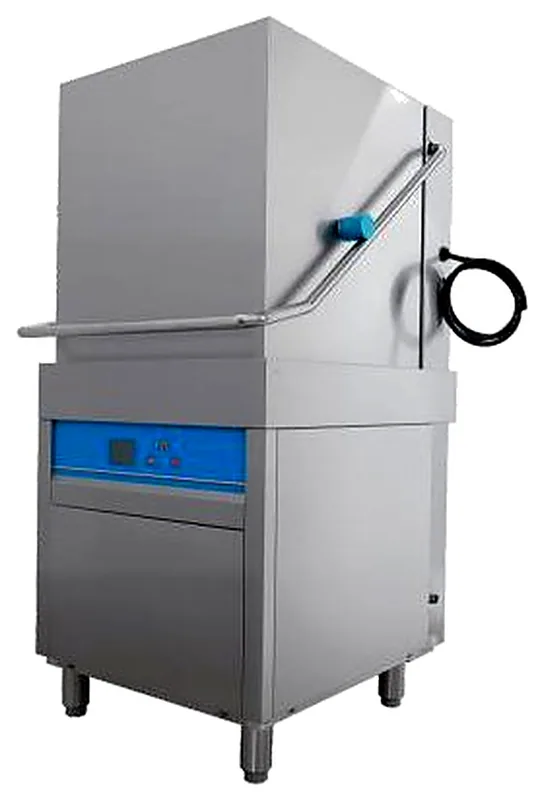
- The Hood-Type Dishwasher (TVD-2111) has a lift hood, and is rated at 220 / 380 V and 6.5 / 13.8 kW. Choose it when you have more plates than glasses and room for a proper dish station.
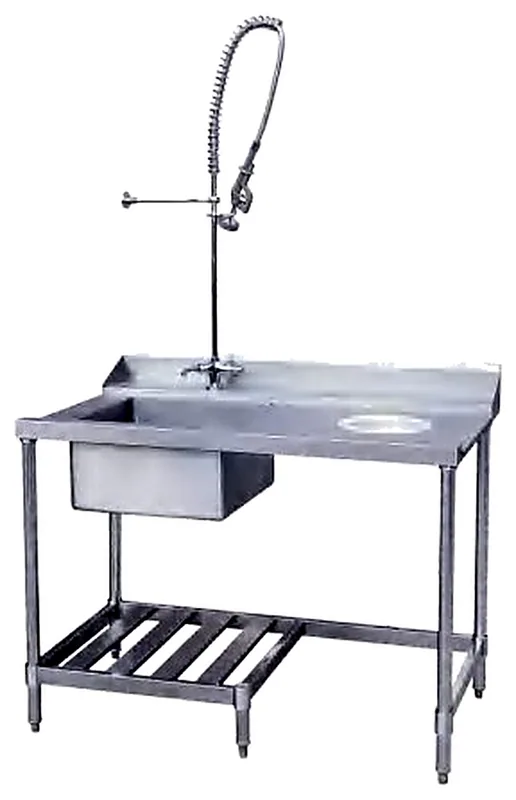
- The Dishwasher Pre-Rinse Table (TVD-2112) is a stainless steel table with a sink and pre-rinse spray, made to fit dishwasher lines. Add it when you scrape and rinse before washing.
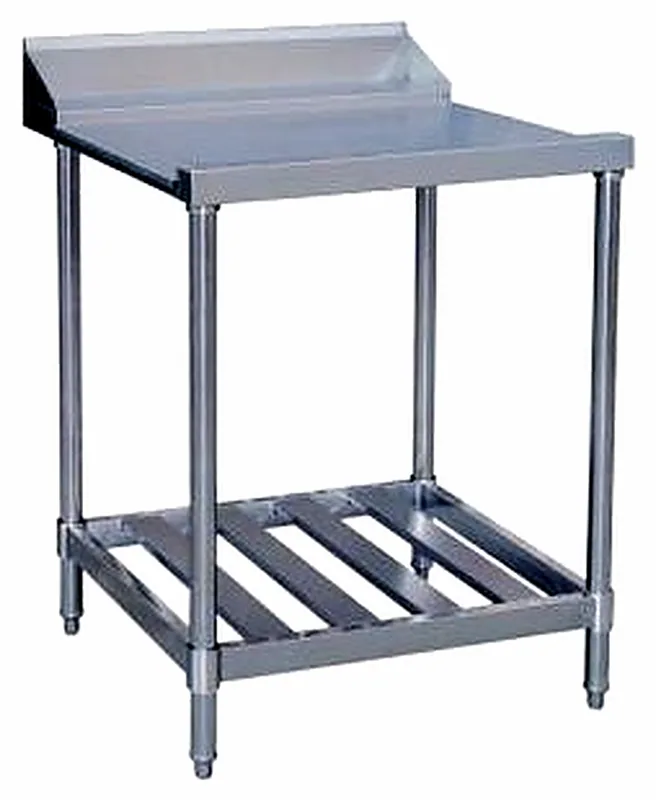
- The Dishwasher Exit Table (TVD-2113) comes in 700 and 1200 mm lengths with an open undershelf. Add it where clean racks need a place to drain.
The undercounter machine is the one for glasses at the bar. The hood machine takes over when plates and trays dominate. Many kitchens finish up with both.
Canadian use notes
Water and power come first. Canadian supply is 120 V and 240 V single-phase, or 208 V and 600 V three-phase, at 60 Hz. Anything rated for 220 V and 50 Hz has to be confirmed as built for Canadian voltage and 60 Hz, so we ask for the rating details before quoting. Your electrician and plumber should see the drawings before the machine arrives. Local public health inspectors and landlords may ask for NSF/ANSI or equivalent sanitation certification, and electrical equipment must carry a Canadian certification mark from an accredited body or a field evaluation label. No mark is on file for TVD-2110 at this time, so we confirm status and documents on your quote; the full explanation is in our certification guide for TVD-2110. Our post on CSA, cUL and cETL marks explained helps you read what you are shown.
In winter, liquids and electronics can freeze in transit, so tell us if the delivery address is an unheated site and we will plan accordingly. Rules change, so confirm with your inspector or the authority in your province.
Freight, duty and provincial tax all change the final cost. Use the landed cost calculator for a rough picture, then rely on the written quote. Our Canada delivery hub explains how delivery works.
Planning the dish area around it
Draw the flow before you order: dirty glasses arrive, get scraped and rinsed, go into the machine, and come out clean to a place where they can drain and dry. An undercounter machine shortens that path, because the bar itself becomes the dish station. Leave room beside it for a rack of dirty glasses and a rack of clean ones, and think about where staff stand while loading. In a café, the machine often sits near the espresso bar so cups cycle without a trip to the back. Ask us for a layout check on your quote request and we will send the connection details your plumber and electrician need.
How ordering works
Send a quote request with your quantity and delivery address. We reply in writing with specifications, certification status and documents, packing, lead time and delivered cost. Samples are available on most items, with the cost usually credited to the first order, and many lines have low trial minimum orders. Payment is a 30% deposit with the order and 70% before release. If you are fitting out a whole kitchen, products from several factories can share one consolidated container. More detail is on how ordering works, and the wholesale guide for commercial kitchens lists related lines.