Certification guide ·
Tall Single-Door Upright Fridge: Certification and Storage Checks for Canadian Kitchens
A back-of-house reach-in has its own questions: height, shelf load, ambient and paperwork. Here is the file for TVD-10822.
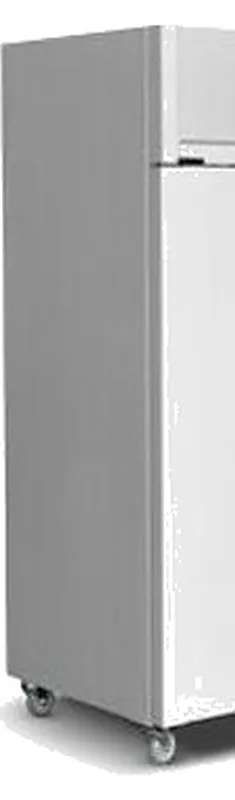
If the under-counter fridge lives beside the cooking line, the Upright Fridge, Single Door, Tall (TVD-10822) lives in the back of the house. Our listing describes 1 to 2 door reach-ins, glass or solid doors, and back-of-house storage. It holds the stock that restaurants, hotels and institutions rely on for a full service. No certification mark is on file. This post covers what a Canadian buyer should check for a tall reach-in, and the questions are different from a worktop unit because of its height, door swing, floor load and storage role.
A tall reach-in is electrical equipment first
A single-door upright has a compressor, evaporator fans and controls, and Canadian rules treat it as electrical equipment. It must carry a mark from a body accredited by the Standards Council of Canada, such as CSA, cUL or cETL, or a field evaluation label. Provincial authorities enforce this, and an inspector can refuse an unmarked unit. The European CE mark and US-only marks do not meet the Canadian requirement. The voltage and plug are not in our listing, so we confirm them on the quote. A 220 V, 50 Hz unit must be confirmed as built for Canadian voltage and 60 Hz first. Our CSA, cUL and cETL marks explained page explains the marks.
Back-of-house means storage questions
A storage fridge is opened less often than a line fridge but filled more heavily. Ask about:
- Shelf count, shelf material and the weight each shelf holds, since stock is heavy.
- Interior lighting and temperature display, so staff can see what is inside without holding the door open.
- Defrost method and where the water goes, which affects drainage.
- The floor surface, because a tall unit loaded with stock concentrates weight on four feet.
- Door swing and clearance: the door must open fully in your corridor.
Refrigerant, range and ambient rating
Ask which refrigerant is used and what temperature range the unit holds. A back-of-house fridge in an unheated service corridor or a hot basement kitchen sees a different ambient from one in a cooled room, and cold winter delivery is its own concern: liquids and electronics can freeze in winter transit, so tell us when and where it will arrive. Quote requests should state the room temperature so the rating can be matched.
Glass or solid door: why the choice has paperwork consequences
Solid doors insulate better and suit storerooms where nobody needs to see in; glass doors let staff check stock without opening. This item can come with glass doors, so glass is one of the materials to ask about. Door glass is not usually a food-contact surface, but ask about the glass type and whether any glass shelves or panels touch food; if so, ask for a lead and cadmium report, because Canadian rules limit leaching from food-contact glassware. For solid doors the question simply moves to the interior liner.
Sanitation and energy checks
Provincial food premises rules and public health inspectors expect cold storage to be cleanable and held at safe temperatures. Many inspectors, landlords and franchisors ask for NSF/ANSI or equivalent sanitation certification, which is listed in NSF's refrigeration standard. Commercial refrigerators can also fall under Natural Resources Canada's Energy Efficiency Regulations depending on category, so we check this when we quote.
Documents to request for TVD-10822
| Document | Why you want it | Who issues it |
|---|---|---|
| Canadian electrical mark (CSA, cUL, cETL) or field evaluation label | Connection approval and insurance comfort | Accredited certification body or field evaluation body |
| Data plate with voltage, phase, Hz, refrigerant | Checks circuit size and 60 Hz suitability | Factory, repeated on our written quote |
| Shelf load rating and interior material list | Confirms the unit suits heavy storage | Factory data sheet |
| Glass door or shelf description, with test report if glass contacts food | Handles the lead and cadmium question | Factory test laboratory |
| Sanitation certificate, if your health unit asks | Common lease or franchise condition | Sanitation certifier; we state whether one exists |
| Energy regulation check | Whether the category is regulated | Our review, stated on the quote |
| French manual and warranty (Quebec) | Required for Quebec delivery | Factory text, translated as needed |
Provincial differences
Electrical inspection varies by province, such as the Electrical Safety Authority in Ontario, and Quebec requires French manuals, labels and warranty documents under the Charter of the French language. Product pages and quotes are in English, with French support on request. The Nova Scotia guide is a useful read for humid Atlantic kitchens, where condensation around a door and a damp floor deserve attention. Western kitchens can read the Alberta guide and British Columbia guide.
What goes wrong when it is missing
- The electrical inspector may refuse to approve the unit.
- Stock stored in a fridge that cannot hold temperature becomes a health-unit finding.
- A door that cannot swing in your corridor is discovered only on delivery day.
- French documents requested later delay Quebec start-up.
Our process
We confirm certification status and supply documents with the quote before you order. Payment is 30% deposit and 70% before release. Delivery is to your site across Canada, and the quote lists crated dimensions and weight so you can plan the route. See how ordering works, use the landed cost calculator to estimate landed cost, check the sales tax by province guide, and send a quote request. Other items in the Commercial Kitchen Equipment line and the Commercial Kitchen & Hospitality chapter include the Tilting Kettle & Braising Pan (TVD-597) and the Open Fryer, Double Tank (TVD-10812), and the certification post for the gas range with oven describes the gas side.
Rules change. Confirm electrical, sanitation and energy requirements with your authority, health inspector or customs broker. This is general information, not legal advice.