Certification guide ·
Gold-Rim Trays in Canada: Food Contact, Decorated Rims and Labelling
A document-led guide to importing gold-edged white and black serving trays, chargers and bowls for Canadian retail and events.
Why gold-rim trays raise more compliance questions than plain trays
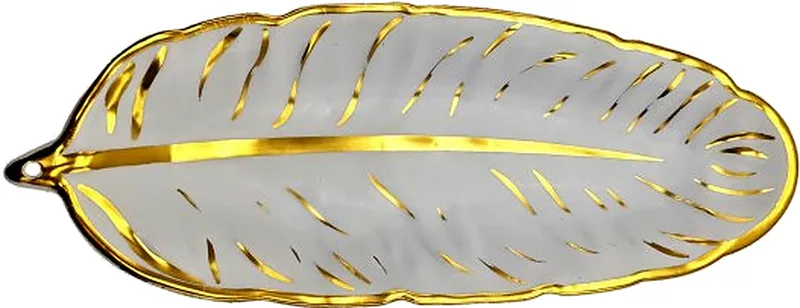
The White & Black Gold-Rim Trays line has 45 products: serving trays, charger plates, platters, a serving bowl and long dishes, all finished with a decorative gold edge, rim or bead. A tray that holds a canape is a different product from a tray that only sits under a vase, and a gold line applied near the lip is a different question from a plain white surface. This guide sets out what a Canadian buyer should ask for before ordering any of them. We hold no certification mark on file for any product in the line, and we do not describe any of them as certified, approved or compliant with a named standard. For each order we confirm certification status and supply the documents with the quote before you order.
The rules that apply, in plain terms
Food contact. The Food and Drugs Act prohibits selling food in or with materials that may make it harmful. Health Canada does not pre-approve kitchenware. Buyers commonly ask the factory for food-contact test reports, such as FDA or EU migration tests, and provincial public health inspectors expect food equipment to be durable, easy to clean and kept sanitary. Many inspectors, landlords and franchisors ask for NSF/ANSI or an equivalent sanitation certification on commercial food equipment, so check what your health unit asks before a restaurant buys serving ware in volume.
Decorated rims. Decorated rims and printed or metallic decorations near the lip are a known risk area. For glazed ceramics and glassware, the Glazed Ceramics and Glassware Regulations under the Canada Consumer Product Safety Act set limits on lead and cadmium that can leach, and a lead and cadmium test report is the right request. The line is described as plastic serving ware, so those regulations apply only if a version you order turns out to be ceramic or glass; in every case, ask for a lead and heavy-metal result on the gold decoration, and ask how it is applied, since foil and paint wear differently. The Consumer Products Containing Lead Regulations also include kitchen utensils, which matters if a piece is used as a serving utensil.
General product safety. The Canada Consumer Product Safety Act prohibits products that are a danger to human health or safety, requires incident reporting and allows recalls. Health Canada enforces it. Packaging. The Consumer Packaging and Labelling Act requires prepackaged consumer products to show bilingual English and French product identity and net quantity, plus the dealer's name and place of business. In Quebec, the Charter of the French language requires labels, instructions and warranty documents to be available in French, with French at least as prominent as English. Canada does not recognise the European CE mark as proof of compliance, so a CE-marked sample still needs the Canadian requirements. No electrical mark applies to a tray, so our explainer on CSA, cUL and cETL marks is useful mainly to rule that question out. Rules change; confirm with the authority, your inspector or your customs broker. This is not legal advice.
How the rules differ across the line
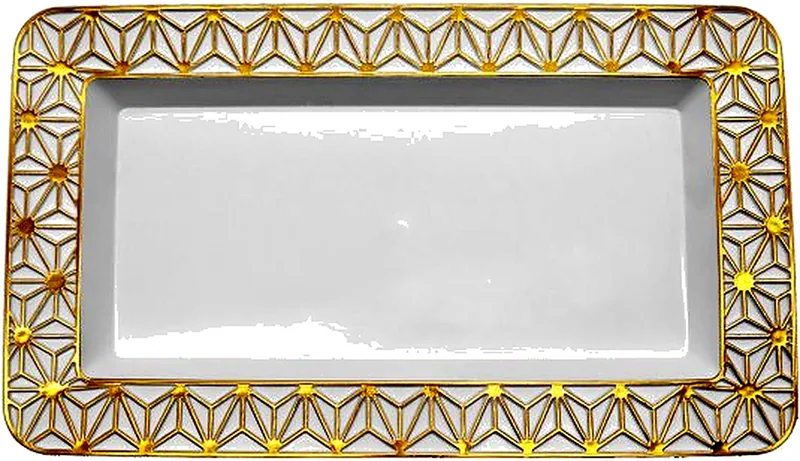
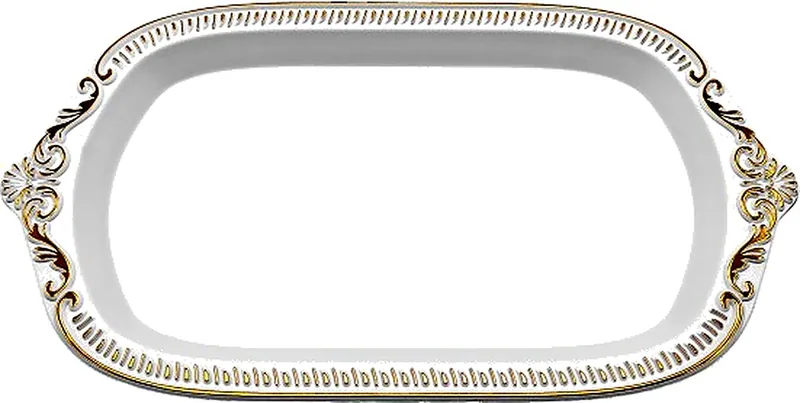
Not every product in the line carries the same risk, and the right paperwork depends on the shape and the job. The flat gold-edged trays such as the Gold Geometric-Rim Rectangular Tray (TVD-2567) and the Tray – Gold Scroll Corners (TVD-2574) are decorative serving pieces: the rim decoration sits at the border while food rests in the centre, which is where a food-contact report is most useful. Our TVD-2567 buying guide and TVD-2574 buying guide cover those two in detail.
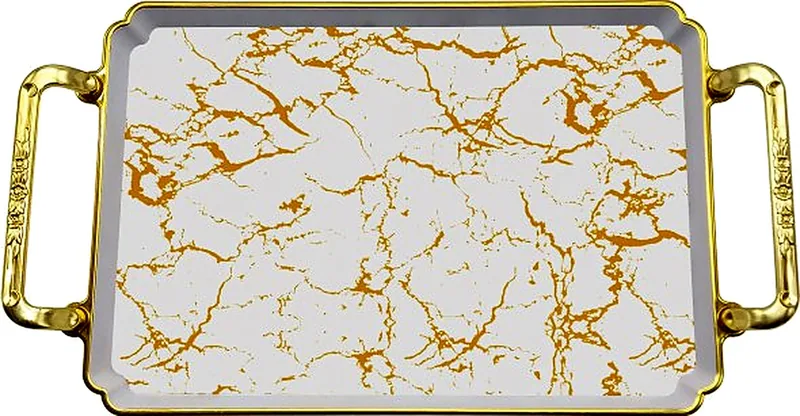
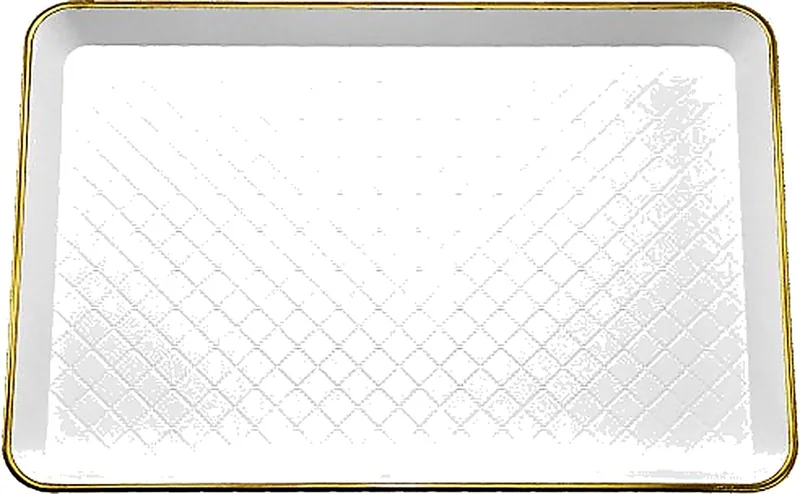
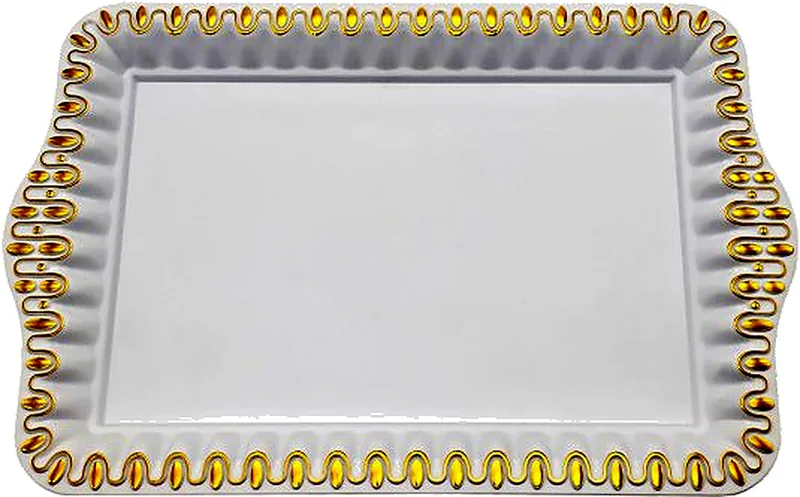
Handled pieces such as the Marble-Look Gold Handle Tray (TVD-2568) add a second question: the gold-tone handles are a separate decorated surface that hands touch constantly. Our handle tray collection post compares it with the other handled pieces. Textured and patterned surfaces such as the White Lattice Tray – Gold Rim (TVD-2569) make cleaning claims harder to support, so ask what care instructions come with the pack; see the lattice tray guide. Charger plates such as the Baroque-Edge Charger Plate (TVD-2577) normally sit under another plate, so ask whether the factory intends food to touch them, because that changes whether a food-contact report is needed. The deep Black Serving Bowl (TVD-2608) is the piece most likely to hold wet food for long periods, so prioritise its report.
Two further points apply to the whole line. First, sizes: some products show a size, such as TVD-2605 or TVD-2606, while others show a shape or "2 sizes" only, and the full size is confirmed on the quote. Second, the line includes clear, white and black pieces, and a pigmented body is another reason to ask which plastic type and which colourant system the factory used, since our product listing does not state them.
Document checklist for a mixed order of gold-rim trays
| Document | Why it matters | Who issues it |
|---|---|---|
| Material grade and plastic type per product | Foundation for every other report and for care instructions | Factory, written into the quote |
| Food-contact test report for the body material | Supports the Food and Drugs Act duty and satisfies many buyers and inspectors | Factory or independent lab |
| Lead and heavy-metal result for the gold decoration | Rims and borders are the known risk area for metallic decoration | Factory or independent lab |
| Care instructions: dishwasher, microwave, oven, hand wash | Foil and paint finishes can fail under heat or harsh detergent; the factory sets the rating | Factory |
| Bilingual pack artwork with identity and net quantity | Needed for prepackaged consumer products | You or us, approved before print |
| French wording for Quebec sales | Quebec retailers and the Charter of the French language | You or us |
| Customs classification and origin | Duty and tax depend on tariff code and origin | Our customs broker |
| Venue or landlord sanitation requirements | Some restaurants and franchisors ask for NSF/ANSI or equivalent on commercial food equipment | Your health unit, landlord or franchisor |
What happens when paperwork is missing
- A retailer or event company may refuse to list or stock a decorated food item without a test report.
- A public health inspector can ask a restaurant to stop using serving ware it cannot show to be suitable for food.
- A product found to be a danger to health or safety can be recalled under the Canada Consumer Product Safety Act, and the importer has incident-reporting duties.
- A pack without bilingual identity and net quantity can be refused by a buyer or stopped by a retailer's compliance team.
How we handle it
Each order starts with a written quote showing quantity, specification, certification status, documents, packing, lead time and delivered cost. We ask the factory for the reports above before quoting, and our broker confirms the tariff classification. Samples are available on most items, trial minimums are low on many lines, and products from several factories can share one consolidated container. Payment is a 30% deposit and 70% before release. Details sit on how ordering works, and the landed cost calculator and sales tax guide help you budget for the delivered order.
Start from the gold-rim trays line page, the wholesale guide or the home kitchen and tableware range for Canada, then send a quote request with your province and intended use. A free account shows the full specifications on each product page. We deliver across Canada; the Canada delivery hub covers freight by region.