Certification guide ·
Bamboo Drawer Organisers: Canadian Compliance and Import Rules for Cutlery Trays
Cutlery trays carry no electrical or gas mark, but five different bamboo trays raise five slightly different paperwork questions. This guide sorts them by what each tray is made of and how it is finished.
A bamboo drawer organiser is one of the least regulated products a homeware importer can buy, which is exactly why buyers sometimes skip the paperwork. The documents still matter: a retailer's compliance team, an online marketplace or a property manager may ask for them, and the answers differ between a plain bamboo tray, a lined tray and a tray with a coloured finish. Our bamboo drawer organisers line has seven products. This guide covers the five where the finish or layout changes the compliance questions, and links to the guides for the other two.
What applies to every tray in the line
- CCPSA: the Canada Consumer Product Safety Act applies to consumer products. It prohibits products that are a danger to human health or safety, requires incident reporting and allows recalls. Health Canada enforces it.
- Food and Drugs Act: it prohibits selling food in or with materials that may make it harmful. Health Canada does not pre-approve kitchenware, so buyers commonly ask the factory for food-contact test reports covering the bamboo, the finish and the glue.
- Consumer Products Containing Lead Regulations: lead limits that include kitchen utensils.
- Consumer Packaging and Labelling Act: prepackaged consumer trays need bilingual English and French identity and net quantity, plus the dealer's name and place of business.
- Quebec: labels, instructions and warranty documents must be available in French, with French at least as prominent as English.
These are requirements for the seller and are not statements about any one tray. Rules change, so confirm with Health Canada, your inspector or your customs broker. This is not legal advice. None of the trays below has a certification mark on file; we confirm certification status and supply documents with the quote before you order.
Where the five trays differ
| Product | Listed features | Extra question it raises |
|---|---|---|
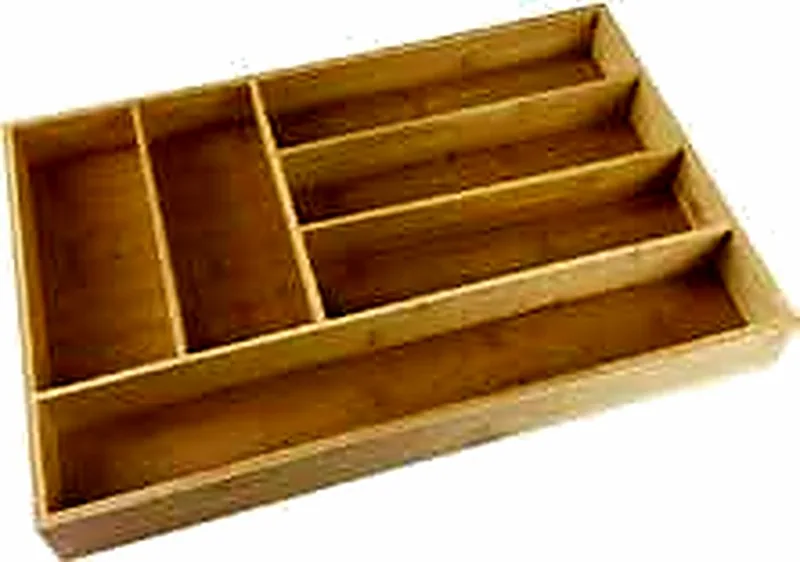
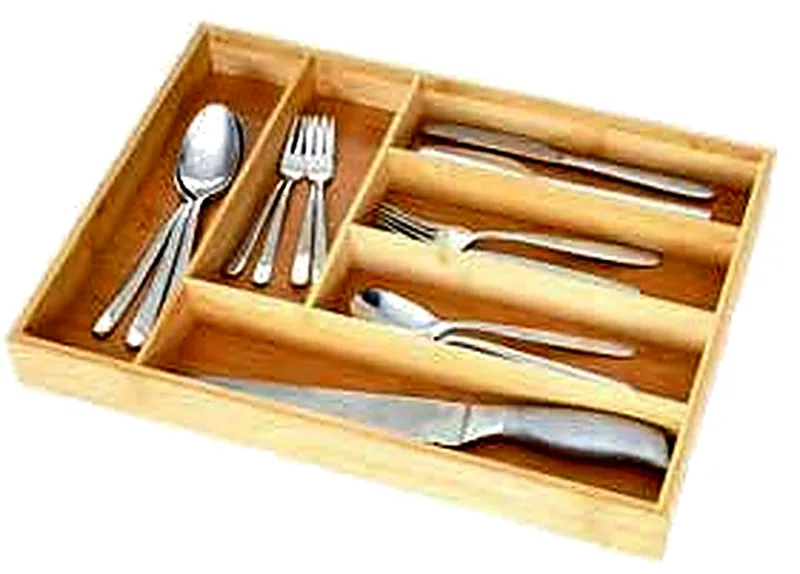
| Bamboo Cutlery Tray – Fixed Slots (TVD-5764) | Natural bamboo slots, fits kitchen drawers, several layouts | Finish and glue; one report may need to cover every layout |
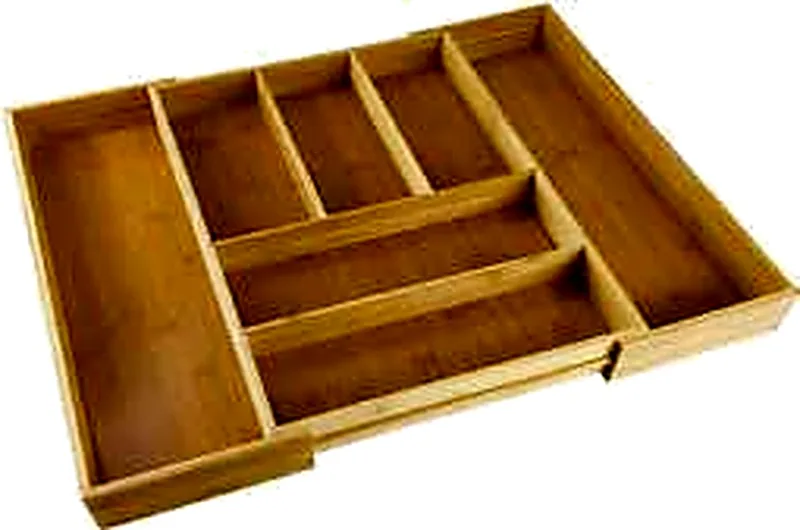
| Expandable Bamboo Cutlery Tray (TVD-5765) | Adjustable width, multiple compartments, fits kitchen drawers | Materials of the sliding parts and any fixings, in addition to the bamboo |
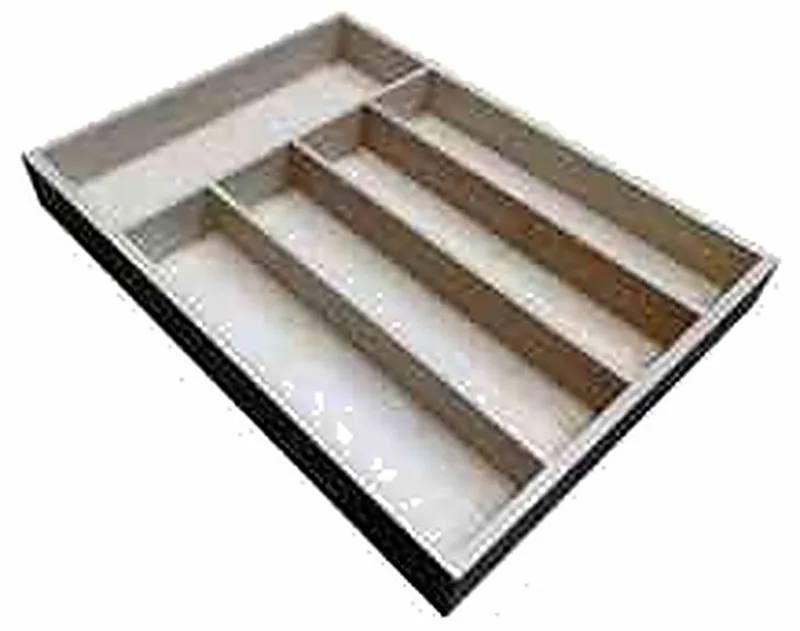
| White-Wash Cutlery Tray (TVD-5780) | White-wash bamboo finish, several compartment layouts, fits kitchen drawers | What the white-wash is, and a lead check on the applied colour |
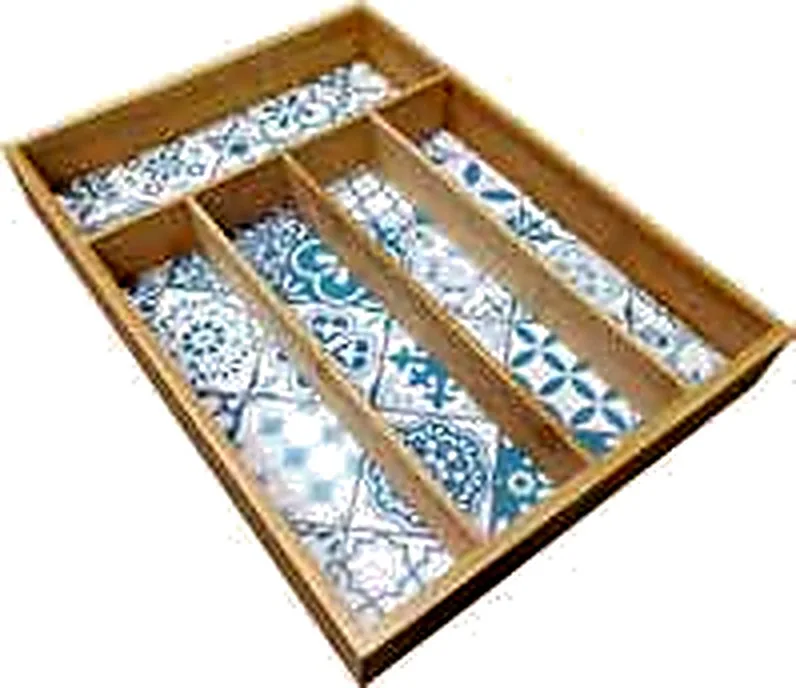
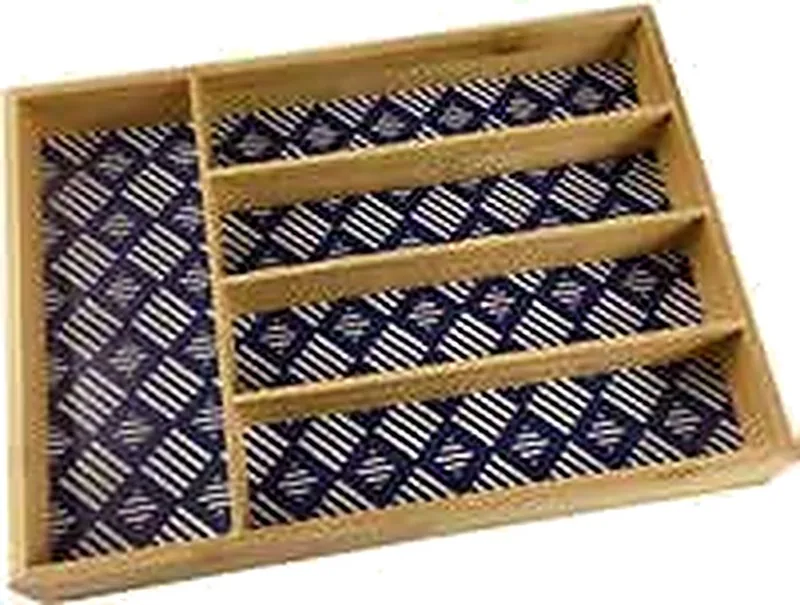
| Bamboo Cutlery Tray – Tile Print Lining (TVD-5781) | Tile-print lining, fits kitchen drawers, natural bamboo frame | Print and lining material, and lead or cadmium results for the print |
| Bamboo Cutlery Tray – 6 Compartment (TVD-5783) | Six compartments, natural bamboo finish, fits kitchen drawers | Finish and glue; consistent construction across all six compartments |
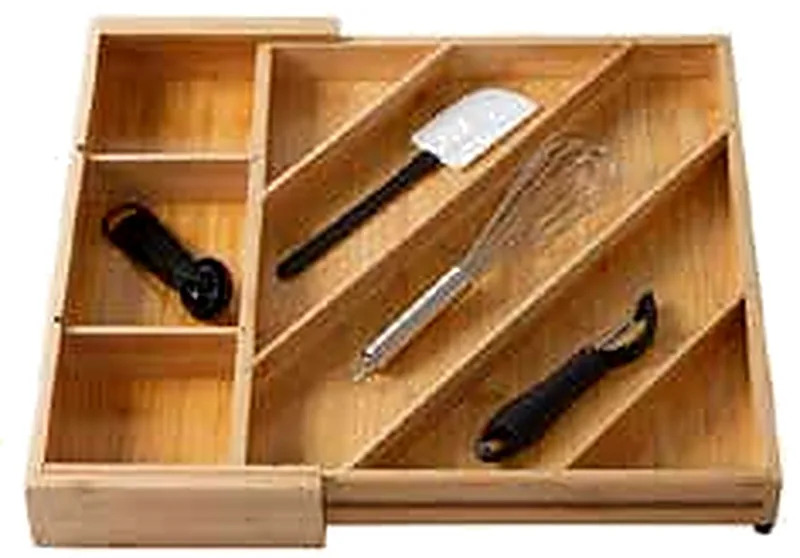
The two trays not in the table are the Bamboo Cutlery Tray – Printed Lining (TVD-5763) and the Bamboo Drawer Organiser – Diagonal Slots (TVD-5782). Read the printed lining compliance guide and the diagonal slots compliance guide.
Natural bamboo versus a finish, a print or a lining
A natural bamboo tray has the simplest paperwork: bamboo strips, an adhesive and perhaps a clear finish. The test report should cover all three. A white-wash adds an applied colour, so ask what it is and whether it has been tested for lead. A tile-print lining adds a printed decoration and a lining material, so ask for lead and cadmium results on the print and for the lining's fibre content if textile labelling is a question. The Textile Labelling Act applies to consumer textile articles; whether a fabric lining inside a bamboo tray is one depends on classification, which we confirm with our customs broker and which you can check with your own advisers. Where a version includes a printed decoration near anything that touches food, the lead and cadmium question is a known risk, so ask for a report.
Document checklist
| Document | Why you want it | Who issues it |
|---|---|---|
| Food-contact test report naming the materials | Evidence the bamboo, finish and glue are suitable in a kitchen | Accredited laboratory via the factory |
| Finish, colour or print declaration | Identifies anything applied to the bamboo | Factory |
| Lead and cadmium result for applied colour or print | Needed for the white-wash and the tile-print versions | Test laboratory |
| Lining material declaration | Supports labelling and tariff classification | Factory |
| Packaging artwork in English and French | Retail packs need bilingual identity and net quantity | You, checked against the quote |
| Tariff classification and duty confirmation | Duty depends on classification and origin | Our customs broker |
No electrical or gas mark applies
Because none of these trays is plugged in, hard-wired or fuelled, CSA, cUL and cETL marks are not the question. The European CE mark is not recognised in Canada as proof of compliance for consumer products either, so a CE statement from a factory is supporting evidence at most. Our marks explainer shows what those marks cover on products that do need them.
Provincial and buyer differences
The strongest provincial difference is language: Quebec retailers expect French on the pack, instructions and warranty. Beyond law, the buyer matters. A big-box or marketplace seller may ask for specific test reports as a listing condition. A hotel or property manager fitting out kitchens may simply want evidence of the material and finish. A restaurant is a different case, because a commercial kitchen's inspector looks at food equipment and food-contact surfaces and a drawer organiser is rarely the item in question; check with your health unit and landlord.
What happens if it is missing
The usual consequence is commercial: a retailer declines a listing, a marketplace takes down an item or a customer returns a product with a strong smell or a loose lining. In a worse case, a safety complaint triggers the CCPSA's incident reporting and recall powers. A document gathered at the quote stage costs less than any of these.
How we handle it
We ask the factory for the documents that match the version you want, confirm the tariff classification with our customs broker and state the certification status in writing on the quote. If you need a test that the factory does not have, we say so and discuss lead time before you pay a deposit. For a first order, a trial quantity of two or three trays lets you test lining or finish against your standards. See also the buying guides for the fixed-slots and expandable trays, the white-wash tray, the tile-print lining tray and the six-compartment tray.
Ordering
Orders are quoted in writing: price for the quantity, specification, certification status and documents, packing, lead time and delivered cost to your address. Payment is a 30% deposit and 70% before release, and samples are available on most items. Check the sales tax guide, read how ordering works, send a quote request and see the Canada delivery hub for delivery.