Product guide ·
Divided Glass Containers with Teal Lids (TVD-1880): Wholesale Guide
Two compartments, one lid, borosilicate glass: TVD-1880 is built for meals that have a main and a side. This guide covers portion planning, the teal lid and the questions to put on your quote.
What TVD-1880 is
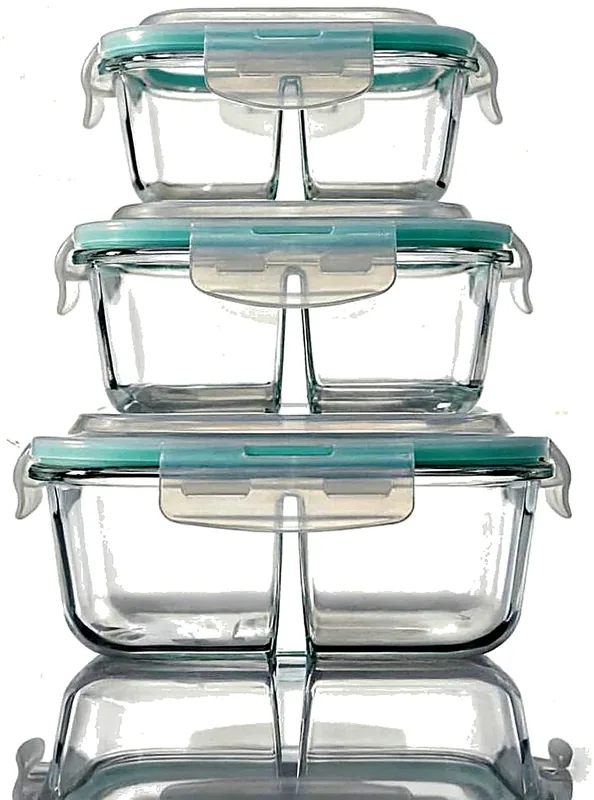
The TVD-1880 (Divided Glass Containers – Teal Lid) is a rectangular borosilicate glass container with two compartments and a teal clip-lock lid. The two-compartment layout is the whole reason to choose it. If your customers eat a protein with a side, a curry with rice or a salad with a dressing, a divider keeps each component separate until the moment of eating.
The portion-control case
Meal-prep businesses sell on consistency. A divided container sets the proportion: one compartment for the main, one for the starch or vegetable. That makes assembly faster on a prep line, and it makes the finished portion look deliberate. For diet and fitness programs, where a customer is counting portions, a fixed compartment is a feature in itself. Before you commit, fill each compartment with your real recipes on a sample and note how many grams of each food actually fit; we do not publish compartment volumes here, and they are confirmed on your written quote.
Who buys it
- Meal-prep brands that portion and deliver weekly meals.
- Corporate and school caterers that serve a fixed lunch with two components.
- Restaurants that run a takeout lunch special.
- Retailers selling lunch and bento-style storage to office workers and students.
- Online sellers who bundle divided containers with a carry bag or a cutlery set.
Reading the listed features
2-compartment rectangular. A rectangular body uses refrigerator and delivery-bag space well. Two compartments make it harder to stack other items inside, so tell customers the container is designed for a single meal, not for bulk storage.
Borosilicate glass bodies. The named glass type. The heat rating is not given, so request a written rating from the factory for oven, microwave, freezer and dishwasher use.
Teal clip-lock lids. Clip-lock lids press against a seal. In a divided container, the key question is whether the seal also keeps the two compartments from leaking into each other, or only seals the outside. Ask the factory how the lid and divider interact, and test with a liquid sauce on one side and a dry food on the other.
Choosing the teal lid
Colour is a working tool in a food kitchen. Teal is distinct from the blue and yellow lids elsewhere in the range, so a kitchen can assign teal to one menu line, such as a vegetarian plan, and avoid mixing up orders. For a retailer, a teal lid is a modern, fresh colour that does not look like a standard kitchen white. If your branding uses a different colour, ask on the quote whether lid colour options exist and what minimum order applies.
Specification checklist
- Overall dimensions and the capacity of each compartment.
- Whether the divider is moulded in the glass or separate.
- Lid material, seal type and compartment sealing.
- Factory ratings in writing for oven, microwave, freezer and dishwasher, for glass and lid separately.
- Food-contact test reports for the Canadian market, covering the lid.
- Retail packaging, bilingual labelling, barcode and carton quantity.
- Minimum order per item or colour, sample availability and lead time.
Comparing the divided options
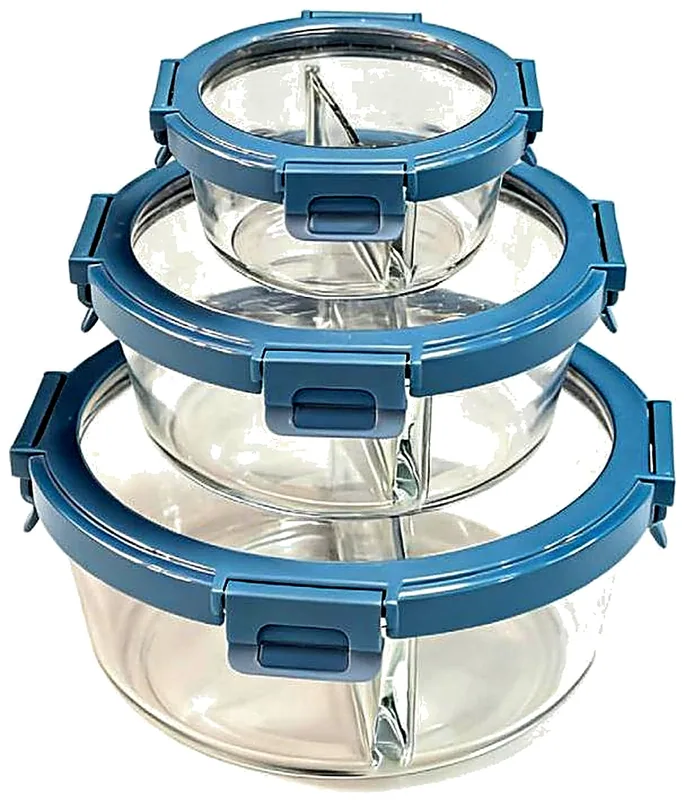
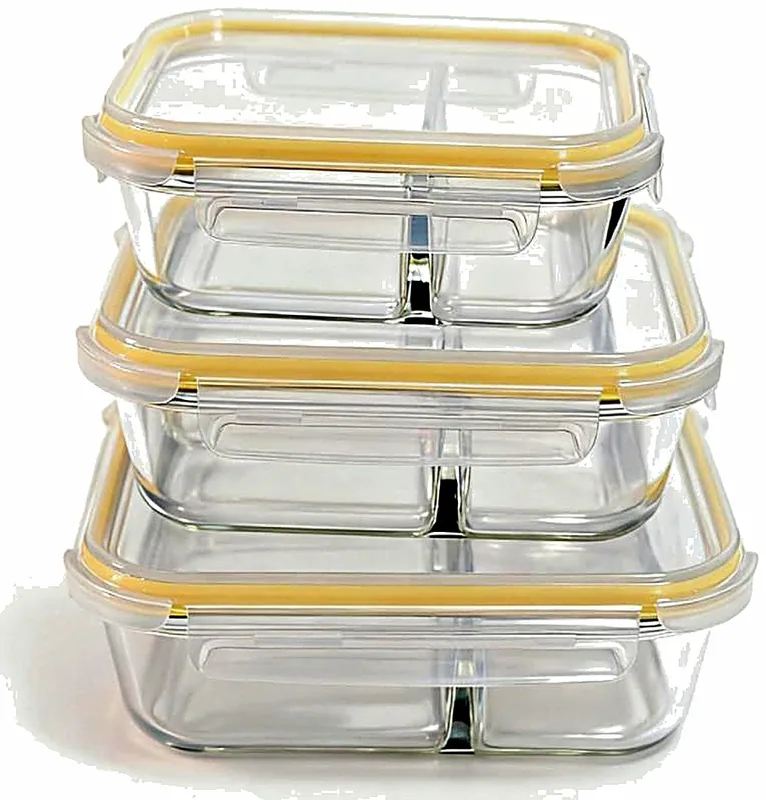
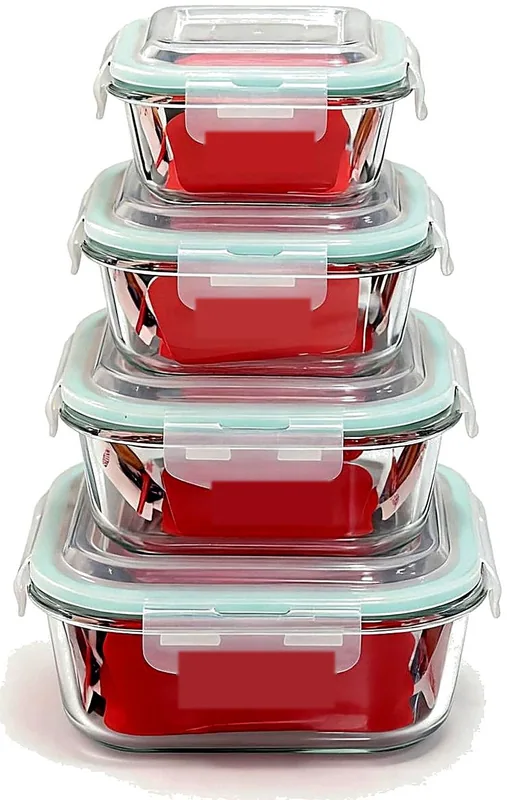
Our range has three divided designs. TVD-1877 (Round Divided Glass Containers – Blue Lid) has a 2-compartment round design with blue clip-lock lids and is covered in the blue clip lid collection guide. TVD-1879 (Divided Glass Containers – Yellow Lid) is a 2-compartment rectangular design with yellow clip-lock lids and is covered in the yellow lid collection guide. TVD-1880 sits between them in layout: rectangular like TVD-1879, teal like neither. If you prefer a single compartment for a nesting set, see TVD-1869 (Square Glass Food Containers – Teal Lid), which has snap-lock lids with a teal seal.
Canadian use notes
Delivery meal programs in Canada deal with winter: a glass container that goes from a hot kitchen to a cold doorstep faces a sharp temperature change. Ask the factory for the temperature range the glass is rated for, and tell your drivers not to place hot containers on frozen surfaces. In summer, insulated delivery bags are common, so check lid fit with your own bags. Freight to remote areas may need extra time, and the Canada delivery hub explains routes. Sales tax is in our sales tax by province guide.
Rules to know
The Food and Drugs Act prohibits selling food in or with materials that may make it harmful. Health Canada does not pre-approve kitchenware, so buyers ask for food-contact test reports that cover the glass and the lid. Glass that contacts food is also covered by the Glazed Ceramics and Glassware Regulations on lead and cadmium; if the version you order has colour or printing near the rim, ask for a lead and cadmium report. Prepackaged consumer sets need bilingual English and French product identity and net quantity, and Quebec retailers expect French on labels and instructions. Local public health inspectors may ask commercial kitchens for sanitation certification on food equipment; check what your health unit asks. Rules change, so confirm with the authority or your inspector. This is not legal advice. No certification is on file for TVD-1880, and we confirm certification status and send documents with the quote before you order. Read the food-contact and glass rules for the whole line.
How ordering works
Every order is quoted in writing for quantity and delivery address, covering specification, documents, packing, lead time and delivered cost. Payment is 30% deposit and 70% before release. Samples are available on most items and the sample cost is usually credited to your first order. Start from the quote request form or read how ordering works, and see the Glass Food Storage & Tableware line for more.