Product guide ·
Ribbed and Divided Glass Containers with Yellow or Dark Lids: TVD-1873, 1879 and 1895
Three glass container sets share borosilicate bodies and snap or clip lids. The differences are ribbed walls, a two-compartment layout and a dark brown lid, and each answers a different customer.
Three sets, one glass specification
TVD-1873 (Ribbed Glass Containers – Yellow Lid), TVD-1879 (Divided Glass Containers – Yellow Lid) and TVD-1895 (Glass Containers – Dark Lid) all use borosilicate glass bodies with a sealing lid. They share that core specification. What differs is walls, layout and lid colour: ribbed walls with square and rectangular shapes and yellow snap lids for the first, a two-compartment rectangular layout with yellow clip-lock lids for the second, and dark brown sealing lids in rectangular and square sizes for the third. Treat this page as a decision guide rather than a spec comparison, because the specification is largely common and the choice is about how each shape works in your business.
At a glance
| Item | Walls and layout | Lid | Shapes |
|---|---|---|---|
| TVD-1873 | Ribbed walls, single compartment | Yellow snap lid | Square and rectangular |
| TVD-1879 | Two compartments | Yellow clip-lock lid | Rectangular |
| TVD-1895 | Single compartment | Dark brown sealing lid | Rectangular and square |
When each one is the right pick
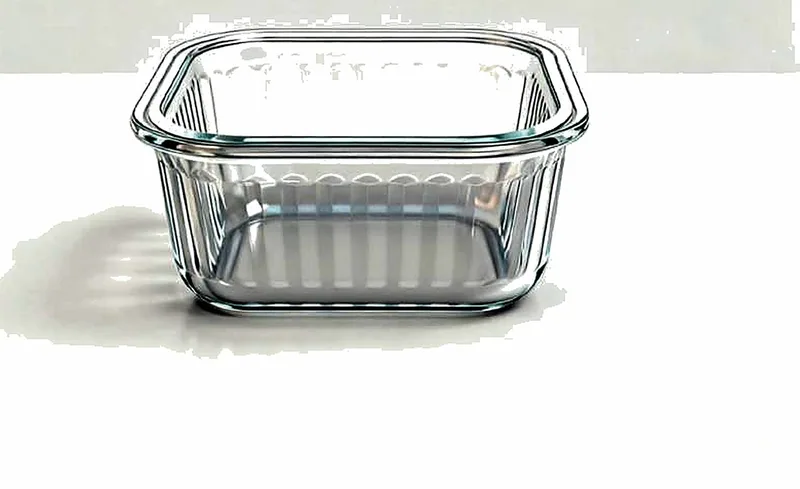
Ribbed with yellow lid, TVD-1873. A bright yellow lid on a textured glass body stands out on a shelf and reads as friendly and modern. It works for retailers who sell to families and first-apartment buyers, and for bakeries or delis that want a branded colour. The ribbed walls give grip, which matters for a container that goes from fridge to counter all day.
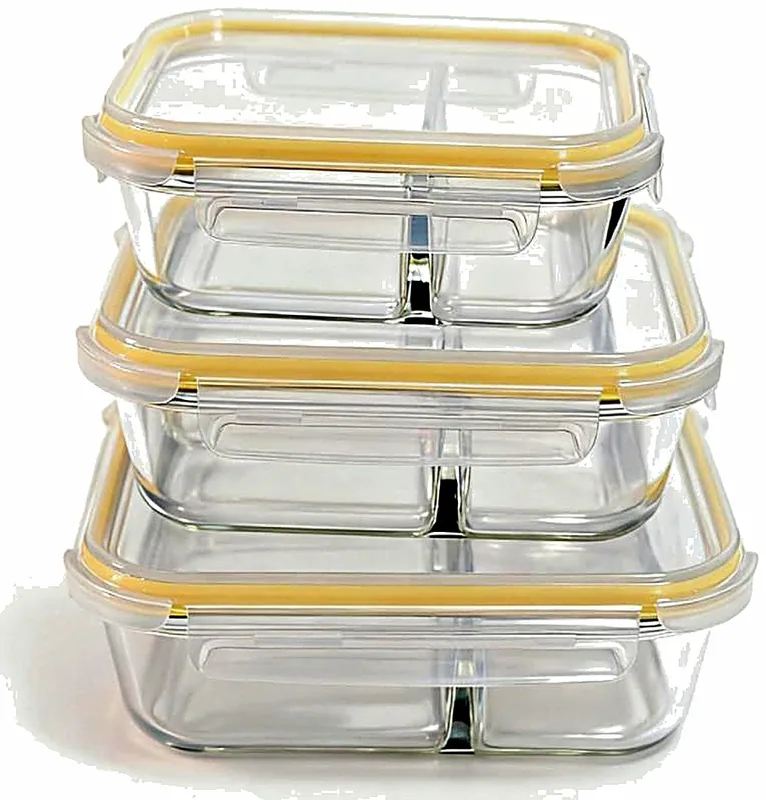
Divided with yellow lid, TVD-1879. Two compartments solve the oldest lunch-box problem: keeping foods apart. A caterer serving staff lunches, a school program or a meal-prep brand with fixed protein and side portions gets neat portion control. Ask for the volume of each compartment on the quote, since a divided design can split capacity evenly or unevenly.
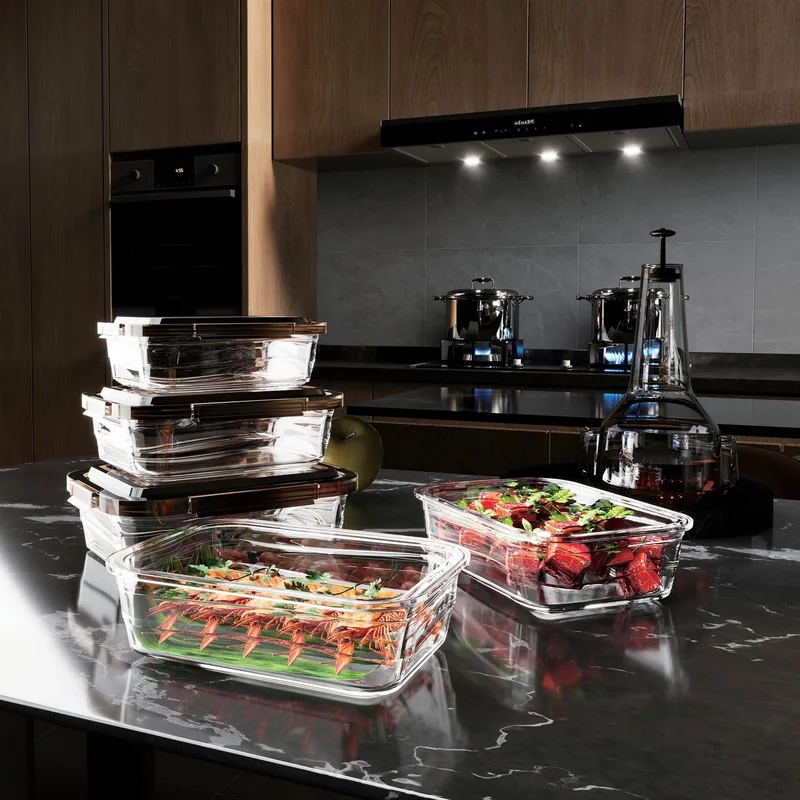
Dark lid, TVD-1895. A dark brown lid hides sauce splashes and reads as natural and understated. It suits restaurants and cafés that prefer a quieter look and do not want a bright lid colour clashing with their branding. It is also the practical choice for items that stain light plastic, but ask whether the lid itself is dishwasher rated.
Buyers, matched
- Retailers and gift shops: TVD-1873 for visual impact, TVD-1895 for a neutral partner on the same shelf.
- Meal-prep and lunch programs: TVD-1879.
- Cafés and delis: TVD-1895 for a discreet look, TVD-1873 for a brand colour.
- Online sellers: all three photograph differently, so a three-item bundle gives a range story.
Mixing them in a single order
Buy by shape, not just by code. List how many square and how many rectangular units you expect to move, then request sizes to match. Order samples of each and run one hard-use week: fill with your real food, snap and clip the lids, stack in the fridge, run through the wash. If your customers will mix these in cupboards, check whether the lids of one shape fit the bodies of another; do not assume they do, and ask us to confirm on the quote. A mixed order can share one consolidated container with other products from our range.
Specification checklist for the quote
- Capacity per size and per compartment, and the piece count per set.
- Lid material and seal type for yellow and dark lids.
- Whether glass and lid carry separate oven, microwave, freezer or dishwasher ratings from the factory.
- Food-contact test reports available for your market.
- Retail packaging, carton size, barcode, labelling language.
- Minimum order per item or colour and sample lead time.
Related products
For taller portions see TVD-775 (Deep Glass Food Containers). For serving rather than storing, TVD-777 (Opal Glass Dinner Sets) covers plates, bowls and platters. Nearby collections include blue clip lid containers and smooth and ribbed rectangles. For the stackable set of three see TVD-1875.
Canadian use and rules
Heated kitchens in winter are very dry and cold storage is cold, so glass in Canadian kitchens sees real temperature swings; ask the factory what temperature change the glass is rated to take and keep those limits in your staff instructions. Food-contact rules apply: the Food and Drugs Act prohibits food in or with materials that may make it harmful, Health Canada does not pre-approve kitchenware, and buyers commonly request food-contact test reports. Glassware limits on lead and cadmium are set by the Glazed Ceramics and Glassware Regulations. For consumer-packaged sets, bilingual product identity and net quantity are required, and Quebec retailers ask for French labelling. Confirm current rules with the authority or inspector; this is not legal advice. No certification is on file for these items, and we confirm certification status and documents with the quote before you order. Read the food-contact and glass rules for the whole line.
How ordering works
Each order is quoted in writing: price for the quantity, specification, documents, packing, lead time and delivery to your address. Payment is 30% deposit, 70% before release, with low trial minimums on many lines and samples on most items. Ask through the quote request form or read how ordering works, and use the landed cost calculator for an early estimate. Tax by province is in the sales tax by province guide.