Product guide ·
Double-wall travel cup with silicone lid (TVD-1968): glass drinkware that leaves the café
A double-wall glass body with a silicone lid and base, in several colours. Learn what the silicone changes and what to confirm before ordering.
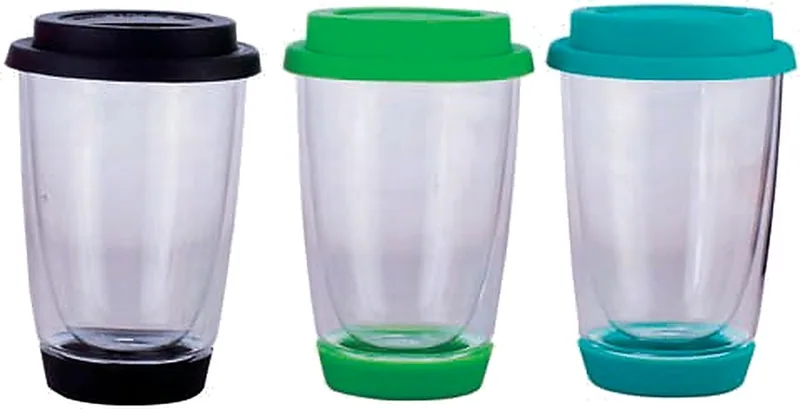
The Double-Wall Travel Cup – Silicone Lid (TVD-1968) takes double-wall glass out of the café and onto the commute. It has a double-wall glass body, a silicone lid and a silicone base, and it comes in several colours. Glass drinkware is usually a sit-down product. Adding a lid and a protective base makes it a carry-along cup, which changes who buys it, what they worry about and what a careful wholesale buyer should check. This guide is built around the lid and base, because they are what make this product different.
What the silicone adds
The lid
A silicone lid keeps dust, insects and splashes out and slows heat loss. It is also the part most likely to be handled with the mouth, which makes it a food-contact part in its own right. Ask what the lid fits like on the glass (snug, loose, sealed or only a cover), whether it has a sip opening, and whether it comes off easily for washing. Do not assume it is leak-proof: our listing does not say so, and any leak-resistance claim is confirmed on the quote.
The base
The silicone base cushions the glass on hard counters and protects it from knocks in a bag or car. It can also give some grip on a desk. Check whether the base is fitted permanently or removable, because trapped water between a glass and a removable base can leave marks and odour if it is never taken off.
The colours
The listing says several colours. Colour is on the silicone, so you can build a colour range around identical glass bodies, which simplifies stock: one glass, several colour variants. Ask which colours are available in your quantity and whether you can pick a mix per carton.
Who buys it
- Cafés that sell a reusable cup to regulars and want it to look better than a plastic tumbler.
- Gift shops and online sellers who bundle it with tea or coffee sampler boxes.
- Offices and corporate gifting buyers who need a desk cup that travels to the meeting room.
- Hotels and retailers offering a branded keepsake cup.
Specifying TVD-1968
| Question for the factory | Why it matters |
|---|---|
| Capacity and overall height | Decides drink size and whether it clears a bag pocket or fits a carrier |
| Is the lid sealed, with a sip opening, or only a cover? | Sets customer expectations and your signage |
| Is the base removable? | Affects cleaning and hygiene |
| Silicone food-contact report | The lid can touch the mouth and the drink |
| Glass lead and cadmium report | Glass that contacts food needs it |
| Hot-drink and dishwasher guidance for the assembled cup | Silicone and glass can tolerate different treatment |
| Custom colours or logos | Possible branding on the silicone; confirmed on the quote |
How it compares with other cups in the line
For a simple handleless glass without accessories, see the Double-Wall Glass Cup – Round (TVD-1936). For a lidded glass with a handle, the Irish Coffee Glass with Silicone Lid (TVD-1969) is the footed alternative. The Double-Wall Glass – Silicone Sleeve (TVD-1970) has a non-slip sleeve and an optional lid, and the Double-Wall Mug – Silicone Base (TVD-1971) has a handle with a coloured silicone base. Pick the travel cup when you want lid and base together and a colour choice.
Canadian rules for lidded glass drinkware
Glass and silicone are both food-contact materials. Canada's Glazed Ceramics and Glassware Regulations limit lead and cadmium that can leach from glassware that contacts food. The Food and Drugs Act prohibits selling food in or with materials that may make it harmful, and Health Canada does not pre-approve kitchenware, so buyers commonly ask the factory for food-contact test reports for both the glass and the silicone. No certification mark is on file for TVD-1968, so we make no certification claim; we confirm certification status and supply the documents with the quote before you order. A boxed cup is a prepackaged consumer product, so bilingual identity and net quantity plus dealer details are needed under the Consumer Packaging and Labelling Act, and in Quebec labels and instructions must be available in French. Rules change; confirm with the authority or your customs broker. This is not legal advice. See the Canadian rules for double-wall glassware for the full line.
Canadian use notes
A travel cup in a Canadian winter goes from a warm kitchen into freezing air. Glass can be stressed by sharp temperature swings, so ask the factory what it advises for use outdoors in winter and do not pour boiling liquid into a cold cup. Silicone stays flexible in the cold, but a lid that fits at room temperature can feel different at minus temperatures, so test a sample. Freight cartons should warm to room temperature before opening.
Ordering
Every order is quoted in writing for quantity, colour split and delivery address; pricing is never posted. The quote also states lead time, packing and certification documents. Low trial minimums are common, samples are available on most items with the sample cost usually credited to the first order, and payment is 30% deposit and 70% before release. The cups can share a consolidated container with products from other factories. See how ordering works, estimate with the landed cost calculator, and read the sales tax by province guide. Then request a quote listing the colours you want. The Double-Wall Glassware line and double-wall glassware wholesale guide cover the range.