Certification guide ·
Floral Cut-Out Plate – Blue (TVD-10344): what Canadian retailers and importers will ask for
A decorated blue plate raises different questions from a plain bowl. This guide covers the checks a retailer, daycare or café buyer will make before listing it.
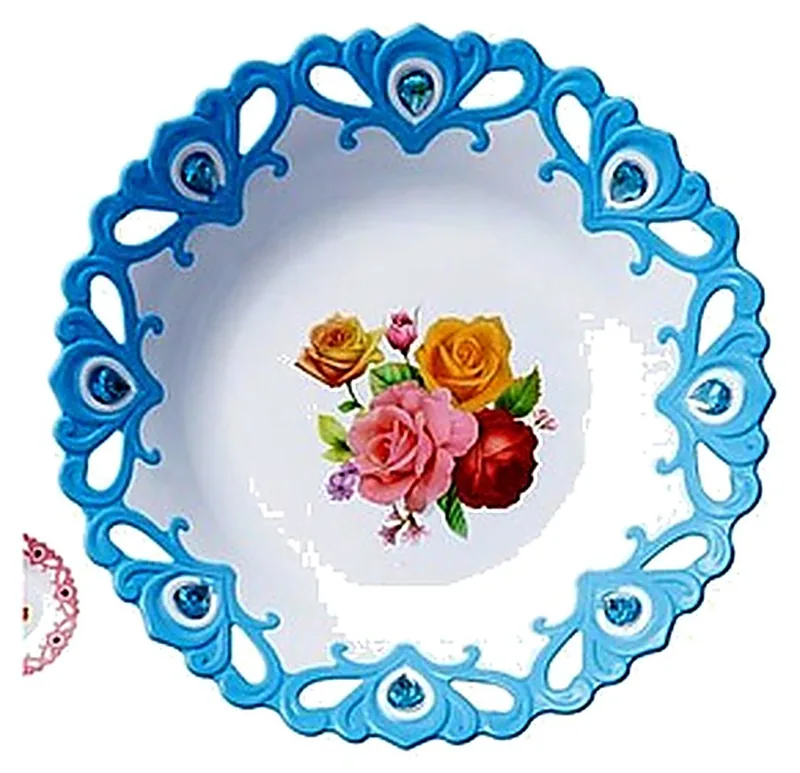
The Floral Cut-Out Plate – Blue (TVD-10344) is described in our product listing with two-tone bowls, cups and printed plates in several sizes. The name points to a decorative floral cut-out design and a blue colour. Its closest neighbour is the Deep Bowl Set – Pink guide, which looks at the set from the food-contact side. This post looks at the plate from the shelf: what a buyer asks for when a decorated piece reaches a Canadian store. Not legal advice; rules change, so confirm with Health Canada, your inspector or your customs broker.
Is a mark on file?
No. No certification or test report is on file for TVD-10344, and we do not describe it as certified, listed or compliant. We confirm certification status and supply the documents with the written quote, so you see what exists before you order.
Where a cut-out plate differs
- Cut-out edges. An openwork edge adds cleaning edges and weak points. Ask whether edges are smooth and whether the plate flexes under a loaded meal. Sharp mould lines are a safety concern for children's use.
- Stacking. Cut-outs can lock plates together in a stack or leave marks. Ask how plates are separated in the carton.
- Decoration. A printed floral pattern is the main compliance question. Where the print sits, what ink is used and whether it is covered by a clear layer all matter.
- Food contact. Food will sit on the plate, not just touch an edge, so the surface and its print are in direct contact with meals.
The Canadian framework in plain words
The Food and Drugs Act prohibits selling food in or with materials that may make it harmful, and Health Canada does not pre-approve kitchenware. The Consumer Products Containing Lead Regulations set lead limits that include kitchen utensils and products for young children. If any piece were glass or glazed ceramic, the Glazed Ceramics and Glassware Regulations would limit the lead and cadmium that can leach; decorated rims and printed or metallic decoration near the lip are a known risk, so request a lead and cadmium report on any decorated surface. The Canada Consumer Product Safety Act prohibits products that are a danger to health or safety and allows recalls. Phthalate limits apply to soft vinyl in childcare articles and toys, so if a plate is sold as a children's feeding or toy item, ask what the material is and confirm what applies.
What a retailer will ask for
| Retail buyer question | What answers it |
|---|---|
| Can children use it? | Lead report for the printed area, material statement, edge finish; confirmation of whether it is sold as a children's product |
| Will the print wash off? | Factory statement on dishwasher and scrub resistance, plus a sample wash test by you |
| Is the packaging bilingual? | Pack artwork with English and French identity and net quantity and the dealer's name and place of business |
| Will it sell in Quebec? | French labels, instructions and any warranty paper |
| Is there a report on file? | The documents we collect with the quote, or a clear statement that none exists |
Document checklist
| Document | Why | Issued by |
|---|---|---|
| Food-contact migration report | Evidence the plate material is suitable for food | Accredited laboratory via the factory |
| Lead and cadmium report on decoration | Covers print and colour, especially the rim | Laboratory |
| Material and construction statement | Confirms plastic type, edge finish and any hidden components | Factory, confirmed on our quote |
| Care statement | Prevents warped plates and false claims on the pack | Factory |
| Duty classification | Locks landed cost | Our customs broker |
Daycares, cafés and schools
Institutional buyers rarely ask for a mark, but they do ask practical questions. A daycare wants edges that cannot cut and a surface that does not chip into food. A café wants plates that survive a commercial wash cycle without the colour dulling, and a school canteen wants to know that a replacement plate ordered next year will match the first batch. Put those questions to the factory in writing, ask for colour references for the blue so a reorder matches, and keep the answers with your purchase file so you can show them to an inspector or a customer who asks.
Consequences of gaps
A missing report rarely stops goods at the border; it stops them at the buyer. Chains decline listings, an online marketplace removes a product after a complaint and an incident can lead to recall under the Canada Consumer Product Safety Act. For a daycare or café, an inspector can ask whether the plates are suitable for food and easy to clean.
Our process
When you send a quote request, we ask the factory for the material statement and available test reports, show you which exist, and give delivered cost to your address. Samples are available on most items and are usually credited to the first order. Payment is 30% deposit and 70% before release; read how ordering works. Our line-wide compliance guide and the product line page cover related pieces, and the Salad Bowl Set – Green (TVD-2719) collection sits in the same set family.