Certification guide ·
Importing Glass Bakeware, Cookware and Measuring Jugs to Canada: Documents and Rules to Request
Glass bakeware has no single Canadian mark to look for. What buyers ask for is a set of test reports and labels. This guide explains which Canadian rules touch glass dishes, bowls, jugs and a glass cooking pot, and what to request before you order.
There is no CSA sticker on a glass dish
Buyers who come to glass bakeware from electrical or gas products sometimes look for a certification mark. Plain glass dishes, bowls and jugs have no electrical or gas parts, so the marks explained in our guide to CSA, cUL and cETL marks are not what this range is about. What applies instead is consumer product safety law, food-contact rules and, for decorated pieces, limits on lead and cadmium. No certification is on file for any product in this line. We confirm certification status and supply the documents with the quote before you order, and we do not describe any piece as certified unless we hold the document.
Canada also does not recognise the European CE mark as proof of compliance for consumer products. A glass dish with a CE marking from the factory still needs to meet the Canadian requirements below.
The rules that touch glass in the kitchen
- Canada Consumer Product Safety Act. It prohibits consumer products that are a danger to human health or safety, requires incident reporting and allows recalls. Health Canada enforces it. Glass that shatters in the oven is exactly the kind of incident that matters here.
- Glazed Ceramics and Glassware Regulations. These set limits on lead and cadmium that can leach from glazed ceramics and glassware that contact food. Decorated rims and printed or metallic decorations near the lip are a known risk, so ask for a lead and cadmium test report on any decorated piece.
- Food and Drugs Act. It prohibits selling food in or with materials that may make it harmful. Health Canada does not pre-approve kitchenware, so buyers commonly ask the factory for food-contact test reports, such as FDA or EU migration tests.
- Consumer Packaging and Labelling Act. Prepackaged consumer products need bilingual (English and French) product identity and net quantity, plus the dealer's name and place of business. For measuring jugs, the capacity markings are part of the product, so confirm millilitres and cups.
- Quebec. Under the Charter of the French language, labels, instructions and warranty documents must be available in French, and Quebec retailers will ask for it.
Which pieces raise which question
The glass bakeware line covers very different items, and the checklist changes with them.
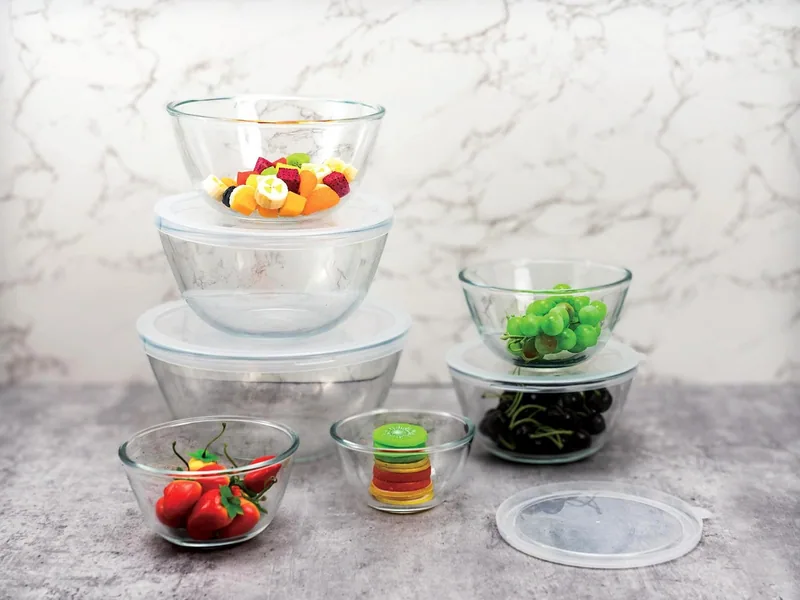
- The Glass Mixing Bowl Set (TVD-1881) is borosilicate glass in nesting sizes with optional clear lids. The bowl glass is plain, so the questions are the borosilicate claim, the lid material and the stack of nesting sizes.
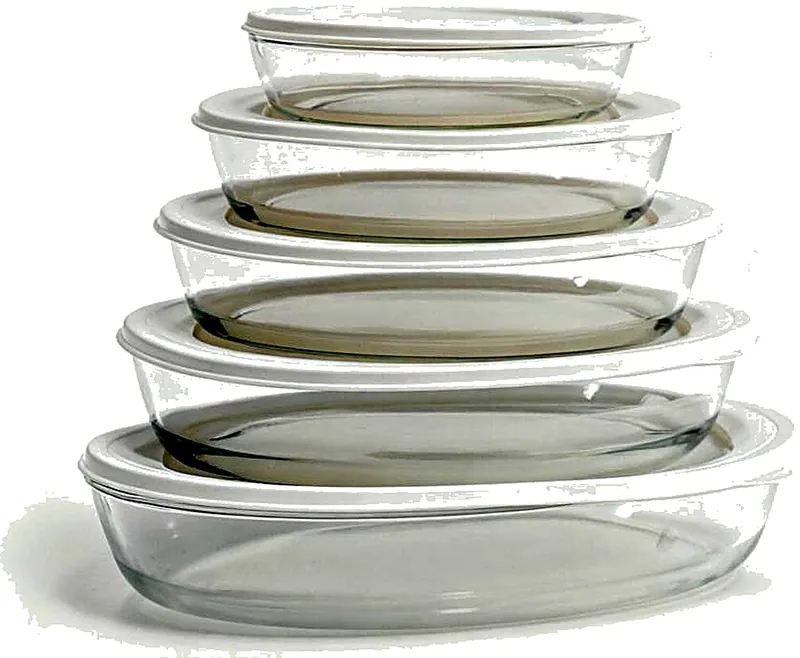
- The Oval Glass Dishes – White Lid (TVD-1884) comes with white lids included. A coloured lid is a separate material from the dish, so ask what it is made of and whether it is meant to go in the oven with the dish or only on the cold dish.
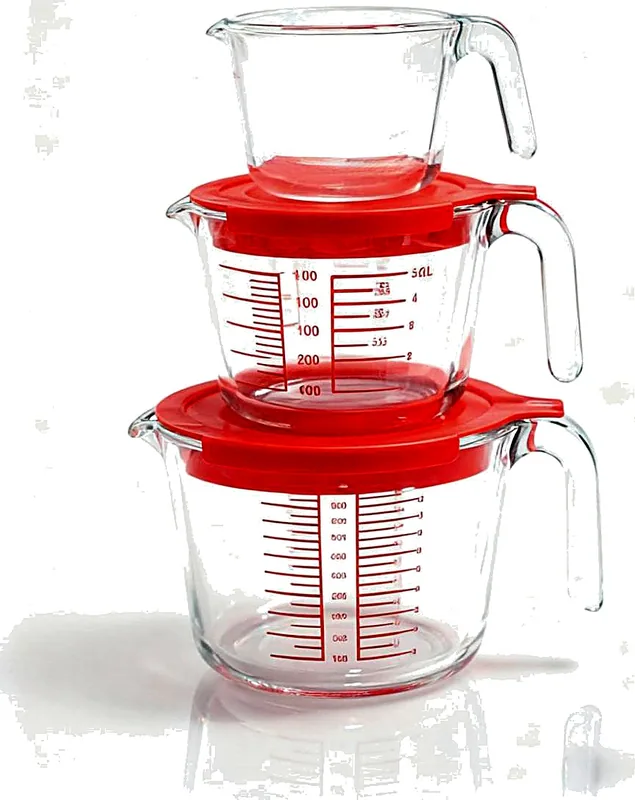
- The Glass Measuring Jugs with Lid (TVD-1889) carry red graduated markings. A printed marking is a decoration, and a decoration on food-contact glass is the case where buyers ask for a lead and cadmium test report. Ask whether the red print sits on the outside or inside of the jug.
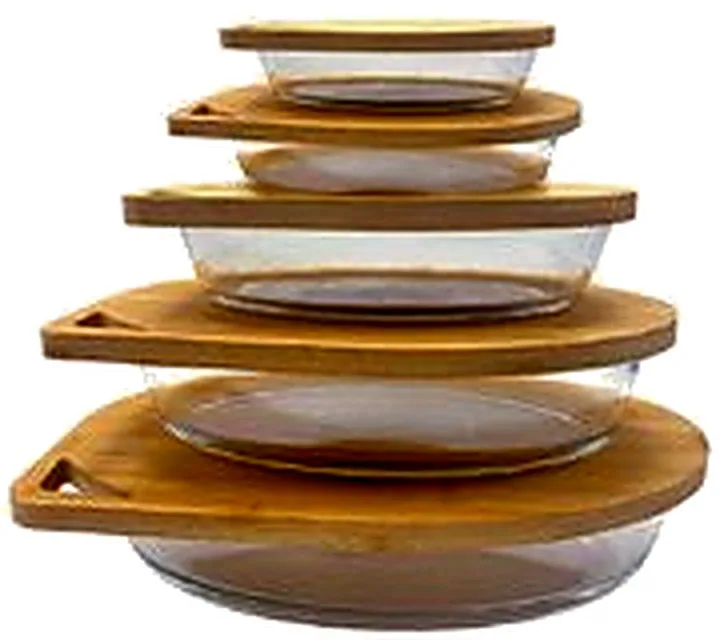
- The Glass Bowl Set with Bamboo Lids (TVD-2782) has bamboo lids that double as boards. Bamboo parts need finish and glue checks, and melamine-bamboo blends are not for microwave use.
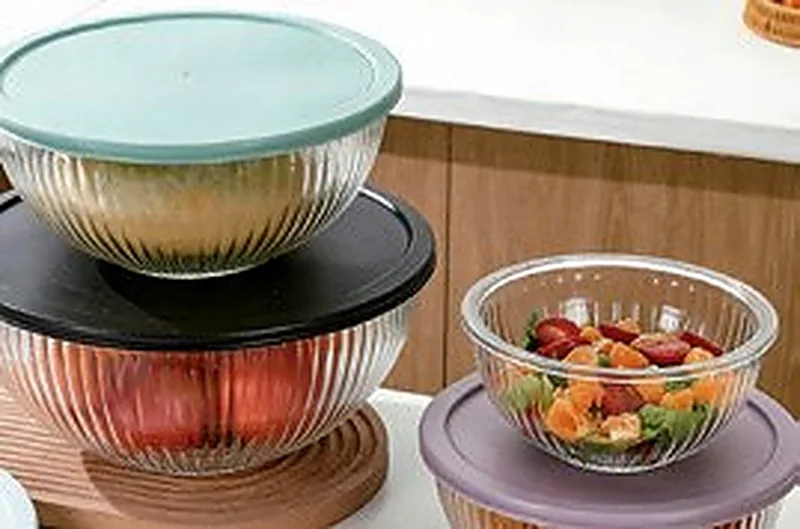
- The Ribbed Glass Mixing Bowls with Lids (TVD-2784) have teal, black and purple lids. The colour is on the lid, so ask what the lid is made of and how the colour is applied.
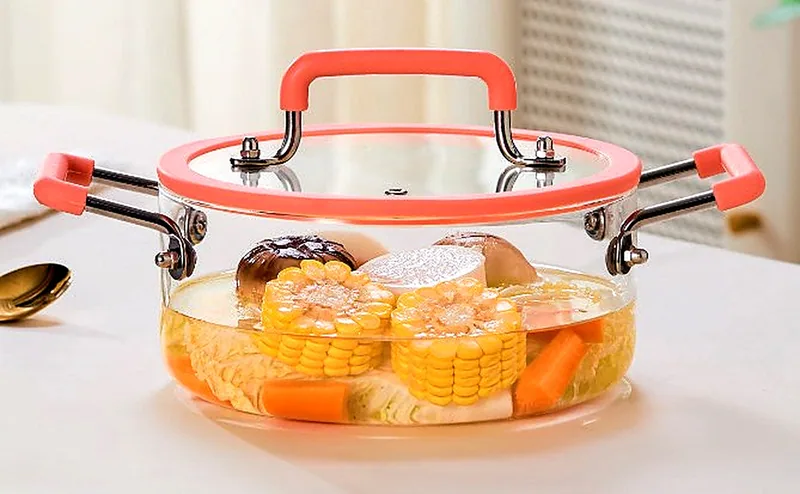
- The Glass Cooking Pot with Lid (TVD-2791) is a clear heat-resistant glass pot for stove-top soups and stews. Heat source suitability is for the factory to state: ask which hobs the pot is meant for and get that in writing.
The two baking-dish guides give more on single products: see the Glass Mixing Bowl Set guide and the Divided Glass Dishes guide.
Document checklist
| Document | Why you ask for it | Who issues it |
|---|---|---|
| Food-contact test report | Shows the glass and any lid or seal are suitable for food, and supports your position under the Food and Drugs Act | An independent testing laboratory, requested through the factory |
| Lead and cadmium test report | Needed wherever there is a coloured rim, print or decoration near food | An independent testing laboratory |
| Material statement (borosilicate or tempered soda-lime) | Decides oven and thermal-shock guidance, and what you can claim | The factory, in writing |
| Temperature and use guidance | Maximum oven temperature, freezer, microwave and dishwasher suitability | The factory |
| Capacity marking check | Millilitres and cups, readable and accurate for North American use | The factory, with sample verification |
| Bilingual label and French instructions | Consumer Packaging and Labelling Act and Quebec language rules | You and us, agreed before printing |
Borosilicate or tempered soda-lime
Many buyers assume that glass bakeware means borosilicate. Only the products that say so in our listing, such as the Glass Mixing Bowl Set and the Glass Measuring Jugs with Lid, are described that way. Others in the line, such as the clear glass baking dishes, are described only as clear glass, and the glass type is confirmed on the quote. The difference matters because borosilicate and tempered soda-lime glass tolerate sudden temperature changes differently, and the way you label and advertise a piece should match what the factory can document. Ask for the maximum oven temperature and the factory's thermal-shock guidance in writing, and do not repeat figures on your own packaging that the factory has not given you.
Differences between the products
Plain clear glass with no decoration has the lightest paperwork: a food-contact report and a material statement. Anything with a coloured lid, red or coloured print or a decorative finish adds a lead and cadmium question. Anything with bamboo adds a finish-and-glue question. A pot meant for a hob adds a heat-source question.
What happens if a document is missing
A missing report can stop a product on the shelf. A retail chain's compliance team may refuse to list a product without a lead and cadmium report on decorated glass. A cooking school or a restaurant group may ask for a sanitation certification, such as an NSF/ANSI mark, on commercial food equipment and check what their health unit asks. If a product is later found to be a danger, the Canada Consumer Product Safety Act allows recalls, so keep your test reports for every shipment. Retailers selling to Quebec will also ask for French documents before they list the product.
How we handle it
We confirm certification status and which documents exist for each code when we quote, and we say so plainly if a document does not exist. Duty depends on tariff classification and origin, and GST, HST, PST or QST applies by province of delivery; our customs broker confirms classification before we quote a delivered cost, see the sales tax by province guide. Glass is fragile in freight, so ask about inner dividers and carton ratings, and plan packaging for the whole route. Rules change, so confirm with your health unit, inspector or customs broker. This is general information and not legal advice.
Every order is quoted in writing with quantity, specifications, certification status, packing, lead time and delivered cost to your address. Many lines have low trial order quantities and most items have samples, with the sample cost usually credited to the first order. Payment is a 30% deposit and 70% before release. Start with how ordering works and send a quote request listing the codes you need. The Glass Bakeware, Cookware & Measuring line page and the wholesale guide list the range, and the Canada delivery hub covers freight.