Product guide ·
Glass Containers with Blue-Rim Vented Lids (TVD-1891): Wholesale Guide for Canada
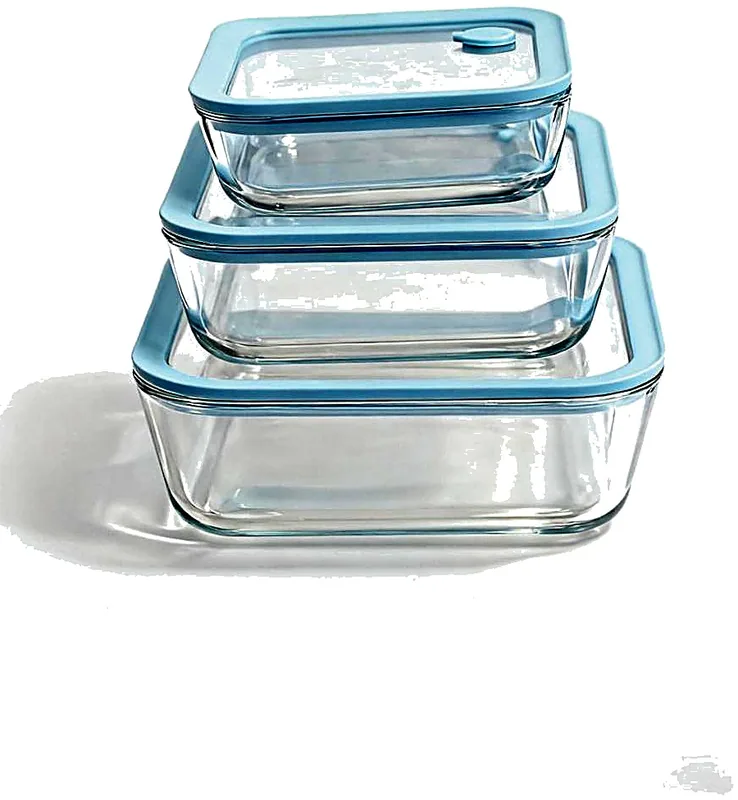
Rectangular nesting glass containers with a blue-rim vented lid. Here is what the vent and the coloured rim mean for your specification and your paperwork.
Rectangular nesting containers with a blue-rim vented lid
Glass Containers – Blue Rim Vent Lid (TVD-1891) is a set of rectangular glass containers with borosilicate glass bodies that nest into each other, topped with vented lids that have a blue rim. Those three features are what our product listing states, and each raises a question that buyers should settle before ordering: what the blue rim is made of, what the vent does, and how the nesting sizes are counted.
Who buys a vented, blue-rim container
- Retailers choose it as a colour-accented alternative to a plain clear set, with the blue rim as a visible point of difference on the shelf.
- Meal-prep businesses like rectangles because they stack in a cooler and hold a single protein with sides.
- Restaurants and commissary kitchens use rectangular nesting sizes in the walk-in, where a graduated set takes less space than a mixed pile of containers.
- Discount and variety chains use nesting sets as a promotional item because the set photographs well and packs flat in the carton.
The vented lid: ask what it is for
A vent in a lid usually lets steam or pressure escape. In our listing it is described only as vented, so we do not state that the container is microwave rated, because that rating comes from the factory for each piece and each lid. If you want to tell your customers that the vent is for reheating, get the factory's written rating for the glass body and for the lid. If the rating covers the glass but not the lid, the use instruction would be "remove the lid", and your packaging should say so.
Also ask how the vent closes. Some vents are an open slot, others are a flap or a small plug. A closed vent is a seal; an open vent is not a seal, and the difference decides whether the container is good for liquids or only for solid food. Ask for a sample and test it with a damp sauce, not only a dry snack.
The blue rim and the lead and cadmium question
The colour is on the lid rim. That is a design feature, but any coloured or decorated element on food-contact ware raises a question about what the colouring contains. The Glazed Ceramics and Glassware Regulations set limits on lead and cadmium that can leach from glassware that contacts food, and decorated rims and printed or metallic decorations near the lip are a known risk. Ask whether the blue is moulded into the lid or is a printed or painted band, and where the colour sits in relation to the food-contact surface. For any print or coating, ask for a lead and cadmium test report. The Consumer Products Containing Lead Regulations, which include kitchen utensils, are a further reason to ask.
No certification mark is on file for TVD-1891, so we make no certification claim. We confirm the status and supply documents with your written quote. Because the rim is a coloured element, see our compliance guide for decorated food glass and ceramic for the specific questions that apply to decorated ware.
Rules change, so confirm current requirements with the authority that applies to you, your health inspector or your customs broker. This article is general information, not legal advice.
A specification table for your purchasing team
| Point to settle | Detail to request |
|---|---|
| Nesting sizes | How many sizes per set and the dimensions and capacity of each; confirmed on the quote. |
| Lid construction | Material, vent style (open or closing) and whether a replacement lid is sold separately. |
| Blue rim | Moulded colour or applied band; lead and cadmium report if applied. |
| Heat rating | Factory rating for the glass body and, separately, the lid. |
| Dishwasher use | Factory guidance for the rim colour and the lid. |
| Retail pack | Sleeve, barcode, bilingual labelling, carton quantity. |
Compared with other rectangular and vented options
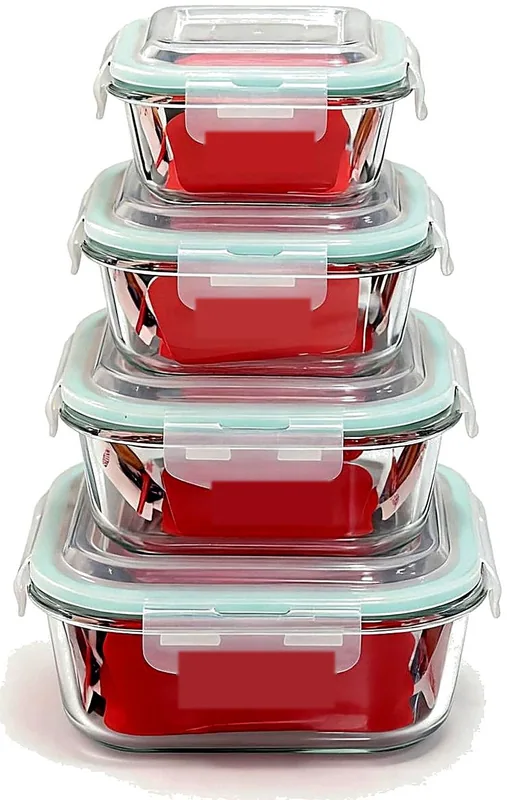
TVD-776 (Glass-Lid Food Containers) combines an all-glass lid with a vented seal and rectangular, square and round shapes, so it is the choice if you want to avoid plastic in the lid. TVD-1869 (Square Glass Food Containers – Teal Lid) is square, with snap-lock lids and a teal seal. TVD-775 (Deep Glass Food Containers) has deeper sizes with leak-proof snap lids. Our related guides cover the rectangular containers with a blue clip lid and the stackable round glass container set if you are weighing a different lid style.
Canadian use notes
Nesting rectangular sets are bulky in freight, so ask for the carton size and quantity early so that the container load plans well. If you sell in Quebec, prepackaged goods need French labelling at least as prominent as English; elsewhere, the Consumer Packaging and Labelling Act asks for bilingual product identity and net quantity. Winter delivery to the Prairies and central Canada means cold glass on arrival, so warm cartons before washing. Tax depends on the province of delivery; see the sales tax by province guide.
Ordering
Your written quote sets out price for the quantity, specifications, certification status and documents, packing, lead time and delivered cost. Samples are available on most items, trial quantities are low on many lines, and the sample cost is usually credited to the first order. Payment is 30% deposit and 70% before release. Read how ordering works, view the Glass Food Storage & Tableware line page, or send a quote request.