Certification guide ·
Glass Tea Cup and Saucer (TVD-1979): What Canadian Buyers Need to See Before Ordering
No certification mark is on file for this glass cup and saucer. For a printed design, the evidence you want is a lead and cadmium test report.
Is there a certification for a glass tea cup and saucer?
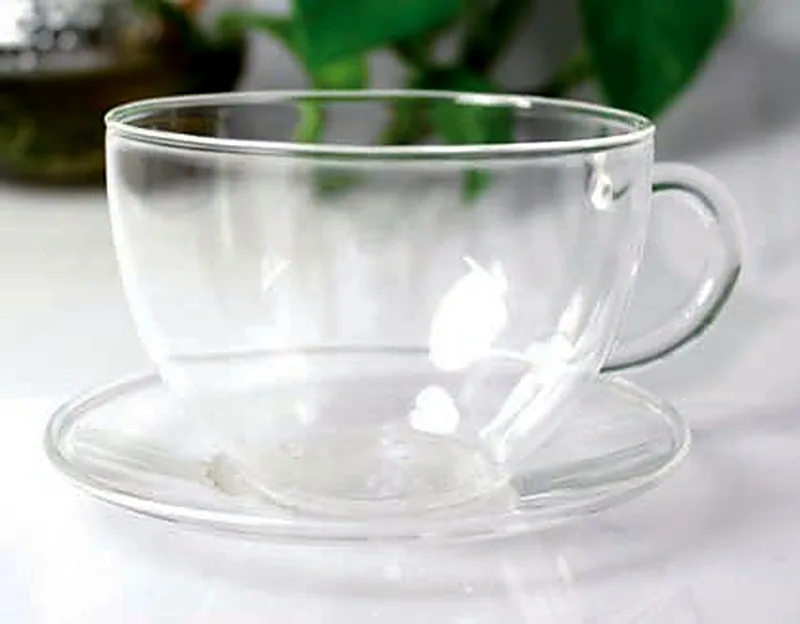
No certification mark is on file for the Glass Tea Cup & Saucer (TVD-1979), and we make no certification claim for it. There is no powered or battery part in its listed features, so the CSA, cUL and cETL marks that govern electrical products do not come into play. What does come into play is a set of Canadian rules about food contact, lead and cadmium in glassware, consumer product safety and labelling. For a cup that can also carry a printed design, the decoration is the key compliance question. Our listing describes clear heat-resistant glass, a cup with a matching saucer and plain or printed designs. This guide explains what a Canadian buyer needs to see before shelving or serving with it. Rules change, so confirm the current requirements with the relevant authority, your inspector or your customs broker; this is general information, not legal advice.
Rules that apply to this product
- Food and Drugs Act. It prohibits selling food in or with materials that may make it harmful. Health Canada does not pre-approve kitchenware; it offers voluntary Letters of No Objection for food packaging materials. Buyers commonly ask the factory for food-contact test reports, for example FDA or EU food-contact migration tests.
- Glazed Ceramics and Glassware Regulations. Under the Canada Consumer Product Safety Act, these limit lead and cadmium that can leach from glazed ceramics and glassware that contact food. Decorated rims and printed or metallic decorations near the lip are a known risk, so a printed tea cup needs a lead and cadmium test report.
- Canada Consumer Product Safety Act. It prohibits consumer products that are a danger to human health or safety, requires incident reporting and allows recalls. Health Canada enforces it.
- Consumer Packaging and Labelling Act. A prepackaged boxed set needs bilingual English and French product identity and net quantity, plus the dealer's name and place of business.
- Quebec Charter of the French language. Labels, instructions and warranty documents must be available in French, with French at least as prominent as other languages.
CE marking versus Canadian requirements
Canada does not recognise the European CE mark as proof of compliance for consumer products. If a factory shows a CE declaration or a European food-contact report, treat it as supporting information, not as the Canadian answer. A European migration test report is, however, a commonly accepted starting point when a Canadian buyer asks for food-contact evidence. Our guide to certification marks explains why electrical marks matter for powered goods and are not the right yardstick for glassware.
Plain versus printed: the decision that drives the paperwork
The two versions of this cup need different evidence. A plain clear cup and saucer mainly needs a food-contact report and a statement of the glass type. A printed version adds a decoration layer, and the Canadian glassware limits focus on exactly that: lead and cadmium in decoration that can contact the mouth or the drink. If you order printed designs, ask for a lead and cadmium report on that specific design, ask where on the cup the print sits relative to the rim, and ask whether the print survives repeated dishwasher cycles, because worn decoration can change both look and risk. Order plain and printed versions as separate lines on the quote so each carries its own report.
Document checklist
| Document | Why you need it | Who issues it |
|---|---|---|
| Food-contact test report for cup and saucer | Evidence the glass suits food and drink contact in Canada | Factory or an independent laboratory |
| Lead and cadmium test report for the printed design | Supports the glassware limits for decorated pieces | Independent laboratory |
| Written heat rating for cup and saucer | Lets you describe it as heat-resistant without guessing | Factory, confirmed on our quote |
| Bilingual packaging and label proof | Consumer Packaging and Labelling Act; French for Quebec | You and us, agreed before print |
| Commercial invoice with tariff classification | Duty and taxes by province of delivery | Our customs broker confirms before we quote |
Provincial differences
For Quebec, French labels, instructions and any warranty document must be available, and Quebec retailers will ask. Other provinces follow the federal bilingual rule for prepackaged goods. Provincial food premises rules and local public health inspectors expect tableware used in a restaurant to be in sound condition and easy to clean, and some franchisors write their own tableware requirements into their standards. Check what your health unit and franchisor ask for.
What happens if documents are missing
A retail buyer may refuse to list a printed glass without a lead and cadmium report. A hotel group's purchasing team may ask for food-contact evidence before approving tableware. A product found to be dangerous can be recalled under the Canada Consumer Product Safety Act, and sellers must report incidents. A missing French label can block a Quebec shelf. All of this is easier to fix at the quote stage than after a container has landed.
How we handle it
We confirm certification status and supply the documents with the quote before you order; for this cup, that means telling you plainly that no mark is on file and what test reports the factory can provide for the plain and printed versions. We can send samples for you to test heat and wash behaviour, with the sample cost usually credited to the first order. Duty depends on the tariff classification and origin, and our customs broker confirms classification before we quote a delivered cost; provincial taxes apply by the delivery province (see the sales tax guide). The commercial side of this product, including who buys it and how to specify it, is in the TVD-1979 buying guide. For the rest of the line, read the single-wall glass compliance guide. To order, read how ordering works and send a quote request.