Product guide ·
Pull-Cord Hand Food Chopper (TVD-1779): Buying Guide for Retailers and Online Sellers
A manual chopper with a clear bowl and three blades, built for onion, garlic, vegetables and herbs. No power needed, which changes both who buys it and what Canadian rules matter.
What the Pull-Cord Hand Food Chopper is
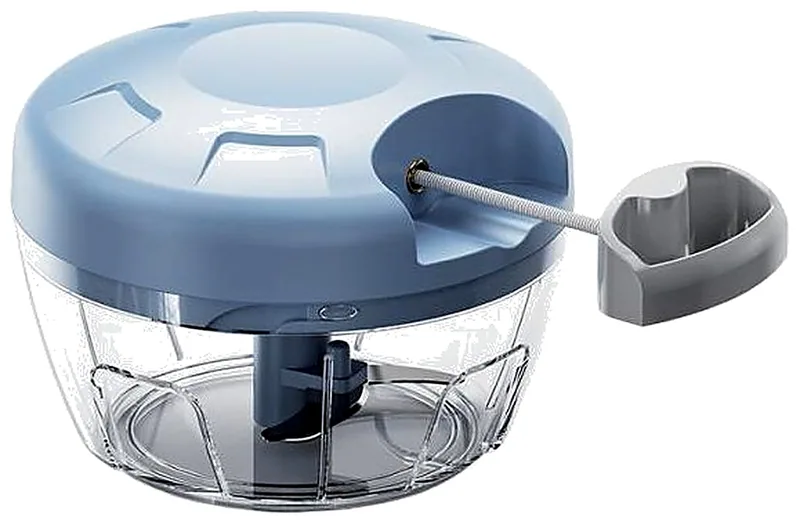
The Pull-Cord Hand Food Chopper (TVD-1779) is a pull-cord manual chopper with a clear bowl and three blades, intended for onion, garlic, vegetables and herbs. Those are the listed features, and they say a lot. Pulling a cord turns the blades, so there is no motor, no cord to the wall and no battery; the clear bowl lets the cook see how fine the chop is; and three blades suggest the unit is meant to handle several textures, from coarse vegetables to fine garlic and herbs. We do not publish the bowl capacity, the blade material, the housing material or the weight: all of those are confirmed on your written quote, and a free account on the site shows the full specifications.
Who buys it
Retailers are the core buyers: kitchenware shops, hardware stores and general merchandise chains stock manual choppers because they sell year-round and need no power. Discount and variety chains buy them for the gadget aisle, where a boxed unit with a visible bowl sells itself. Online sellers like products with a clear selling story, and "chop onions without tears or a power outlet" is exactly that. Camping and cottage outfitters can add it as an off-grid kitchen tool. Small restaurants and caterers will occasionally buy a few for garlic and herb prep on a station without a food processor, though a commercial buyer should check what the health unit expects for equipment.
What the features mean in practice
- Pull-cord operation. Each pull spins the blades. The feel of the pull, the length of the cord and the force needed are what customers notice most, so ask for a sample and test it with real onions. A cord that frays or a mechanism that sticks is the usual return reason, so ask what pull-cycle testing the factory does.
- Clear bowl. A transparent bowl is a selling point but means plastic or glass. Ask which, and what the thickness is. Clear plastic can scratch and cloud with use, and some clear plastics can crack if dropped on a hard floor.
- Three blades. Ask how the blades attach, whether they can be removed for cleaning, and whether a blade guard or cover is included. Blades are the part that matters most for both safety and food contact.
- Onion, garlic, vegetables, herbs. This describes intended uses. It does not describe meat, nuts, ice or hard cheese, so do not advertise those uses without the factory's confirmation.
How to specify it: a checklist for your quote
- Capacity of the bowl, overall height and the weight of the boxed unit.
- Material of the bowl, lid, housing and cord, and the blade steel grade.
- Whether the blades can be removed, and how many sets come in the box.
- Whether the unit is rated for dishwashers, and which parts. No rating is stated here, so do not assume one.
- Food-contact test reports for the bowl, lid and blades.
- Retail packaging: colour box or window box, barcode, labelling language, instruction sheet language.
- Carton quantity, carton size, minimum order and sample lead time.
Compared with other prep tools in the range
The chopper sits between a plain knife and an electric processor. If your customers want slicing and dicing into even pieces, the multi-function vegetable dicer (TVD-1780) uses interchangeable blades with a container, suited to potato, onion and cucumber. For a single quick job on one fruit, the stainless steel apple slicer (TVD-10736) is a carded gadget. The Stainless Steel Mini Grater (TVD-10727) and the Silicone Pot Grip Pad (TVD-2824) are small add-on items for a gadget bay. A sensible range for a shop pairs a chopper with a dicer for a kitchen-prep display, with the chopper marketed for herbs, garlic and onion and the dicer for larger cuts.
Canadian notes
A pull-cord chopper has no electrical part, so electrical certification does not apply to the unit as described. If a version you order has a motor or battery, tell us. For food contact, the Food and Drugs Act prohibits selling food in or with materials that may make it harmful, and Health Canada does not pre-approve kitchenware; buyers ask the factory for food-contact test reports for the plastics and blades. The Consumer Products Containing Lead Regulations set lead limits that include kitchen utensils. Blades and moving parts fall under general consumer product safety in the Canada Consumer Product Safety Act. Boxed consumer goods need bilingual product identity and net quantity and the dealer's name and place of business under the Consumer Packaging and Labelling Act, and in Quebec labels and instructions must be available in French. Rules change, so confirm with the authority or your customs broker; this is not legal advice.
No certification is on file for TVD-1779. We confirm certification status and supply the documents with the quote before you order. See our compliance guide for kitchen gadgets and knives for the document list that applies across the whole line.
Practical points for Canadian use: clear plastic bowls can become brittle in very cold storage, so ask whether the unit tolerates freezing temperatures in transit before sending stock to an unheated warehouse in winter. Canadian kitchens are generally warm and dry in winter and the chopper will see regular washing, so ask about how the cord and seals cope with repeated water exposure.
Freight, duty and tax
Choppers travel by ocean to Vancouver or Prince Rupert and then continue by rail and truck. Boxed units with bowls are bulky for their weight, so the carton count drives freight cost per piece. Duty depends on the tariff classification and origin, which our customs broker confirms before we give a delivered cost. Use the landed cost calculator for an estimate and the sales tax by province guide to see which taxes follow your delivery address.
How ordering works
Every order is quoted in writing for price, specification, certification status and documents, packing, lead time and delivered cost. Samples are available on most items, and the sample cost is usually credited to the first order. Many lines have low trial minimums, which suits a test in a few stores. Payment is 30% deposit and 70% before release. See how ordering works, browse the kitchen gadgets and knives line, read the wholesale guide, or send a quote request for TVD-1779.