Product guide ·
Round Tray – Patterned Glass Insert (TVD-5714): Wholesale Guide for Hotels, Cafés and Retailers
A dark bamboo rim and a patterned glass base make this round tray a wipe-clean serving piece. Here is what to ask about the glass before you order.
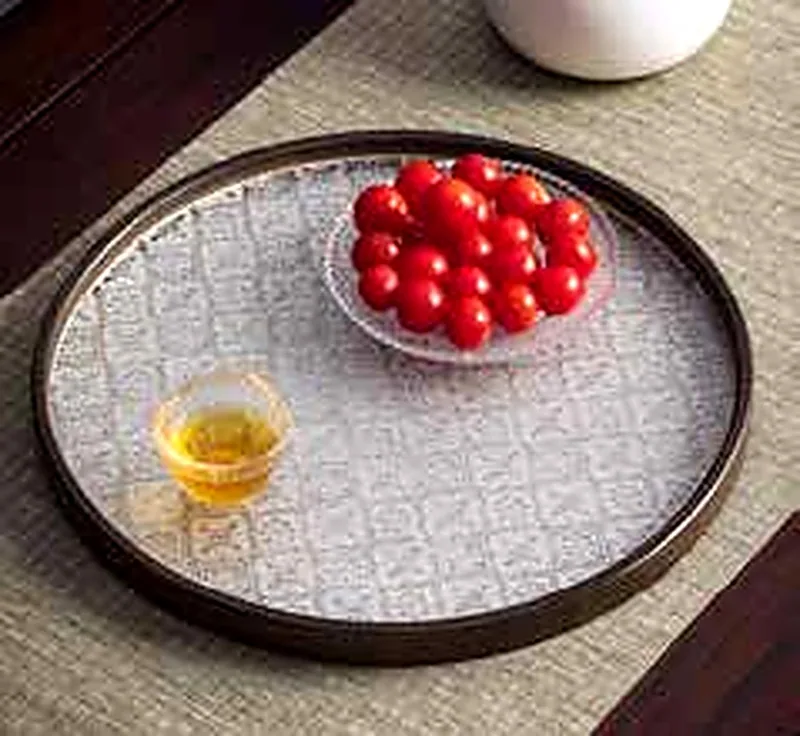
Round Tray – Patterned Glass Insert (TVD-5714) pairs a dark bamboo rim with a patterned glass base in a round serving size. The glass is the point of difference in the range: where the woven and plain bamboo trays have a base that crumbs and drips can settle into, a glass base is a flat surface you can wipe in one pass. That makes this tray a natural fit for hotels, cafés and lounge bars that put drinks and small plates on a tray all day, and for retailers who want a giftable piece with a more finished, table-ready look. This guide explains what the listed features mean, what to ask the factory about the glass and the pattern, and how the tray compares with others in the bamboo serving trays line.
Reading the three listed features
- Dark bamboo rim. A dark frame hides the marks that tea, coffee and oils leave on bamboo, which is useful when trays go back into service every day. It also frames a patterned glass base well on a table, so the tray looks intentional rather than purely functional.
- Patterned glass base. The glass can carry a moulded texture, an etched design or a printed pattern. These are different things for a buyer: a texture formed in the glass has no surface coating, while a printed or metallic decoration is a coating that needs a lead and cadmium conversation. Ask the factory which method is used on this base before you commit.
- Round serving size. Round suits cups, a carafe, a small bowl or a plant pot display. The diameter, rim height and glass thickness are confirmed on your written quote.
The glass question every buyer should ask
A glass insert changes the risk profile compared with an all-bamboo tray. Three practical questions come first.
- How is the glass held? The buying tip for this range is to check how an insert is fixed. A glass panel seated in a routed groove, glued in, or clipped behind a lip behaves very differently when a loaded tray is lifted at one side. Ask for a description and a photograph.
- Is the glass toughened or standard? This decides how it breaks. We confirm the glass type and thickness on the quote and do not assume either.
- What happens when a base cracks? For hotels, ask whether replacement trays or loose inserts can be supplied, and plan your reorder quantities with breakage in mind.
Lead and cadmium: why decoration matters
Canada's Glazed Ceramics and Glassware Regulations set limits on the lead and cadmium that can leach from glazed ceramics and glassware that contact food. Decorated rims and printed or metallic decorations near the lip are a known risk. On this tray the glass is a base rather than a drinking surface, but it can still touch food and drink, so if the pattern is printed or has a metallic effect, ask for a lead and cadmium test report. If the pattern is moulded into the glass with no applied decoration, say so on your purchasing record and ask the factory to confirm in writing. Rules change, so check the current position with Health Canada or your health inspector. This is general information, not legal advice.
Who buys it
Hotels and lodges. Room-service and lobby-lounge teams want a tray that survives a wipe-down between guests. Glass handles that better than woven bases. The weight of the glass matters when trays are carried one-handed, so ask for the packed weight on the quote.
Retailers. Giftware buyers can sell it as a set with glasses or a decanter. Because the glass base is the feature, photograph it flat and from above, and use the dark rim in lifestyle shots. Glass also affects freight: plan for protective packing and ask for carton drop-test practice.
Cafés and restaurants. Where the tray carries drinks, a smooth base reduces the sliding and the sticky-crumb problem. If the tray will go through a dishwasher, ask for the factory's written rating first; bamboo and glued glass joints may not tolerate it.
Specification checklist
- Diameter, rim height and overall weight of one tray.
- Glass type, thickness and how the pattern is produced (moulded, etched or printed).
- How the glass is fixed to the bamboo, and whether the joint is food-safe.
- Bamboo grade and the rim finish, with food-contact test reports for your market.
- Whether the factory rates it for dishwasher, microwave or oven use.
- Retail packaging, barcode, label language, carton quantity and size, and breakage protection.
- Minimum order, sample availability and lead time.
How it compares
| Tray | Rim | Base | Choose it when |
|---|---|---|---|
| Round Tray – Patterned Glass Insert (TVD-5714) | Dark bamboo | Patterned glass | You want a flat, wipe-clean surface in round form |
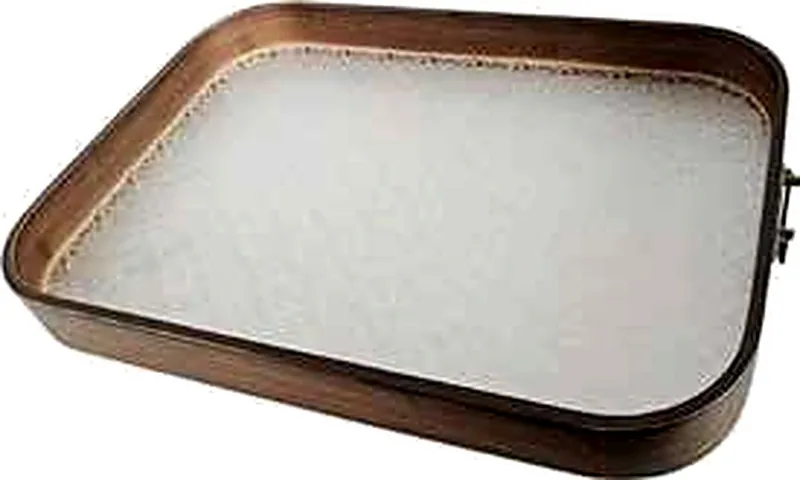
| Rectangular Tray – Frosted Glass Insert (TVD-5715) | Dark bamboo | Frosted glass, side handle grips | You need a rectangular tray with grips |
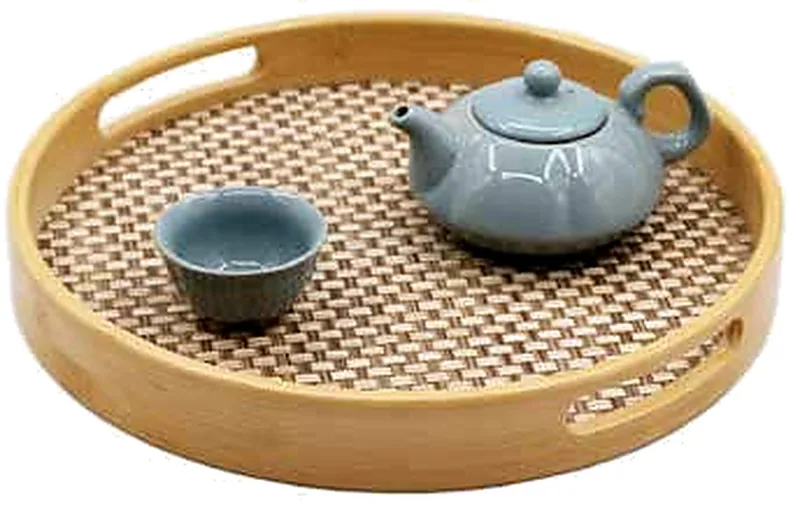
| Round Bamboo Tray – Woven Insert (TVD-5712) | Light bamboo | Woven pattern | You want texture rather than glass, and a lighter look |
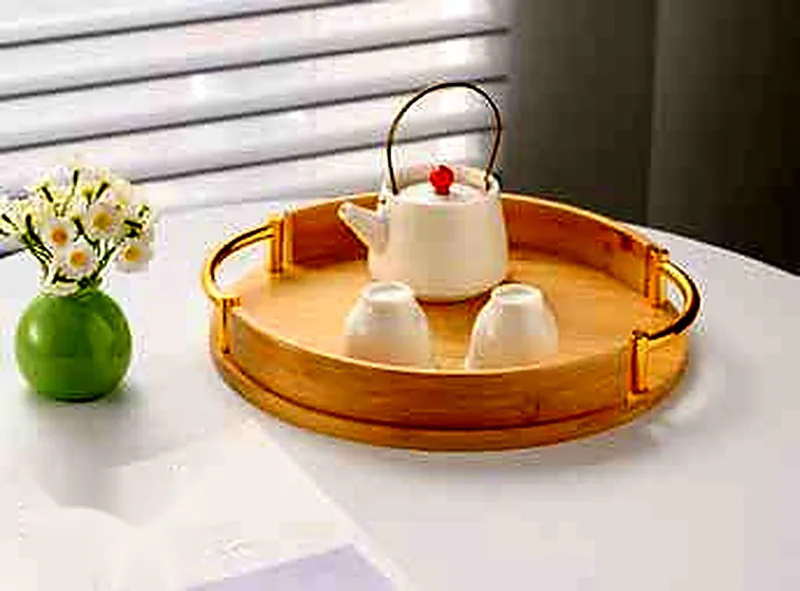
| Round Bamboo Tray – Gold Rim (TVD-5710) | Gold-tone | Round bamboo tray | You are presenting teapots and cup sets |
If your buyers like the look of this tray but you serve in a rectangular format, our buyer guide for TVD-5715 covers the frosted version.
Canadian use notes
Glass and bamboo expand at different rates, so a tray left in a cold delivery truck and brought straight into a warm room can stress the joint. Allow cartons to reach room temperature before unpacking in winter. Dry heated interiors across the Prairies and central Canada can shrink bamboo, while coastal humidity can swell it, which is another reason to ask how the glass is seated. The tray has no listed electrical part, so voltage is not a question. Read the compliance guide for TVD-5714 for the document list, and note that bilingual labelling applies to retail packaging, with French documentation needed for Quebec.
How ordering works
Every order is quoted in writing for your quantity and delivery address, with specification, certification status and documents, packing and lead time included. Low trial minimums are available on many lines, samples are offered on most items with the cost usually credited to the first order, and payment is a 30% deposit with 70% before release. Several factories' products can share one container, so trays can travel with other tableware. See how ordering works, estimate duties with the landed cost calculator, and when you are ready, request a quote. A free account shows the full specifications on the product page.