Product guide ·
Silver Covered Tray on Feet (TVD-2748) and Two Footed Bowls: Wholesale Guide
Three silver footed pieces share one hollow-out specification. Here is how the covered tray and two footed bowls differ and what to confirm about feet, covers and food contact.
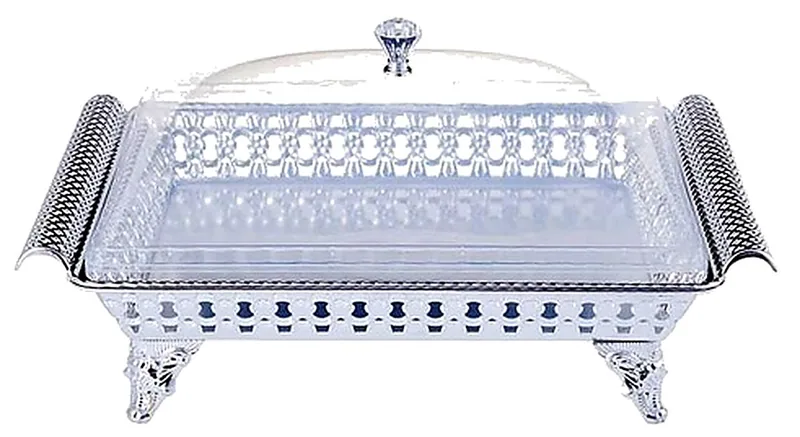
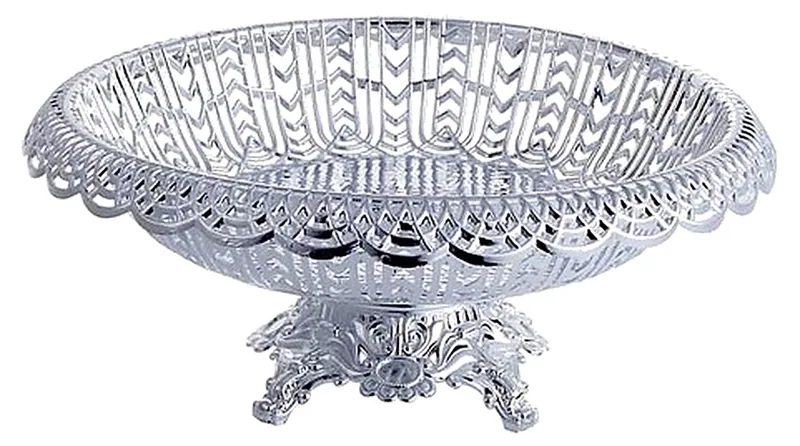
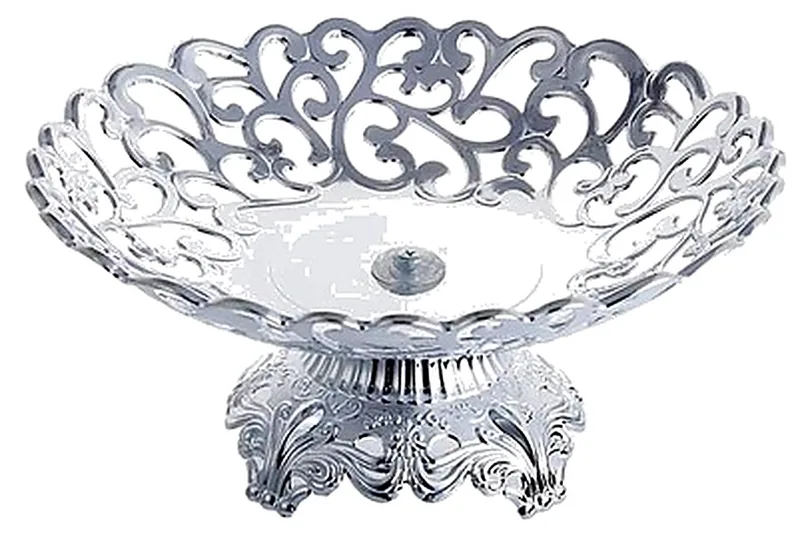
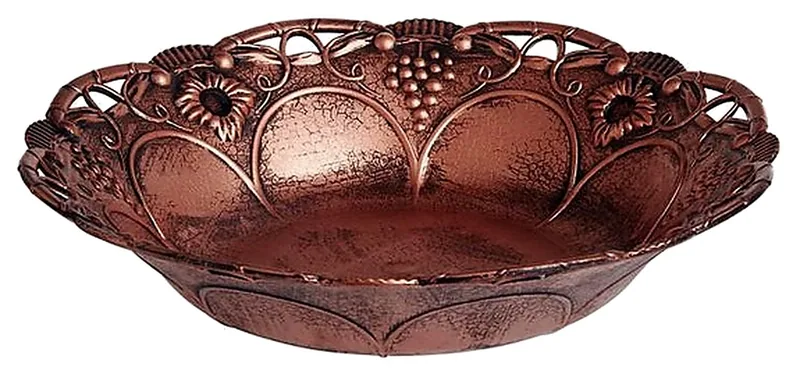
Three footed pieces in our electroplated tray line share one description: a silver hollow-out design, footed bowls and stands, with covered dishes shown. They are the Silver Covered Tray on Feet (TVD-2748), the Silver Footed Openwork Bowl (TVD-10351) and the Silver Footed Cut-Out Bowl (TVD-10352). Feet and covers set this group apart from flat trays, and they raise questions a flat tray never does.
What the three share
According to our listing each is silver, has a hollow-out design, and belongs to a family of footed bowls and stands with covered dishes shown. The names tell you the visible differences: one is a covered tray on feet, one is a footed bowl described as openwork, and one is a footed bowl described as cut-out. The openwork and cut-out labels may describe two patterns of the same hollow-out idea. We do not publish sizes, weights or base metal, so the full size of each piece and the material are confirmed on the written quote.
Height, feet and covers in practice
A foot lifts the piece. That adds height to a table, which is why footed bowls and stands appear in dessert tables, bridal displays and hotel buffets. It also means the piece is taller than a flat tray, so carton size per piece grows and nesting is unlikely; ask for carton size and pieces per carton before you plan freight. A cover on TVD-2748 adds a protective lid over a display, useful for wrapped items on a counter. Do not assume the cover seals out moisture, since our listing does not say so. Ask how the feet are attached, as feet are the first part to loosen or bend in transit, and whether spare feet are available.
How the three differ
| Code | Name | Reading the name | Natural use |
|---|---|---|---|
| TVD-2748 | Silver Covered Tray on Feet | Tray, feet, cover shown | Covered display of wrapped or solid items |
| TVD-10351 | Silver Footed Openwork Bowl | Footed bowl, openwork pattern | Height on sweet and favour tables |
| TVD-10352 | Silver Footed Cut-Out Bowl | Footed bowl, cut-out pattern | Giftable centrepiece |
Which buyer should choose which
- Event planners and wedding stylists. The footed openwork bowl (TVD-10351) gives height and a lace pattern for sweets and favours.
- Hotels and banquet kitchens. The covered tray on feet (TVD-2748) is the buffet piece for wrapped or solid items that should be covered between service rounds. Confirm food-contact status for the interior before using it with unwrapped food.
- Gift and homewares retailers. The cut-out bowl (TVD-10352) is a giftable centrepiece. Packing and tarnish protection decide how well it arrives.
- Online sellers. Footed pieces photograph well but are fragile in post. Ask for inner packing and a breakage plan.
Mixing the three in a single order
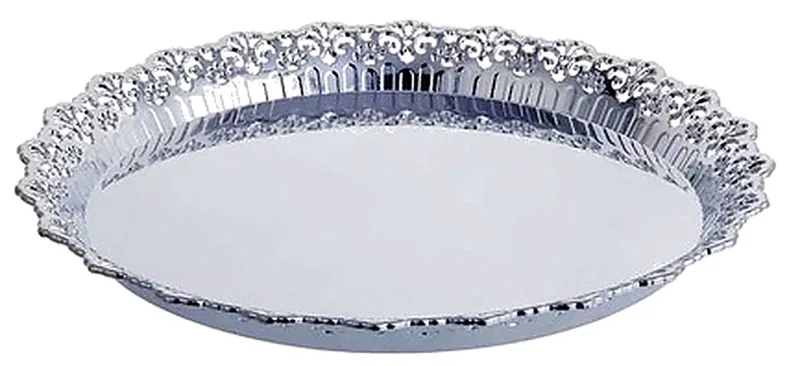
All three can be quoted together, and a typical sample order is one of each so the finish, foot stability and cover fit can be compared. They sit alongside flat pieces in the same line: the Silver Scalloped Round Tray (TVD-2747), described in our round tray guide, and the Copper Openwork Bowl (TVD-2749), described in the copper and pewter guide. Products from several factories can share one consolidated container.
Food contact, finish and Canadian rules
The line guidance is to ask whether each piece is meant for direct food contact or for wrapped items and display. If food touches the piece, the Food and Drugs Act applies: food must not be sold in or with materials that may make it harmful. Health Canada does not pre-approve kitchenware, so buyers commonly ask the factory for food-contact test reports. Covered and footed pieces have extra joints where the foot or handle meets the body; ask what joins them and whether any joined area can touch food, and request a lead test report because the Consumer Products Containing Lead Regulations set lead limits that include kitchen utensils. Public health inspectors look for food equipment that is durable, easy to clean and sanitary, so ask how the openwork and joins are cleaned. No certification is on file for these three products, and we do not imply one. We confirm status and send documents with the quote before you order. Rules change, so confirm with the authority, your inspector or your customs broker. This is not legal advice. The whole-line view is in our silver and copper tray compliance guide.
Labels, transport and winter
For prepackaged consumer sale, bilingual English and French identity and net quantity and the dealer's name and place of business are required, and Quebec retailers expect French on labels and instructions. Footed metalware travels best with separators and corner protection. A cold carton opened in a warm room can fog the finish with condensation, so leave it closed until it reaches room temperature.
How ordering works
Every order is quoted in writing for the quantity, specifications, packing, lead time and delivered cost. Samples are available on most items and usually credited to the first order. Payment is a 30% deposit and 70% before release. Read how ordering works, send a quote request, estimate delivery with the landed cost calculator and see the sales tax guide. The full range is on the silver and copper electroplated trays line page, and the wider home kitchen and tableware range in Canada sits alongside it.